
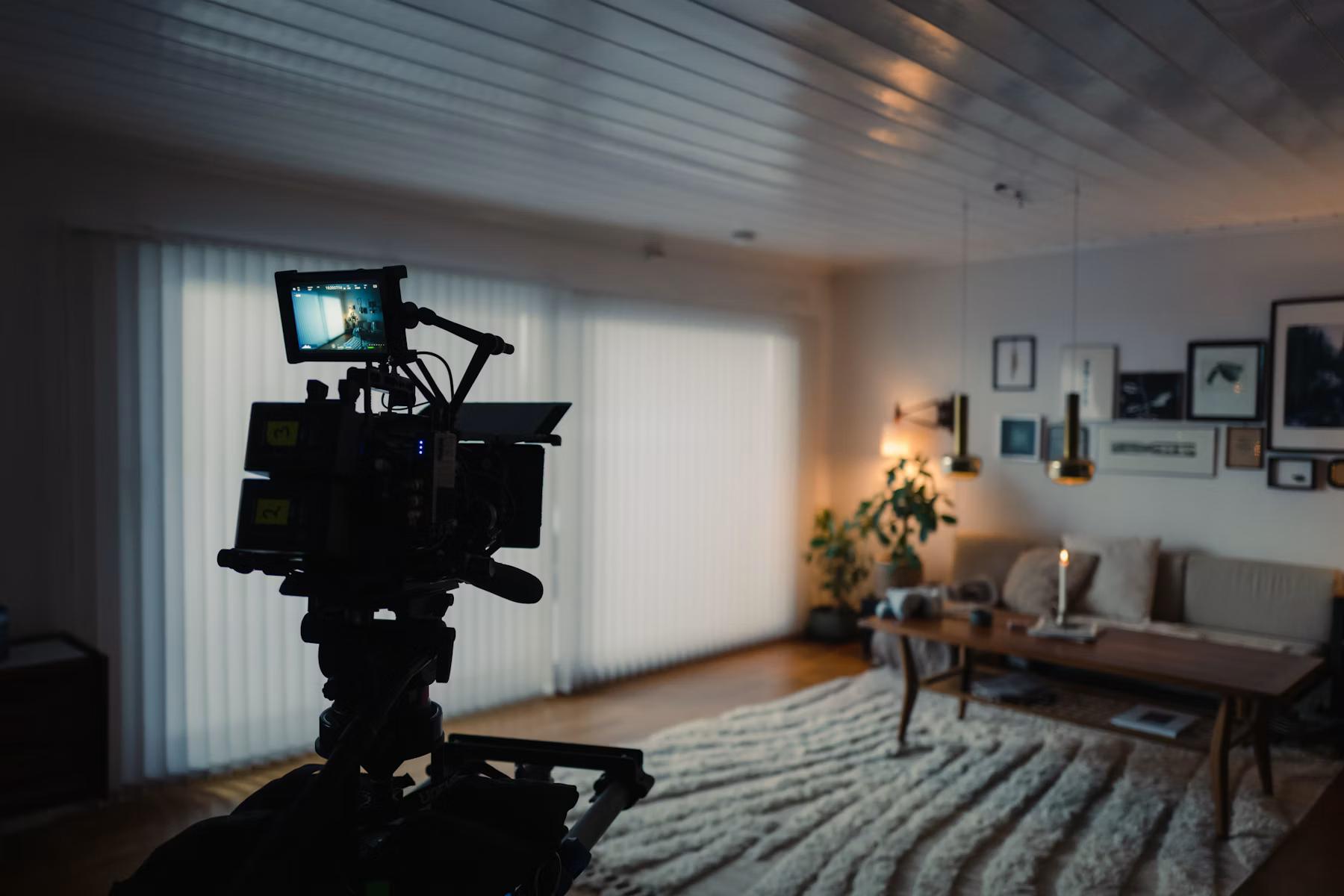
Camera set up on a tripod in a living room von Eirik Skarstein Unsplash License
Filmlocation anbieten: Welche Räume gefragt sind und welche Anfragen man ablehnen sollte
Wer eine Filmlocation anbietet, sollte nicht jede Anfrage annehmen. Der Guide zeigt, welche Räume gefragt sind, wie SetScout Inserate strukturiert und welche Red Flags Hosts ernst nehmen sollten.
Eine Filmlocation muss nicht außergewöhnlich sein. Viele Produktionen brauchen glaubwürdige, klar beschreibbare Räume: eine echte Küche, ein Wohnzimmer mit Tiefe, ein Büro mit Empfang, ein Laden mit Waren, ein Treppenhaus, eine Dachterrasse, ein Keller, eine Werkstatt oder eine leere Fläche, die man kontrolliert einrichten kann. Wer eine Filmlocation anbieten will, sollte deshalb zuerst verstehen, welche Motive gefragt sind und wo die eigenen Grenzen liegen.
Key Takeaways
- Eine Filmlocation sollte passende Anfragen anziehen und unpassende früh herausfiltern.
- Gefragt sind oft glaubwürdige Alltagsräume, nicht nur spektakuläre Motive.
- Ablehnen ist professionell, wenn Crewgröße, Nutzung, Preis, Nachbarn oder Risiko nicht passen.
- Ein Gegenangebot ist sinnvoll, wenn der Dreh passt, aber Umfang oder Preis angepasst werden müssen.
Gefragt sind Räume mit Funktion, nicht nur mit Stil
Für Produktionen zählt ein Raum in drei Schichten: Look, Nutzung und Logistik. Ein Altbauzimmer kann schön sein, aber ohne Aufzug, Ladezone oder ruhige Tonbedingungen nur für kleine Foto- oder Content-Teams passen. Ein nüchternes Büro kann stärker sein als ein spektakulärer Showroom, wenn Empfang, Besprechungsraum, Küche, Toiletten, Aufzug und Parken planbar sind.
Auf SetScout kann ein Inserat deshalb mehr abbilden als Titel und Preis. Kategorien, Tags, einzelne Bereiche mit eigenen Fotos, Ausstattung, Regeln, Verfügbarkeit, Preis, Stornierung und technische Hinweise helfen, die Location nicht als schöne Galerie, sondern als nutzbaren Drehort zu beschreiben. Das reduziert falsche Anfragen und macht gute Anfragen konkreter.
Welche Räume oft unterschätzt werden
Neben Wohnzimmern, Küchen, Lofts und Studios sind Nebenflächen oft entscheidend: Flure, Treppenhäuser, Garagen, Hinterhöfe, Lieferzonen, Holding-Räume, Maske, Garderobe, Lager oder ein neutraler Raum für Kundinnen und Kunden. Eine Produktion kann einen guten Hauptraum ablehnen, wenn sie keinen Platz für Team, Technik und Rückzug findet.
Auch normale Räume können wertvoll sein, wenn sie klar sind: Arztpraxis, Büro, Café, Restaurant, Klassenzimmer, Laden, Werkstatt, Lager, Vereinsraum oder Seminarraum. Wichtig ist, ob Marken, Kundendaten, Mitarbeitende, Nachbarn, Lärm, Sperrzeiten und Reinigung vorab regelbar sind.
Anfragen, die man nicht schönreden sollte
Lehne lieber ab, wenn der Anfrageumfang nicht zu deinen Regeln passt: zu große Crew, zu wenig Vorlauf, unklare Versicherung, riskante Effekte, laute Nachtdrehs, Tiere ohne Schutzkonzept, Stunts, Drohnen, Rauch, Haze, Wandmontage, starke Umbauten oder Szenen, die Nachbarschaft, Eigentümer oder Betrieb überfordern. Eine schlechte Zusage ist teurer als eine klare Absage.
Auf SetScout ist eine Buchungsanfrage zuerst unverbindlich. Hosts können nachfragen, ablehnen, akzeptieren oder ein Gegenangebot machen. Das ist wichtig: Der Host muss nicht aus einem guten Motiv eine passende Produktion machen. Es reicht, die Bedingungen sauber zu prüfen.
So formulierst du Grenzen im Inserat
Gute Regeln sind konkret. Schreibe nicht nur „nach Absprache“, sondern benenne Grenzen: maximale Crewgröße, erlaubte Zeiten, keine Bohrungen, keine offenen Flammen, keine Drohnen, kein Rauch, kein Dreh in privaten Zimmern, keine Veröffentlichung der Außenadresse, keine lauten Aufbauten nach 20 Uhr. Solche Regeln schrecken die richtigen Produktionen nicht ab; sie helfen ihnen, realistisch zu planen.
Wenn du unsicher bist, beginne mit einem kleinen, ehrlichen Inserat statt mit einem maximalen Versprechen. Der Beitrag zur production-ready Location und der Guide zur Produktionshaftpflicht helfen beim Feinschliff. Danach kannst du dein kostenloses SetScout-Inserat erstellen.
Welche Räume besonders gut funktionieren
Produktionen suchen Räume mit klarer Funktion und mehreren verwertbaren Blickachsen: Küchen, Wohnzimmer, Büros, Werkstätten, Ateliers, Gärten, Flure, Empfangsbereiche und Nebenräume. Wichtig ist nicht, dass jeder Raum perfekt ist. Wichtig ist, dass im Inserat steht, was sichtbar genutzt werden darf und was privat bleibt.
Red Flags bei Anfragen
- Die Crewgröße passt nicht zu Fläche, Sanitär, Aufzug oder Nachbarschaft.
- Die Produktion will Bereiche nutzen, die im Inserat nicht freigegeben sind.
- Versicherung, Schutz, Rückbau oder Verantwortlichkeit bleiben unklar.
- Nachtzeiten, Lärm, Effekte oder Setbau kollidieren mit Hausregeln.
So läuft eine Anfrage auf SetScout ab
SetScout behandelt eine Host-Location nicht wie eine lose Kleinanzeige. Im Listing werden Kategorie, Tags, Adresse, Grunddaten, Ausstattung, Fotos, Bereiche, Regeln, Preis, Stornoregel, Buchungsvorlauf und Verfügbarkeit strukturiert abgefragt. Dadurch sehen Produktionen nicht nur den Look, sondern auch die Produktionsbedingungen.
Eine Anfrage ist zunächst nicht bindend. Sie enthält das Projekt, das angefragte Inserat, den bisherigen Nachrichtenverlauf, die gewünschten Zeiträume, ein Preisangebot und ein Briefing. Hosts prüfen sie in ihrem Posteingang und können annehmen, ablehnen oder ein Gegenangebot mit einem anderen Betrag senden.
Nach der Annahme durch den Host entscheidet die Produktion zwischen direkter Buchung und Motivbesichtigung. Danach folgen bei Bedarf die finale Preisabstimmung, der Motivvertrag, die Versicherungsprüfung und die Bezahlung über Stripe. Die Auszahlung an den Host erfolgt anschließend in zwei Teilbeträgen in Euro.
Praktische Checkliste vor der Zusage
Bevor du eine Anfrage annimmst, geh die harten Produktionspunkte einmal schriftlich durch. So verhinderst du, dass ein schöner Ort am Drehtag an Zugang, Nachbarn, Schutz oder unklaren Zuständigkeiten scheitert.
- Projektart, Motiv, Crewgröße, Drehzeiten und gewünschte Bereiche sind klar benannt.
- Versicherung, Vertrag, Ansprechpartner und Zahlungsweg sind geklärt.
- Parken, Anlieferung, Aufzug, Strom, WLAN, Toiletten und Nebenräume passen zur Anfrage.
- Schutz, Reinigung, Müll, Rückbau und Endkontrolle sind vor der Zusage besprochen.
- Nachbarn, Hausordnung, Eigentümerzustimmung und gesperrte Bereiche sind berücksichtigt.
Empfohlene Artikel
Weitere Beiträge, die dich interessieren könnten

Illustration zur Reportagefotografie auf einem Markt von OpenAI ImageGen Originalbild für SetScout generiert
Reportagefotografie: eine Geschichte am realen Ort erzählen
Reportagefotografie praktisch planen: einen echten Ablauf recherchieren, eine Bildfolge bauen und beobachtete von gestellten Motiven trennen.

Modefotografie in einem Industrieatelier von OpenAI ImageGen Originalbild für SetScout generiert
Modefotografie on Location: Kleidung bleibt die Hauptsache
Modefotografie am realen Ort planen: Location, Farbwirkung, Licht, Styling und Bildfolge so abstimmen, dass die Kollektion klar zu sehen ist.

Porträtfotografie in einer hellen Loft-Location von OpenAI ImageGen Originalbild für SetScout generiert
Porträtfotografie on Location: Menschen und Räume verbinden
Porträtfotografie am realen Ort planen: Bildziel, Hintergrund, Licht, Zusammenarbeit und eine kurze Shotlist für brauchbare Bildvarianten.