
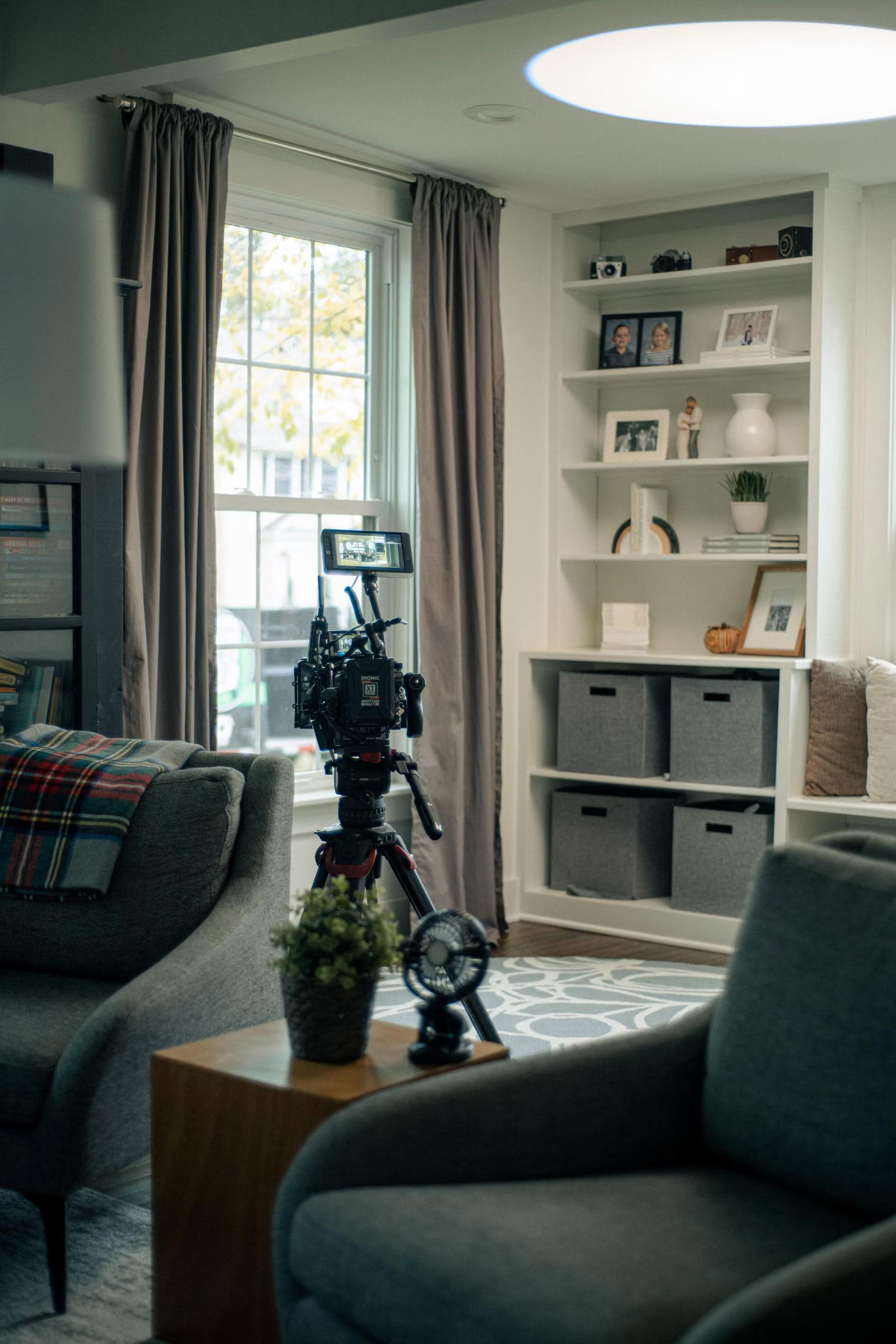
Living room filled with furniture and a large window by Troy Spoelma Unsplash License
Rent Out Your House for Filming: Prices, Preparation and Limits for Private Hosts
A house can be a strong filming location when rooms, boundaries, price, neighbors, protection and the booking workflow are prepared before requests arrive.
Renting out a house for filming can work well when the property offers more than a good look: room depth, access, predictable neighbors, usable side rooms, controllable rules and a host who knows what is allowed. If you want to rent out your house as a film location, prepare the boundaries first.
Key Takeaways
- Houses are strong because they can offer multiple looks in one place.
- The day rate should account for blocked use, crew size, rooms, prep, reset and risk.
- Neighbors, parking, protection and power often decide whether filming is realistic.
- Hosts should separate usable rooms, private rooms and exterior areas clearly.
The whole house does not have to be available
Many hosts think too broadly: whole house or nothing. Productions often prefer a clear partial use. Living room, kitchen, hallway, garden, driveway, bathroom, office or terrace can be stronger as defined areas than as a vague full-house offer.
SetScout lets a listing describe areas separately. This matters because the kitchen may need different rules than the living room, the garden may affect neighbors and private rooms may be completely off-limits.
Price: one day rate as the starting point
SetScout listings use a day price. Hosts should use it as a clear baseline for typical use: rooms, time, disruption, exclusivity, preparation, reset, cleaning and personal effort. Special cases belong in request review or a counteroffer.
Preparation before the first request
Photograph the house honestly: room depth, windows, doors, stairs, driveway, parking, side rooms and access. To publish on SetScout, a listing needs at least four finished images including a hero image; more good images make decisions easier.
Also clarify who may approve a shoot, who is present on the day, which furniture may move, which floors need protection, where equipment can stand, where the team eats and how fast the house must be reset.
Neighbors, insurance and contract
Private houses rarely fail because of the living room. They fail because of neighbors, load-in, noise, parking, pets, sensitive floors, missing approval or unclear protection rules. Insurance proof is part of the request and booking process, but SetScout is not an insurer and should not be treated as a damage guarantee.
Once price, rooms and rules are clear, create a free SetScout listing.
How to think about price
The daily price should not be based only on living area or rent value. It should reflect blocked use, number of people, rooms used, exterior areas, loading, prep, reset, delicate surfaces and whether residents need to leave during the shoot. If the request expands scope or risk, use a counteroffer.
Prepare before shoot day
- Document usable and restricted rooms.
- Protect floors, stairs, door frames, kitchen surfaces and garden areas.
- Remove private photos, documents, valuables and sensitive items.
- Clarify parking, loading, trash, catering and the point of contact.
How the booking process works on SetScout
SetScout does not treat a host location like a loose classified ad. The listing captures category, tags, address, basic facts, facilities, photos, areas, rules, price, cancellation policy, booking lead time and availability, so productions can review practical conditions as well as the look.
A request is non-binding at first. It refers to a specific listing and includes the project, the requested dates, an offered price and a brief. Hosts review it in their inbox and can accept, decline or send a counteroffer with a changed amount.
After the host accepts, the production chooses a direct booking or a location visit (recce). If needed, the next steps include a final price agreement, the location contract and an insurance check. Payment is handled through Stripe Checkout, and the host payout follows in two EUR instalments.
Practical checklist before accepting
Before accepting a request, hosts should run through the hard production points in writing. That way an attractive location does not fail on shoot day because access, neighbors, protection or responsibilities were unclear.
- Project type, scene use, crew size, shoot hours and requested areas are clearly named.
- Insurance, the contract, the point of contact and the payment process are understood.
- Parking, loading, elevator, power, Wi-Fi, toilets and side rooms fit the request.
- Protection, cleaning, trash, reset and final inspection are discussed before acceptance.
- Neighbors, house rules, owner approval and restricted areas are accounted for.
Recommended articles
More posts you might be interested in

none by Jakub Zerdzicki All photos and videos on Pexels can be downloaded and used for free.
Tax rules for income from renting out a film location
How to report profits from renting out your location correctly for German tax purposes
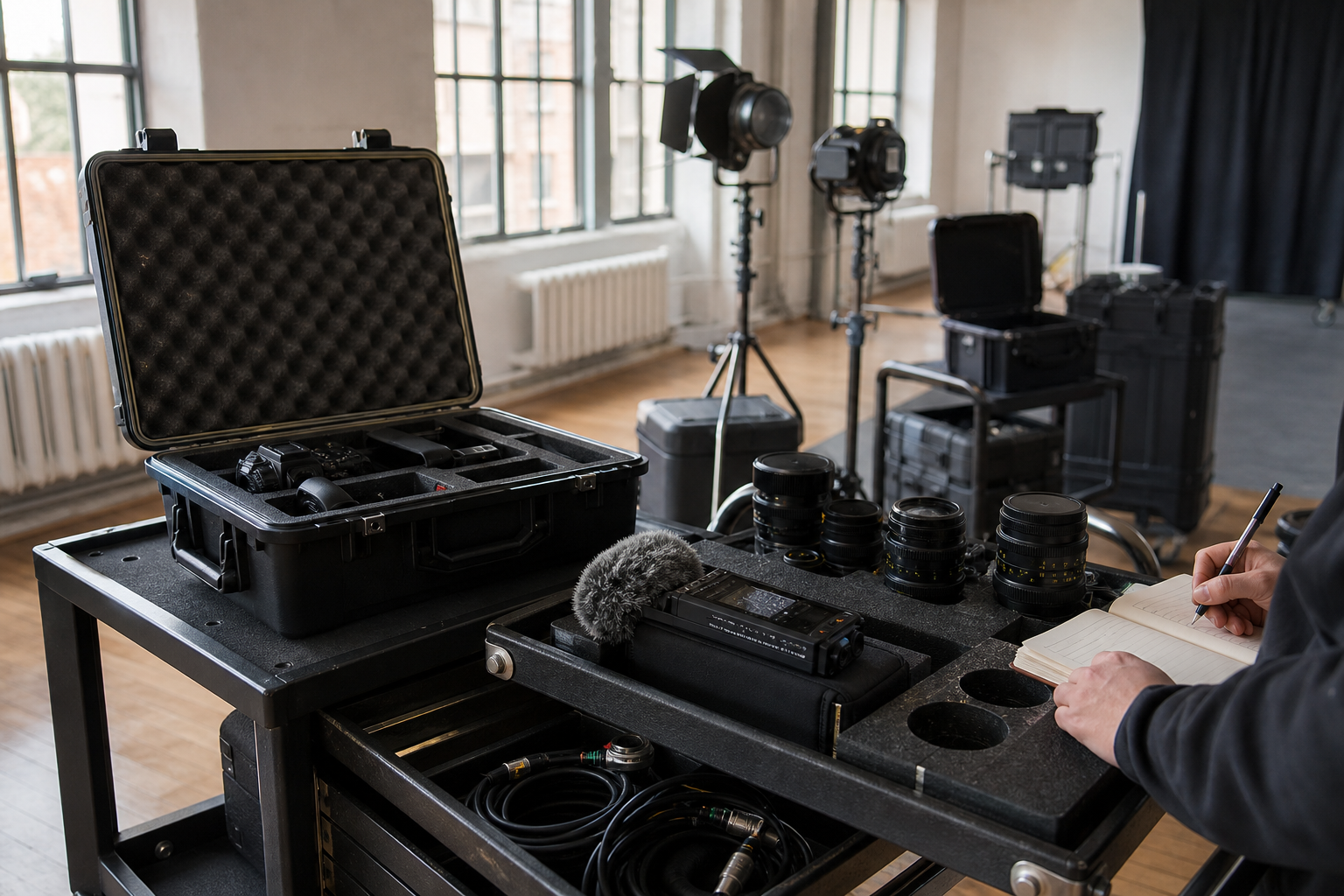
Inventorying film equipment before a location shoot by OpenAI image generation for SetScout Original image generated for SetScout; no third-party source image used
Film Equipment Insurance: Documenting Owned and Rented Gear
A practical checklist for cameras, lighting, sound and rented film equipment: confirm inventory, values, transport, storage and claims procedures before the shoot.

Film insurance for a production at a prepared location by OpenAI image generation for SetScout Original image generated for SetScout; no third-party source image used
Film Insurance for Productions: Coverage, Costs and Location Risks
Which insurance modules a film production should review, which details affect the premium and how to include locations properly in the risk assessment.