
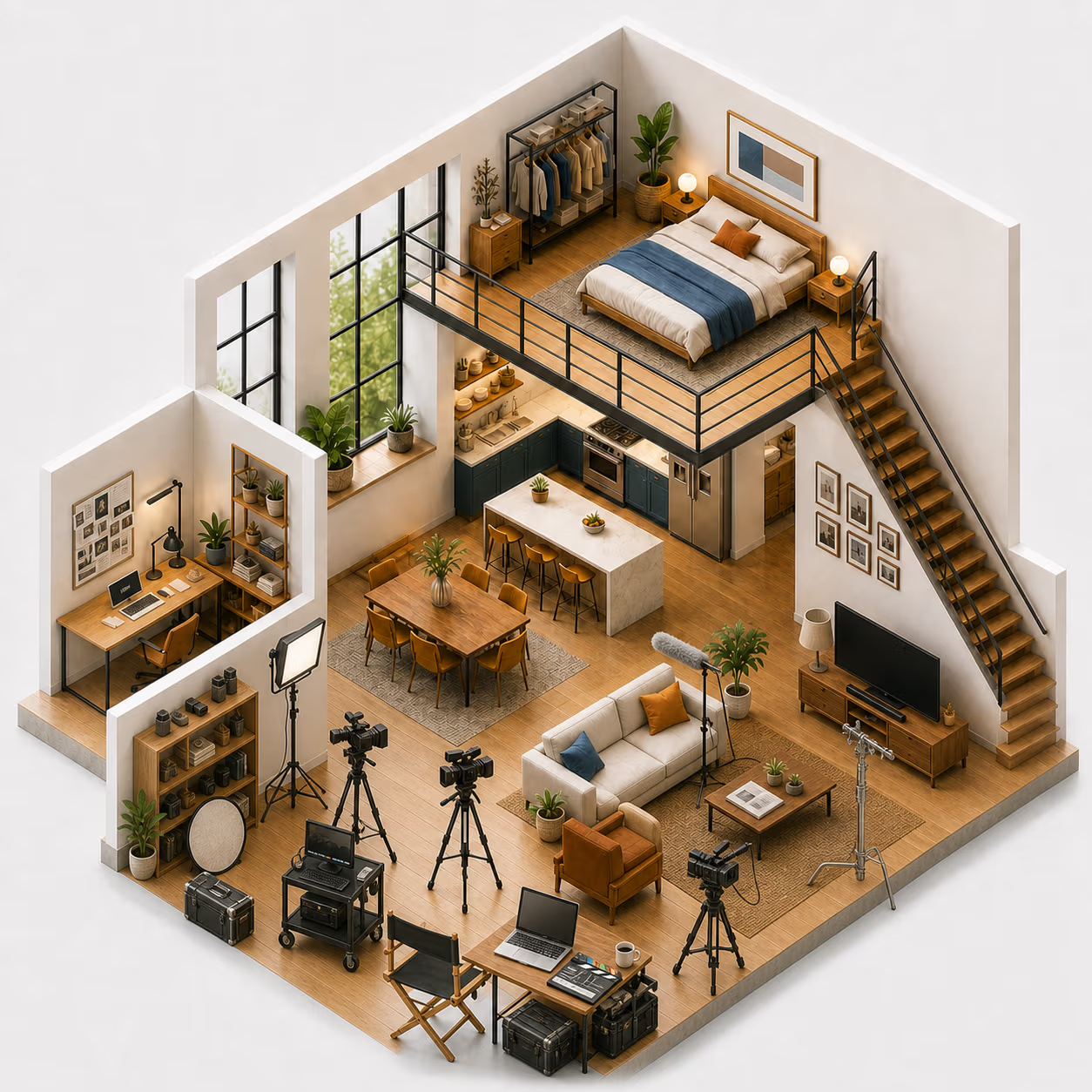
A good look alone does not make a home shoot-ready.
A private household is different from an empty location: beyond the look, a production needs working space, controllable light and sound, access, parking, power, bathrooms and room for crew and equipment. There are also personal belongings, neighbors, perhaps a landlord and rooms no one should see. Good preparation separates what a production may use from what stays protected. On SetScout you decide which inquiries to accept, and the Super Check verifies the standardized location contract and insurance before a booking.
Assess the look, working space and boundaries together.
Your home does not need to be luxurious: a believable family house, period apartment or distinctive lived-in style can fit the brief. What matters is whether camera, lighting, sound and crew can work around the image. Check rooms, ceiling height, windows, echo and outside noise, plus the garden, bathroom, kitchen, parking and support space. At the same time, set no-go areas, a realistic crew limit and a safe place for valuables, documents, medication, photos and pets.
Write down household rules early.
Write house rules down early, not on the shoot day: noise and shooting hours, shoes, food and drink, pets, smoking, furniture moving, wall fixings and whether the stairwell or yard may be used. In a multi-unit building, treat the apartment and common areas separately: the entrance, doorbells, corridor, elevator, courtyard, basement and parking do not automatically come with the apartment. Clarify the loading route, crew size, quiet hours and neighbors. At booking, these rules become binding through the location contract.
Check permission, handover and protection before accepting.
As a tenant you usually need your landlord's consent; in multi-unit buildings the building management and owners' association may have a say. Resolve the consent chain and use of shared routes before publishing. Record furniture positions, sensitive surfaces, restricted areas and condition in photos; agree cleaning, trash, reset, a joint final inspection and when the home becomes private again. Decline if permission, neighbors, protection or reset cannot be resolved reliably. Before any booking, the Super Check verifies the standardized location contract and insurance.
Residential checklist
- Check each usable room for look, working space, ceiling height, light, sound and room for a realistic crew size.
- Mark private rooms and put away valuables, documents, medication, keys, screens and personal photos beforehand.
- Clarify parking, door widths, stairwell, elevator, courtyard and loading route, including permission for shared areas.
- Set rules for crew size, noise, shooting hours, animals and smoking.
- Use before photos to record who handles cleaning and reset, when the home becomes private again and who completes the final inspection.