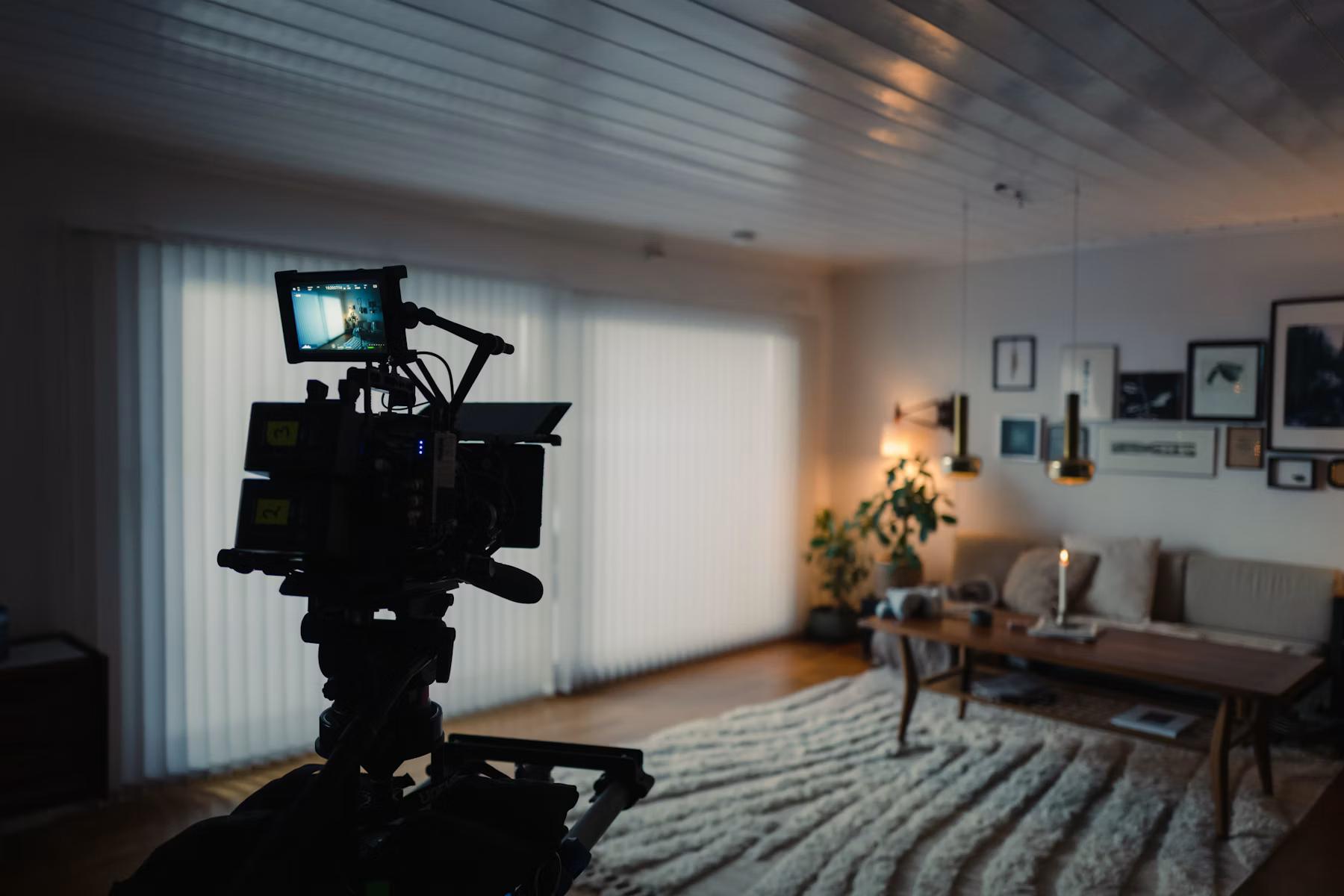
Camera set up on a tripod in a living room by Eirik Skarstein Unsplash License
A good film location listing should attract the right requests and filter out the wrong ones. This guide explains which rooms productions look for, where to set limits and how booking requests work on SetScout.
A film location does not have to be extraordinary. Productions often need believable rooms: a real kitchen, a deep living room, an office reception, a shop, a staircase, a rooftop, a basement, a workshop or a controllable empty space. If you want to offer a film location, start with the rooms and limits you can describe honestly.
Productions judge a room in three layers: look, use and logistics. A beautiful old apartment can work for a small photo team but fail for sound, load-in or parking. A plain office can be stronger if reception, meeting room, kitchen, lift and restrooms are predictable.
SetScout listings can include categories, tags, separate areas, area photos, equipment, rules, availability, price, cancellation and technical notes. This makes the location more than a gallery of pretty corners.
Side areas matter: hallways, staircases, garages, courtyards, loading zones, holding rooms, makeup, wardrobe, storage or a neutral client room. A production may decline a great main room if the team has nowhere to work.
Decline when the scope does not fit your rules: too large a crew, too little notice, unclear insurance, risky effects, loud nights, animals without a protection plan, stunts, drones, smoke, haze, wall mounting or heavy set dressing.
On SetScout, a booking request is non-binding at first. Hosts can ask questions, decline, accept or make a counteroffer. This review step gives you time to check the conditions properly before anything becomes binding.
Concrete rules help. Name crew limits, allowed hours, no drilling, no open flames, no private rooms, no public address sharing and no loud load-in after a certain time. Then create a free SetScout listing.
Productions often need rooms with a clear function and several usable camera angles: kitchens, living rooms, offices, workshops, studios, gardens, hallways, reception spaces and side rooms. The listing should say what can be used on camera and what stays private.
SetScout does not treat a host location like a loose classified ad. The listing captures category, tags, address, basic facts, facilities, photos, areas, rules, price, cancellation policy, booking lead time and availability, so productions can review practical conditions as well as the look.
A request is non-binding at first. It includes the project, the listing, the conversation so far, the requested dates, the offered price and a briefing. Hosts review it in their inbox and can accept, decline or send a counteroffer with a different amount.
After the host accepts, the production chooses between booking directly and arranging a location viewing (recce) first. If needed, the next steps are a final price agreement, the location contract, an insurance check and payment via Stripe. The host payout then follows in two EUR instalments.
Before accepting a request, run through the hard production points in writing. That way an attractive location will not fail on shoot day because access, neighbors, protection or responsibility was unclear.
More posts you might be interested in
Filming setup with cameras and lighting equipment by Andrej Lišakov Unsplash License
Offering a location for film, TV or photography takes more than attractive rooms. This guide explains suitability, photos, rules, privacy, requests, contracts, insurance and the SetScout flow.
Living room filled with furniture and a flat screen tv by Yevhenii Deshko Unsplash License
Apartments can be strong filming locations, but they need permission, house rules, neighbor planning, privacy protection and a realistic reset plan.
Elegant event space set with round tables for dining by Filip Rankovic Grobgaard Unsplash License
Event venues can be strong film and photo locations, but shoots need different checks: image rights, restricted areas, load-in, crew, reset and downtime.
