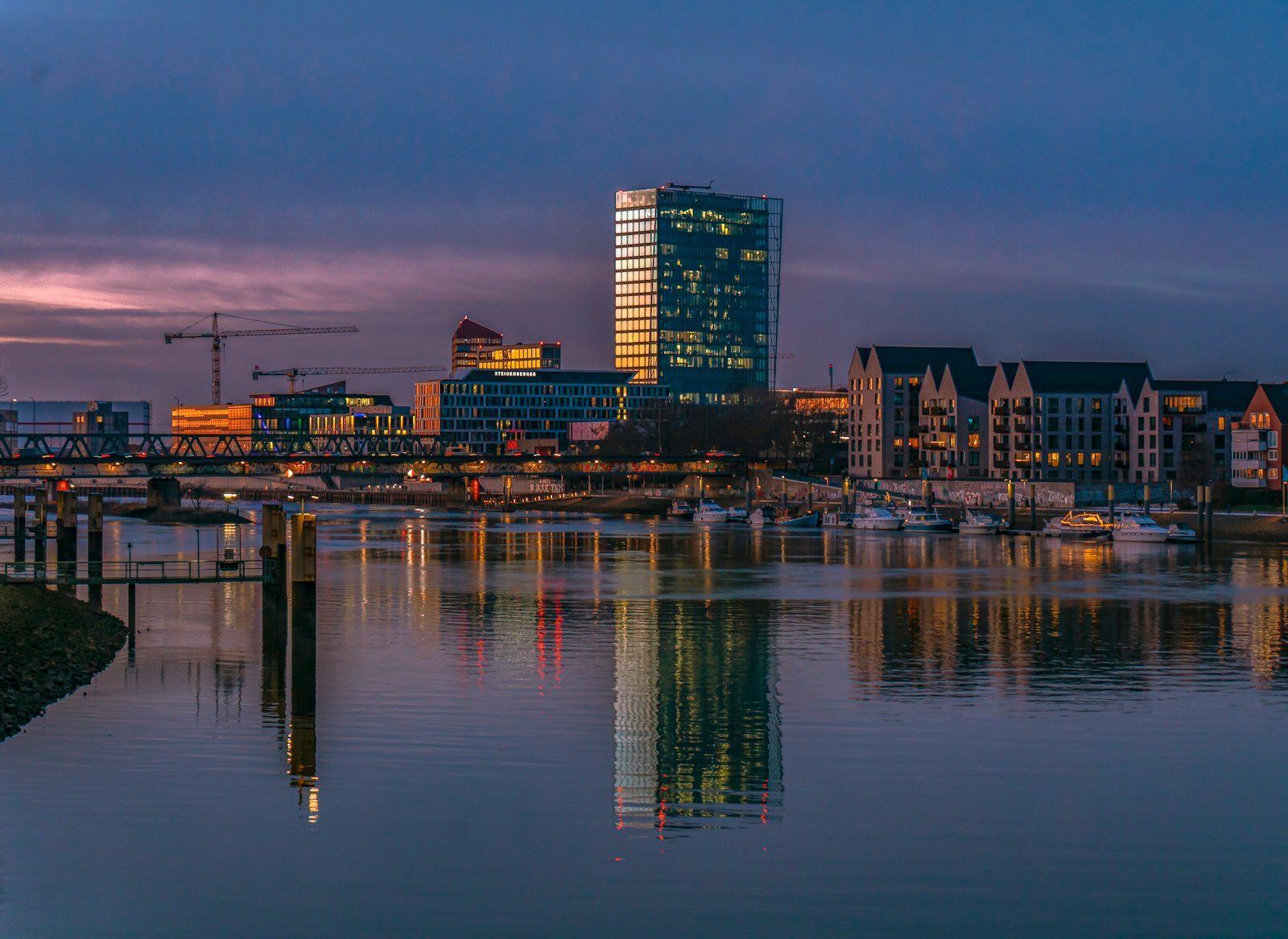
Photo by Jahanzeb Ahsan on Unsplash by Jahanzeb Ahsan Unsplash License
When Hannover or Bremen can be stronger than Hamburg for northern Germany shoots: motifs, logistics, permits, parking, budget and regional contacts.
Hamburg is often the default choice for northern Germany shoots: harbor, agencies, studios, crews, hotels and a clear media context. But many productions should still compare Hannover and Bremen before locking the plan. Both cities offer distinct looks, different owner structures, usable logistics and less obvious imagery without moving the production out of northern Germany.
Use Hamburg as the benchmark, then compare film locations in Hamburg with targeted locations in Hannover and locations in Bremen. This guide explains when Hannover or Bremen can be the stronger production choice and what needs to be checked before the location request.
Hamburg is strong, but it is also obvious and heavily requested. That matters when a production needs private houses, industrial spaces, waterfront access, parking, street control or short-notice options. Hannover and Bremen can work better when the brief needs a northern German feel rather than an unmistakable Hamburg image.
The value is rarely one cheap day rate. It is usually the combined effect of less familiar imagery, easier comparison between alternatives, different ownership patterns, usable side areas, hotel availability, simpler routing and a better fit between location, unit base and travel.
Hannover is not a substitute version of Hamburg. It is useful for productions that need modern offices, trade fair or congress context, public institutions, universities, clinics, science environments, broad streets, residential districts and nearby Lower Saxony countryside. The look can be functional, accessible and less iconic, which is often exactly what advertising, corporate film, series work or documentary formats need.
Individual prestige locations still need owner approval. Herrenhäuser Gärten, for example, separates private or editorial photography from other uses and publishes specific photo and film permit information. Leibniz University Hannover also uses its own application for photo and filming permits. The practical rule is simple: a useful regional market does not replace permission from the owner or operator of the actual motif.
Bremen becomes attractive when the production needs water, warehouses, harbor infrastructure, the Weser, old town texture, brick, smaller streets, maritime industry or northern German civic history without immediately reading as Hamburg. Bremen and Bremerhaven can provide settings that feel more compact, rougher or more specific.
That matters when Hamburg would be too recognizable. A car brand, B2B campaign, series or music video may not need a globally legible port. It may need a credible northern working, residential or waterfront environment. Bremen can deliver that tone without triggering the same expectations in every frame.
For Lower Saxony and Bremen, the nordmedia Film Commission is the key official starting point. It supports location research, regional contacts, service providers and orientation around filming conditions. For productions comparing Hannover, Bremen, Bremerhaven, rural areas and smaller cities, this regional layer can be more useful than a city-only search.
Nordmedia also provides a Location Guide for Lower Saxony and Bremen. It is not a substitute for a scout or owner check, but it is a good reality check: what types of public and private motifs exist, which contacts are visible, and which alternatives are close enough to Hamburg, Berlin or the planned crew base?
A common mistake is assuming smaller markets are automatically simple. Nordmedia explains in its filming permit information that Lower Saxony and Bremen generally do not require a general filming permit as long as the shoot does not create traffic-obstructing measures or restrictive setups in public street space. That is useful, but it is not a blanket clearance.
As soon as no-parking zones, closures, equipment on public areas, larger teams, drones, safety questions, night work, noise, public footfall or owner-controlled areas are involved, the production needs specific coordination. The local production information at bremen.film also points to the importance of details by motif and use. Plan access, parking, neighbors, power, routes and time windows together with the location itself.
Hannover or Bremen often make sense when a project needs a northern German tone without the instant recognition of Hamburg. They are also strong when a production needs to cluster several motifs within practical distance: office, home, warehouse, street, waterfront, park, commercial area, hotel and unit base. The more the motifs have to function together, the more regional availability matters.
Budget should be calculated plainly. A cheaper location does not help if extra travel days, hotels, transport, parking or permit handling erase the saving. The reverse is also true: a less obvious market can save money when crew routing, side areas, location moves and owner communication fit together more cleanly.
A strong request for Hannover or Bremen should ask for more than reference images. Include production type, the role of the motif, shoot date, crew size, technical vehicles, loading needs, sound requirements, day or night work, parking, set dressing, power, safety questions, requested control areas and backup motifs. The clearer these points are, the faster the market fit becomes visible.
You can start with the broader SetScout location search and then compare Hamburg, Hannover and Bremen directly. The right choice is not about city preference. It is about motif function: which place gives the production the image, access, budget and logistics with the least friction?
Hamburg remains a strong production city, but not every northern Germany shoot should start there. Hannover is useful for trade fair context, institutions, offices, science, residential districts and Lower Saxony edges. Bremen is strong for water, harbor, warehouses, old town, brick and maritime industry. Teams that connect those profiles with permits, owner approval, parking and crew logistics early often find better alternatives than a rushed Hamburg-only search.
More posts you might be interested in
Photo by Joey Banks on Unsplash by Joey Banks Unsplash License
A practical access planning guide for productions and hosts documenting real routes, bathrooms, ramps, holding and limitations before booking.
Photo by Ryan Liu on Unsplash by Ryan Liu Unsplash License
How productions should prepare bar, club and nightclub locations for music videos, fashion, commercials and nightlife content.
Photo by Peter Herrmann on Unsplash by Peter Herrmann Unsplash License
How productions should assess bunker, lost-place and special-motif locations without creating legal or safety risk.
