Photo by benjamin lehman on Unsplash by benjamin lehman Unsplash License
Green screen studio, real location or hybrid: compare post-production, scouting, lighting, tracking and approval risk before booking.
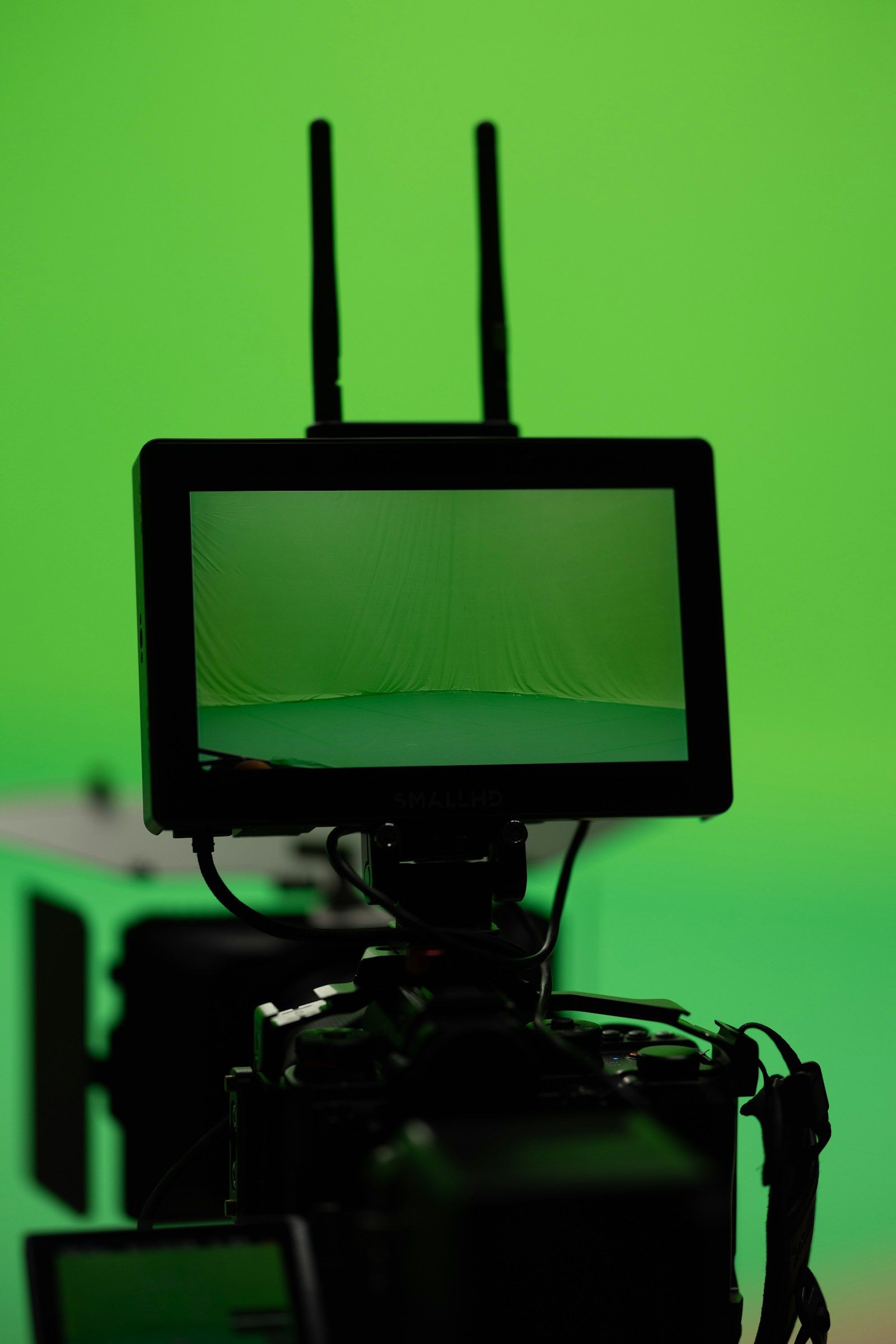
A green screen studio is the right choice when the production is deliberately buying control, repeatability and post-production flexibility. It is not automatically cheaper than location scouting. Green screen becomes cost-effective only when lighting, tracking, perspective, reflections, talent interaction and approvals are planned from the start.
This comparison helps producers decide whether a green screen studio, a real location or a hybrid shoot makes sense. Start with film studios on SetScout, compare rental studio or real location and use renting a film studio or dressing a location as the budget framework.
Green screen works when the background is variable, unsafe, far away, hard to permit or likely to change. A real location works better when texture, light, depth and interaction matter. Hybrid often wins: real foreground pieces plus a digitally extended background.
Green screen saves scouting time only when the set is prepared for keying and compositing. Bad lighting, green spill, mismatched sightlines or missing references move the cost into post. The studio choice can look cheap in the estimate and become expensive later.
Do not ask only: studio or location? Ask which parts of the image must be real, which can be digital and what post-production needs to know on the shoot day.
A green screen studio is strong when you need control over space, light and repeatability. Product films, presenters, explainers, safety-sensitive scenes, inaccessible places, international backgrounds and recurring campaigns can benefit from separating foreground and background.
It can also help when approval loops are tight. If clients want to test several backgrounds, if language versions will be reshot or if a location cannot be accessed for legal or practical reasons, a controlled workflow can cost less than a new location search.
The studio still has to work operationally. Check floor area, cyclorama or clean green surface, height, distance between talent and screen, controllable lighting, sound, power, tracking options, make-up space and load-in. Use film studio rental to evaluate the room beyond the green wall.
A real location is better when performance, camera and lighting need to interact with the room. Mirrors, windows, metal, glass, wet surfaces, tight corridors, complex shadows, crowds or tactile details can make green screen more expensive than shooting the real place.
Real also wins when the background is not just scenery. If performers open doors, cross floors, lean on walls, move through patches of light or handle props, a real location gives them orientation and believable physics.
For texture-heavy scenes, build a real location shortlist first. The guide to rental studio vs real location helps decide when control matters more and when authenticity is worth the logistics.
Hybrid is often the practical middle ground. Build or book real foreground elements and extend only what is expensive, unsafe or inaccessible: skyline, window view, distant hall, traffic, crowd or product environment.
The benefit is simple: performers have real reference points, light and shadow have a base, and post-production does not have to invent the entire room. The tradeoff is coordination between art department, camera, lighting and post.
Green screen needs even lighting and distance. If green light spills onto skin, hair, wardrobe or glossy products, keying becomes harder. What looks minor on set can become many extra post-production hours.
Moving camera is possible, but it needs tracking markers, lens information and correct perspective. The more the camera dollies, pans or uses parallax, the earlier post-production should be involved.
Cars, glass, jewelry, bottles, water, screens and glossy furniture quickly reveal that the room is not real. If these surfaces are central to the shot, a real location may be cheaper than digital cleanup.
Performers need reference points. Marks, props, eyelines, floor texture and real edges help movement feel grounded. Without those anchors, green screen can look flat.
Green screen invites late changes. That is useful when versioning is planned. It becomes expensive when the look, perspective and background are not decided until after the shoot.
Choose green screen for controlled foregrounds, replaceable backgrounds and a clear post plan. Choose a real location when texture, depth, light and interaction carry the look. Choose hybrid when a real foreground gives credibility and only the background needs flexibility.
Useful rule: if more than half of the image value comes from light, material and spatial depth, scout real locations first. If more than half comes from replaceability, safety or background variation, test studio or hybrid first.
Clarify scene list, camera, lenses, movement, talent distance, props, reflective materials, tracking needs, lighting plan, planned backgrounds, approval loops, post budget and ownership. The earlier these points are known, the more honest the comparison becomes.
Do not send a request that only says “we need green screen.” Describe the production goal: which foreground must be real, which background will be digital and which versions are planned. Then use SetScout to compare real locations and studio environments side by side.
Sometimes. Green screen can be cheaper when scouting, permits, travel or safety needs would be high and the digital background is well planned. It becomes expensive when lighting, reflections, tracking or approvals are solved only after the shoot.
A real location is better when material, depth, shadows, windows, mirrors, movement or performer interaction matter. Making those details believable digitally can cost more than finding a strong location.
Look for enough distance, controllable light, a clean cyclorama or green surface, height, quiet sound conditions, power, make-up and holding areas, load-in, prop space and the ability to place tracking markers and real reference elements cleanly.
Compare green screen studio, real location and hybrid with the same criteria. Start with film studios, check real locations for texture and logistics, then decide whether post-production is genuinely cheaper than location scouting.
More posts you might be interested in
Photo by Joey Banks on Unsplash by Joey Banks Unsplash License
A practical access planning guide for productions and hosts documenting real routes, bathrooms, ramps, holding and limitations before booking.
Photo by Ryan Liu on Unsplash by Ryan Liu Unsplash License
How productions should prepare bar, club and nightclub locations for music videos, fashion, commercials and nightlife content.
Photo by Peter Herrmann on Unsplash by Peter Herrmann Unsplash License
How productions should assess bunker, lost-place and special-motif locations without creating legal or safety risk.
