
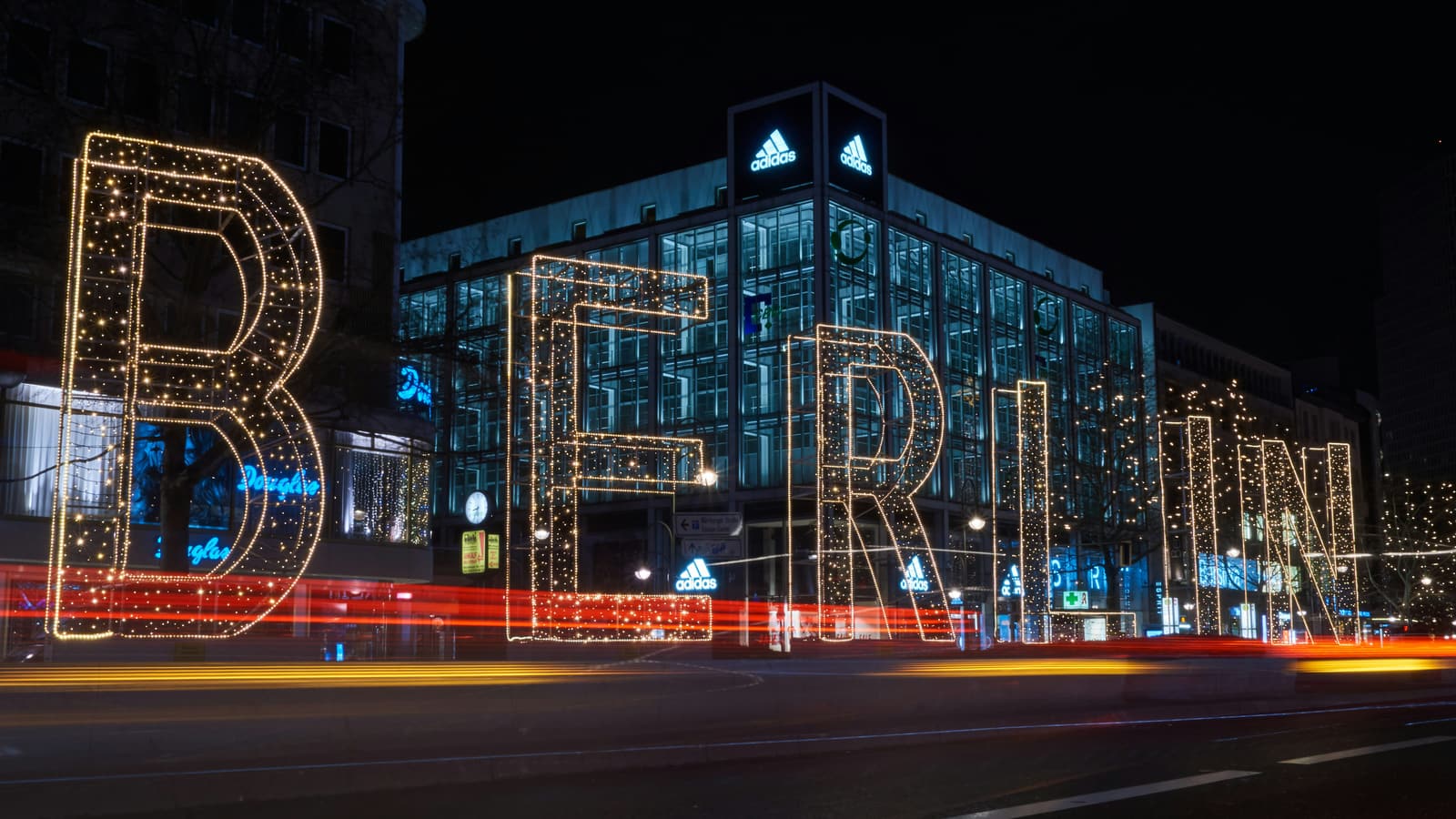
Berlin lighted free standing signage during night time by Levin / Unsplash Unsplash License
Berlin filming permits 2026: streets, parks, small crews and night shoots
What production teams should clarify before filming in Berlin: public land, small crews, parks, night shoots, private locations and the details needed for a usable permit request.
A Berlin location is not ready for production just because it looks right. For filming permits in Berlin, the decisive questions are where the crew stands, whether public space is used, whether traffic is affected and whether the shoot falls into protected quiet hours.
This guide does not replace guidance from the authorities. It gives producers, production managers and agency teams a practical decision path before they request a location, block a shoot day or submit an incomplete application.
Quick takeaways for productions
- If a shoot goes beyond ordinary public use, assume that a permit route must be checked.
- Public areas usually involve a special-use permit. Traffic measures such as no-parking zones, road closures or playing areas may require an additional traffic order.
- Small crews are easier to process, but not permit-free. Night shoots, Sundays, parks and tourist sites each have separate contacts and lead times.
Which filming permit do you need in Berlin?
The short answer: it depends on whether the shoot is private, municipal, tourist-related or on public streets. The Berlin Brandenburg Film Commission states that filming in Berlin and Brandenburg beyond ordinary public use is generally subject to approval, except for current news reporting (BBFC: filming on public streets).
For production planning, the key question is not the label on the location. It is what the crew actually uses. The scene may be inside a private apartment, but lighting stands may sit on the pavement. The apartment may be booked, but the unit vehicles may need no-parking zones. That is where permit issues usually appear.
Public streets: special use is the standard case
If your team uses public areas for filming, Berlin usually treats this as a special use of public land. The BBFC lists streets, pavements and squares as examples and explains that this special-use permit is needed for filming on public areas (BBFC).
Plan this check even when the actual scene is indoors. As soon as catering, camera stands, lighting, green walls, cables, barriers or unit vehicles occupy public space, the shoot is no longer only a private room booking.
When a traffic order is added
A traffic order becomes relevant when the shoot affects traffic. This includes no-parking zones for unit vehicles, playing areas, intermittent closures, larger setups or anything that affects pedestrians or vehicles. Berlin Mitte describes these cases as requiring not only district special-use approval, but also a traffic order (Berlin.de: film and photo shoots).
One detail matters: the General Filming Permit is not a shooting permit. According to the BBFC, it is a prerequisite for applying for traffic-related orders and serves, among other things, as evidence of insurance coverage (BBFC).
Small crews: simpler does not mean permit-free
According to the BBFC, small crews in Berlin do not need a traffic-authority filming permit, but they still need special permission from the relevant district office or civil engineering department. That distinction is important: a lighter process is still an application (BBFC: small crews).
For a small social video or a documentary scene, the small-crew route may fit. Once vehicles are reserved, stands are set up, paths are blocked, green areas are used or quiet hours are involved, check the case again.
Parks and green spaces have separate rules
For parks, do not only think about the district office. Grün Berlin requires permission for commercial photo and film shoots in its parks or projects and requires a location agreement for commercial use of the material (Grün Berlin: requests and permits).
This can apply to more than large film sets. A compact commercial shoot with tripod, team, styling and commercial usage can be treated differently from a private photo. Clarify early whether the site belongs to a district, Grün Berlin, a foundation, museum, university or another owner.
Night shoots, Sundays and holidays need more lead time
Shoots between 22:00 and 06:00 require approval from the responsible environmental authority, according to the BBFC. Filming on Sundays is also subject to approval and requires an exemption from the relevant environmental office. The BBFC lists a lead time of up to four weeks for quiet-hour applications, depending on the district (BBFC: quiet hours).
Also check current notices. For example, the BBFC reported a temporary stop on filming approvals on the Rote Insel in Tempelhof-Schöneberg until 31 December 2026, with a narrow exception for Lucie-Leydicke-Platz (BBFC: current notices). Notices like this can rule out an otherwise suitable location.
Private locations: owner approval only covers the private part
On private land or in private facilities, the owner is the main permission giver. The BBFC identifies the owner approval as the relevant permission route for private locations (BBFC).
Still, do not treat the private location in isolation. Stairwell, courtyard, pavement, no-parking zone, loading path, generator, drone and exterior shots can trigger additional approvals or consent. That is why permit checks belong in the location review, not in the final week before production.
What information belongs in the application?
A good application reads like a precise production brief. The more concrete you are, the faster an authority, district office or location owner can assess the case. Vague details usually lead to questions, not flexibility.
- Production type, title, client and responsible on-site contact
- Location address, exact areas, site plan and areas for setup, action, catering and technical equipment
- Date, backup date, setup, filming, strike and planned quiet-hour use
- Crew size, vehicles, no-parking zones, closures, lighting, sound, power, generators and expected noise
- Insurance proof, owner approval, location agreement and sensitive content, where relevant
The practical workflow before requesting a location
Do not start with the form. Start with the location risk. A simple interior scene in a private apartment needs different preparation than a night shoot with unit vehicles outside. Work from the inside outward: room, building, property, pavement, street, park, quiet hours.
- Define the scene: interior or exterior, day or night, crew size, vehicles, equipment, sound and lighting.
- Mark every area used: rooms, courtyard, entrance, pavement, street, parking area, loading zone and catering.
- Identify the responsible party: owner, district office, civil engineering department, green-space authority, environmental authority, tourist site owner or BBFC contact point.
- Request the location only with complete basics so price, availability and permit risk can be assessed together.
How SetScout helps with preparation
SetScout does not replace the authorities. It helps you collect the right location data early: rooms, use, crew size, access, parking, availability and request context. Start with shooting locations in Berlin or plan the search through location scouting in Berlin.
FAQ about filming permits in Berlin
Do I need a filming permit for a private apartment?
For the private location itself, you usually need owner approval and a proper location agreement. If the shoot uses the pavement, street, courtyard, parking, exterior areas, drones, loud sound or quiet hours, additional permits or approvals may be needed.
Is a small crew permit-free in Berlin?
No. According to the BBFC, small crews do not need a traffic-authority filming permit, but they still need special permission from the relevant district office or civil engineering department. The process is lighter, but it is still an application.
How long does a Berlin filming permit take?
It depends on district, location, traffic impact, quiet hours and whether the application is complete. Berlin Mitte lists about 10 to 14 working days for regular applications and at least 14 days for traffic-restricting measures. The BBFC lists up to four weeks for quiet-hour applications.
Where can I find the official forms?
The BBFC collects application forms for Berlin and Brandenburg on its forms page. Always use the current official source and also check whether a district, park operator or private location owner requires separate documents (BBFC: application forms).
Matching film locations
Find bookable locations for the topic of this article here:
Filming permits compared by city
Responsible offices, fees, lead times and online applications for 30 German cities, each with an official source.
See the 2026 city comparisonRecommended articles
More posts you might be interested in

none by Jakub Zerdzicki All photos and videos on Pexels can be downloaded and used for free.
Tax rules for income from renting out a film location
How to report profits from renting out your location correctly for German tax purposes
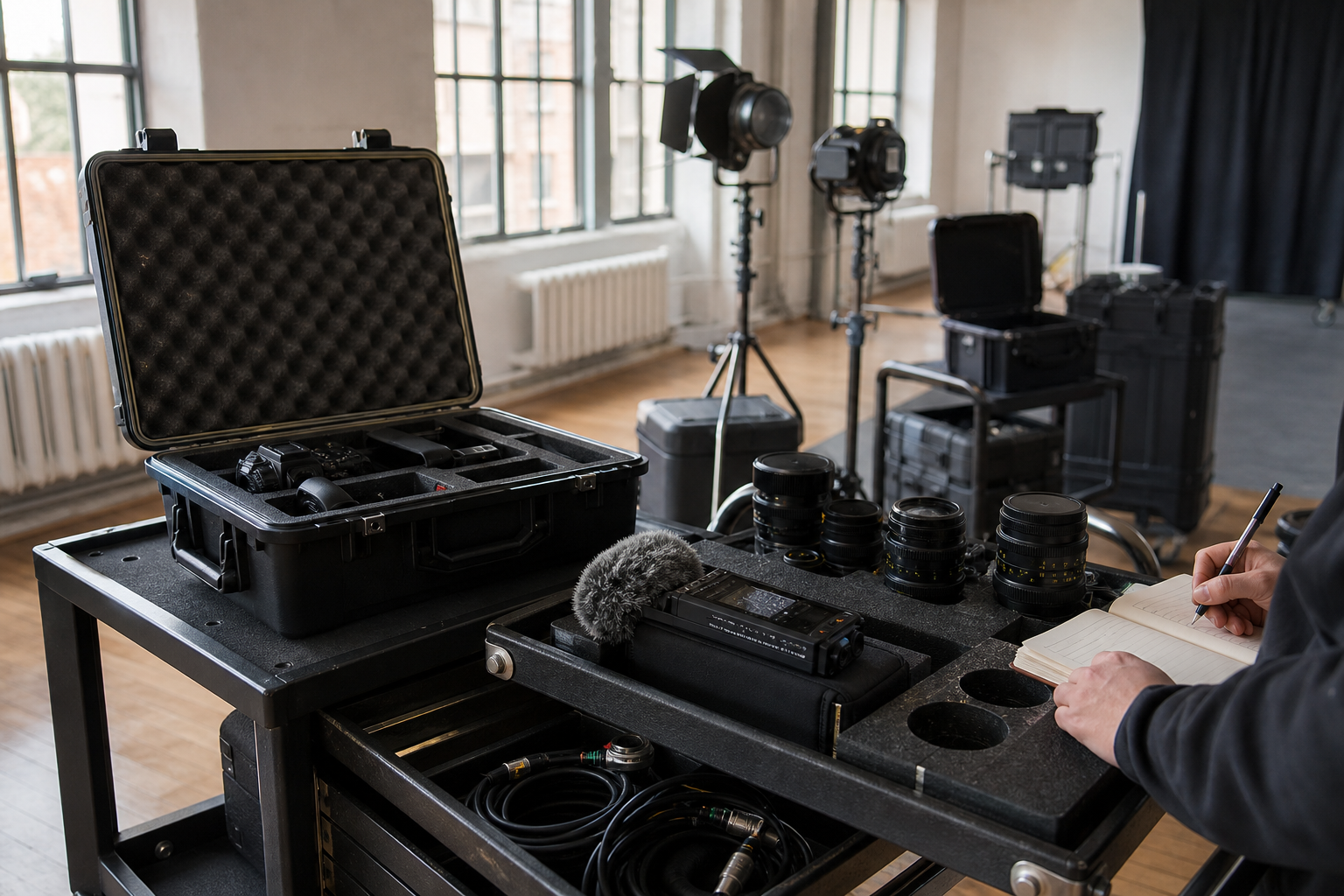
Inventorying film equipment before a location shoot by OpenAI image generation for SetScout Original image generated for SetScout; no third-party source image used
Film Equipment Insurance: Documenting Owned and Rented Gear
A practical checklist for cameras, lighting, sound and rented film equipment: confirm inventory, values, transport, storage and claims procedures before the shoot.
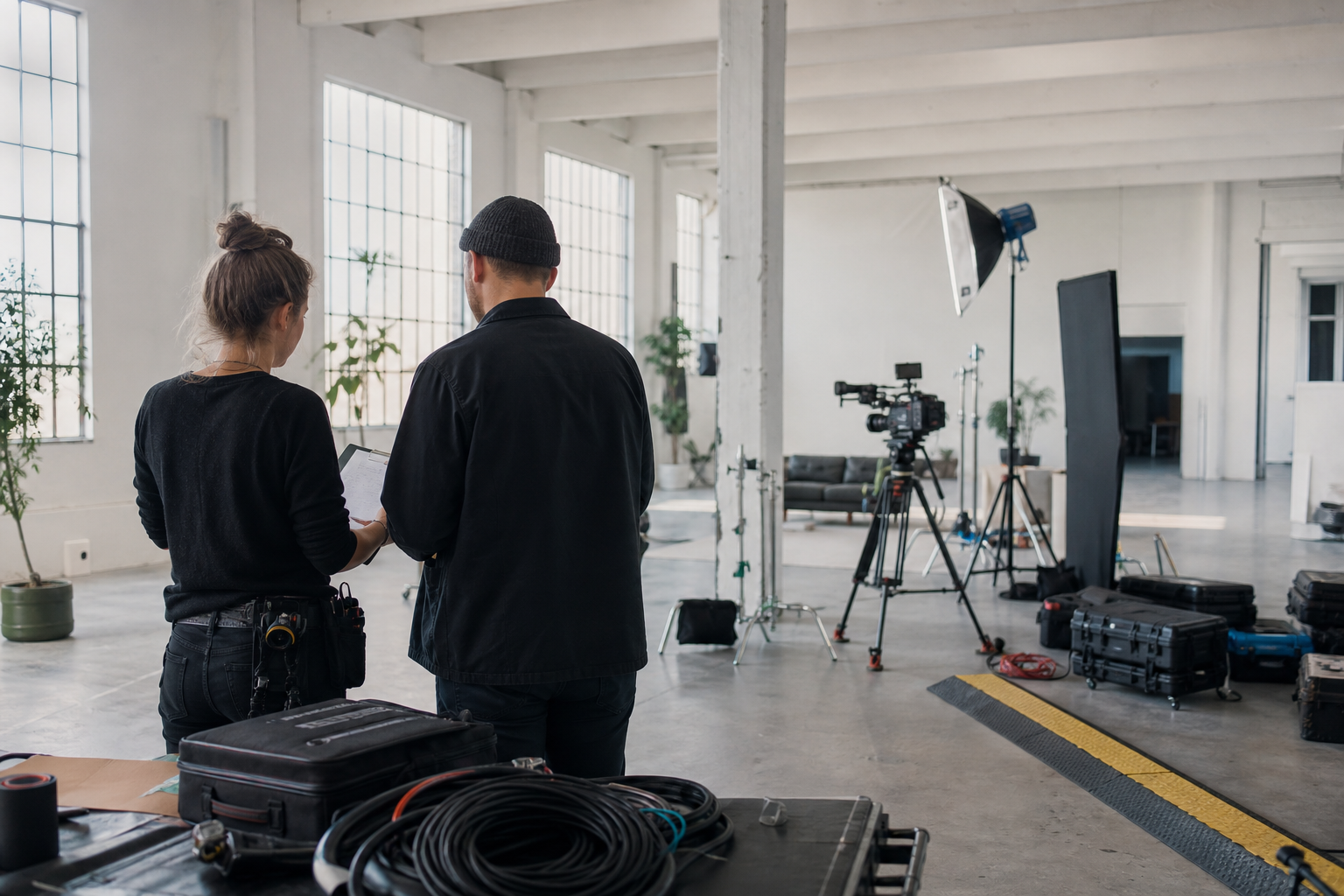
Film insurance for a production at a prepared location by OpenAI image generation for SetScout Original image generated for SetScout; no third-party source image used
Film Insurance for Productions: Coverage, Costs and Location Risks
Which insurance modules a film production should review, which details affect the premium and how to include locations properly in the risk assessment.