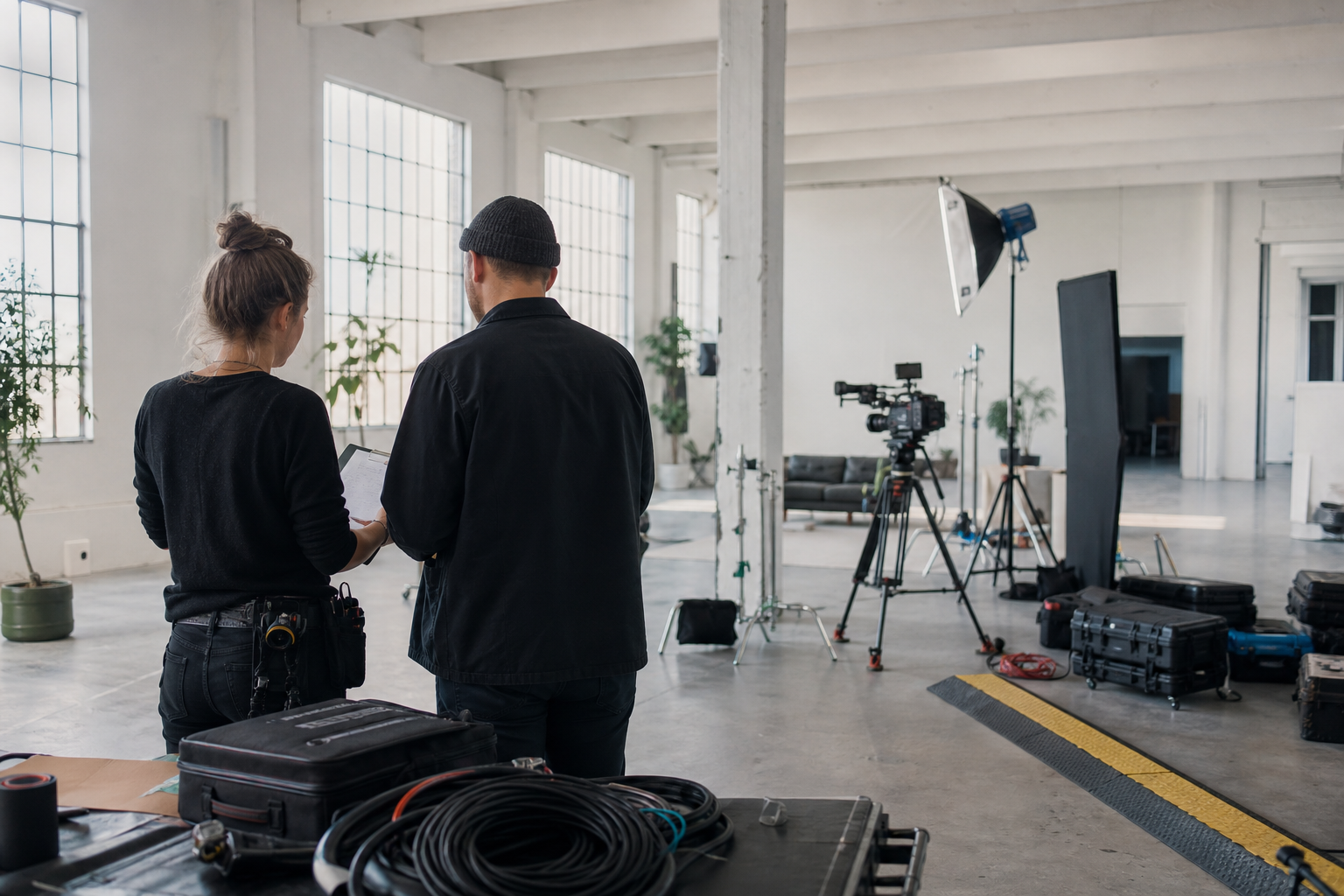
Film insurance for a production at a prepared location by OpenAI image generation for SetScout Original image generated for SetScout; no third-party source image used
Which insurance modules a film production should review, which details affect the premium and how to include locations properly in the risk assessment.
Film insurance is usually not a single standard product that automatically covers every production risk. It makes more sense to break the production down into specific areas of risk: people, equipment, props, liability, interruption and additional location-related costs. Only then can you assess which modules are actually needed.
This article provides general guidance for productions in Germany. It is not individual insurance or legal advice. Terms, exclusions, deductibles, territories of cover and premiums vary by provider, contract and production. Binding cover should always be confirmed in writing with a qualified insurer or specialist broker.
In practice, film insurance often refers to a package of selectable coverage modules. A current overview from BarmeniaGothaer lists cover for cast and property production loss, image and sound media, film equipment, props, cash, group accident and production liability, among other areas. This list is one provider's example, not a general recommendation.
For its risk assessment, Allianz Commercial describes factors including the script, shooting schedule, budget, cast, stunts, locations and equipment. This project-specific approach explains why blanket statements such as “film insurance always costs x per cent” provide little reliable guidance for a specific production.
Production liability insurance concerns third-party liability claims, for example if members of the production damage someone else's property. For location providers, the name of an insurance product alone is not enough; they need evidence that matches the production. Our guide to production liability insurance for location providers explains which details should be checked on a certificate.
Camera, lighting, sound, data storage media and props may present different risks and have different owners. Rented equipment often needs to be documented differently from equipment owned by the production. A precise inventory is more useful here than a broad collective entry. Our detailed equipment insurance checklist for film productions explains which information should be assembled before load-in.
Production-loss modules may cover defined additional costs if an insured person or item becomes unavailable for a reason covered by the contract. They do not cover every delay. Our guide to film production interruption insurance explains how the shooting schedule, location and replacement options interact.
A filming location is more than an address. It affects access, workflows, protective measures and potential consequential costs. A sound enquiry therefore describes not only the setting, but also how it will actually be used.
Many of these points are addressed during a technical location recce in any case. When the recce report, location agreement, insurance enquiry and production plan are based on the same facts, the risk of conflicting information is reduced.
There is no credible one-size-fits-all figure for film insurance costs. The premium may depend on the production budget, shoot period, territory of cover, scope of the modules, deductibles, value of the equipment, number of insured people, locations, stunts and claims history, among other factors. Whether filming takes place worldwide, only in certain countries or exclusively at named locations may also be relevant.
The official General Terms and Conditions for Film Insurance 2022 from a German provider illustrate that the start and end of cover, insured perils and policyholder obligations are governed by the contract. Other providers and more recent terms may differ. For budgeting purposes, the specific quotation matters, not an unverified benchmark from another project.
The earlier the core information is complete, the more precisely an insurer can ask follow-up questions. A concise risk pack should include at least:
The location agreement should also align with the insured activities and periods. Insurance questions cannot be resolved if the liability provisions in the agreement remain unclear.
These points belong in a written confirmation before the policy is bound and before call time. A verbal assumption or a similarly named product from an earlier project is not reliable evidence.
The most efficient workflow connects location research, the recce and risk assessment. On SetScout productions can research suitable filming locations and prepare their location enquiry with the relevant key details. The insurance decision remains with the production team and its qualified advisers, but thorough location documentation provides a better basis for that decision.
There is no universal answer. Obligations may arise from contracts, client requirements, permits or the specific activity involved. The cover required or appropriate for the project should be assessed by qualified professionals and, where necessary, legal advisers.
Not automatically. What matters is which activities, losses, people, countries and contractual risks are actually covered. An insurer should confirm in writing whether the specific production is included.
As soon as the shooting schedule, budget, key personnel, equipment and main locations can be described reliably. High-risk scenes or international shoots usually require more lead time for follow-up questions.
It is common to provide an insurance certificate tailored to the production, stating the policyholder, period, type of cover and relevant limits. The location provider should establish which details are required with its own professional adviser and the production team.
More posts you might be interested in

none by Jakub Zerdzicki All photos and videos on Pexels can be downloaded and used for free.
How to report profits from renting out your location correctly for German tax purposes
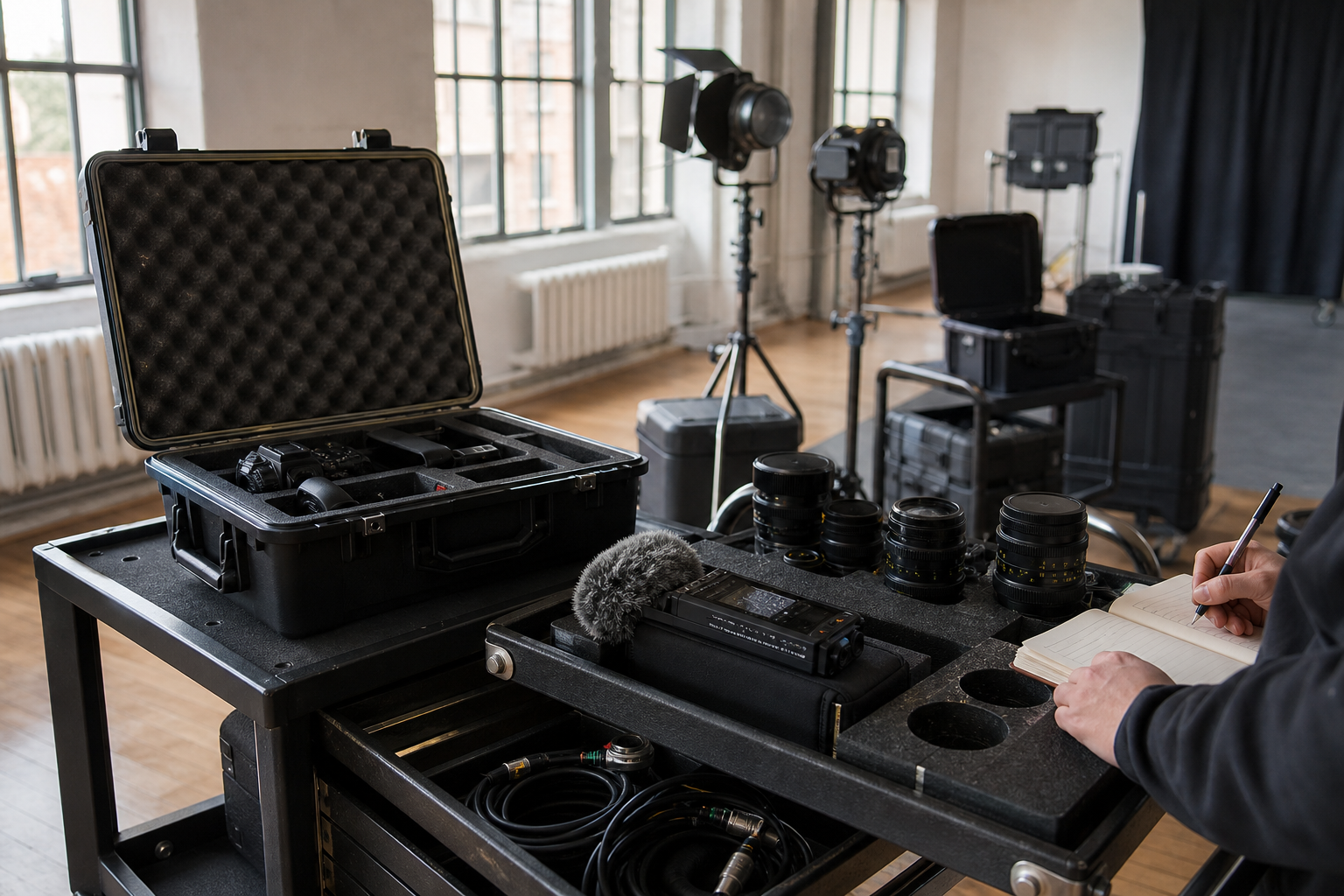
Inventorying film equipment before a location shoot
A practical checklist for cameras, lighting, sound and rented film equipment: confirm inventory, values, transport, storage and claims procedures before the shoot.
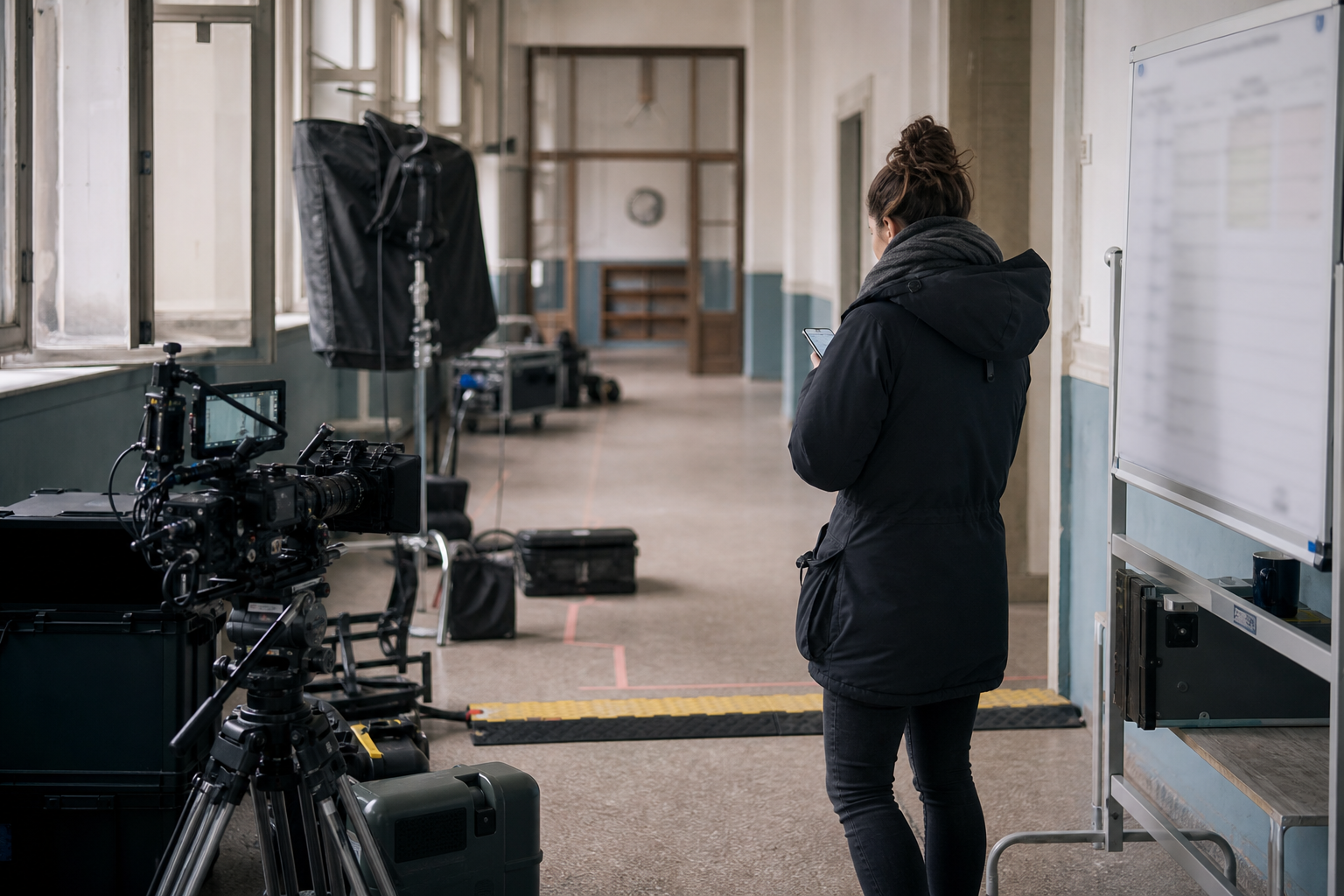
Planned production stoppage at a film location by OpenAI image generation for SetScout Original image generated for SetScout; no third-party source image used
How productions can systematically assess key-person and property interruptions, location dependencies, exclusions, and additional costs before filming begins.
SetScout is funded through the EXIST program by the Federal Ministry for Economic Affairs and Energy and the European Social Fund Plus (ESF Plus).