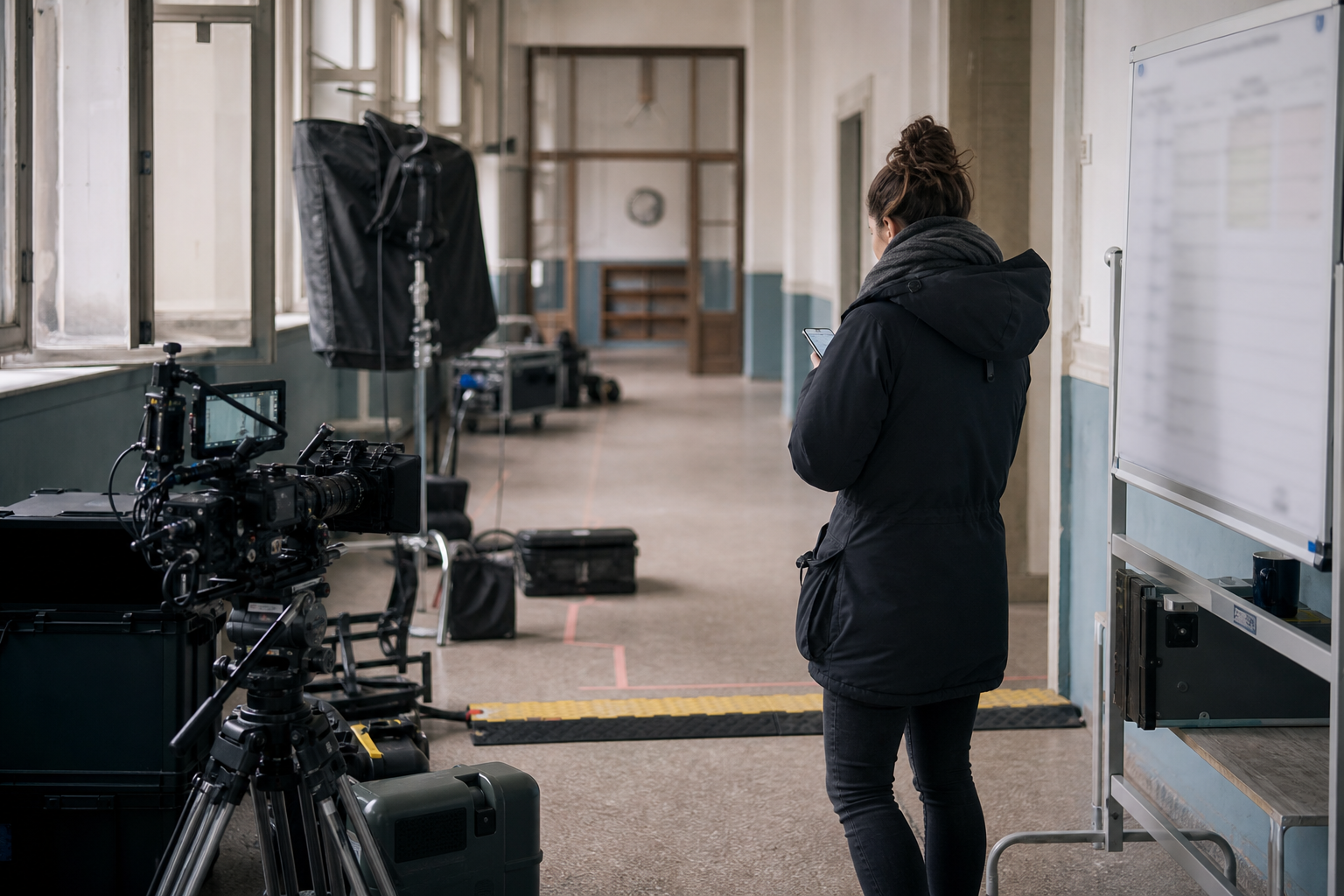
Planned production stoppage at a film location by OpenAI image generation for SetScout Original image generated for SetScout; no third-party source image used
How productions can systematically assess key-person and property interruptions, location dependencies, exclusions, and additional costs before filming begins.
Film production interruption insurance is not blanket protection against every delay on set. Depending on the policy, it may cover defined additional costs or losses when an expressly insured event interrupts, postpones, or ends production. The assessment therefore starts not with the word “interruption,” but with three questions: What could become unavailable, for what reason, and what additional costs would result?
This article provides general educational information and is not individual insurance or legal advice. Terms, exclusions, deductibles, insured people and property, and geographical scope vary. Before booking a location and starting the shoot, a qualified professional should review the specific production and the current policy.
Film production interruption insurance is often used as an umbrella term for key-person and property interruption cover. The BarmeniaGothaer overview of film insurance lists both as possible components of a modular film insurance package. Whether and in what form they are offered for a production depends on the risk assessment.
The 2022 Special Conditions for Production Interruption Insurance published by this provider describe, by way of example, additional costs resulting from an interruption or abandonment caused by contractually covered events. This is one provider's 2022 example, not a universal or necessarily current market rule.
Key-person interruption concerns specifically named people who are essential to the production. Which events qualify as grounds for non-appearance, what health information is required, and when cover begins must be clarified in advance. Data protection and medical information require a professionally and legally sound process.
Property interruption may concern items essential to the production. Depending on the policy, this can include equipment, sets, or other named production resources. For film equipment, it is also necessary to check whether a separate equipment insurance component is required.
A location ties up more than the location fee. Permits, set-up, transport, catering, crew, equipment, arrangements with neighbors, and often a narrow time window all depend on it. If it becomes unavailable at short notice, the result is not only a new rental cost but a chain of schedule changes.
These items belong in the interruption scenario, but their insurability must not be assumed. The specific policy determines which additional costs are recognized following which event.
In this example, the 2022 interruption insurance conditions contain numerous limitations and exclusions, including for certain weather, illness, pandemic, or animal risks. Other providers, endorsements, or current versions may differ. The correct conclusion is therefore not “weather can never be insured,” but: the actual risk must be identified and its treatment confirmed in writing.
For outdoor locations in particular, productions should plan insurance and operational precautions in parallel. Our guide to planning an outdoor film location covers weather monitoring, neighbors, power, toilets, and a backup location as practical production tasks.
Interruption costs can only be assessed if the budget is structured transparently. The provider example ties the insured value to planned total costs. Each production must clarify which cost items, profit, contingency, or additional costs are taken into account and what evidence would be required in the event of a claim.
A clear cost structure does more than support the insurance enquiry. It also shows where a backup plan is more economical than a tightly budgeted shoot with no contingency.
The cost of a film location includes more than the location fee. Ancillary costs, overtime, and buyouts must be included in the interruption scenario.
The Allianz Commercial cites the script, shooting schedule, budget, cast, stunts, locations, and equipment as risk assessment factors. A complete package speeds up professional assessment but does not guarantee cover.
A claims process should not be devised only after production has stopped. One provider's 2022 general film insurance conditions cite, by way of example, prompt notification, loss mitigation, and preservation of evidence. For the production's own policy, contacts, deadlines, and approvals must be documented specifically.
Even a suitable policy cannot prevent an interruption. Productions still need alternative locations, weather windows, replacement equipment, clear decision-making authority, and realistic contingencies. Insurance and production planning address the same risk from different directions.
With SetScout teams can compare suitable film locations and factor alternatives into their location search early. Whether a replacement location should be reserved and which costs can be insured remains a project-specific production and insurance decision.
Not automatically. Weather may be excluded, limited, or relevant only under special agreements. The specific policy, the event, and the agreed conditions determine whether cover applies.
A production should not assume so. People may need to be individually named and assessed. Scope, requirements, and the data protection process should be clarified in writing before the shoot.
Only if the specific event, the affected property or dependency, and the resulting costs are included under the policy. A cancellation alone does not amount to confirmation of cover.
As soon as losing the location would materially jeopardize the shooting schedule and an alternative cannot be secured at short notice. The decision should account for cost, availability, permits, and minimum creative requirements.
More posts you might be interested in

none by Jakub Zerdzicki All photos and videos on Pexels can be downloaded and used for free.
How to report profits from renting out your location correctly for German tax purposes
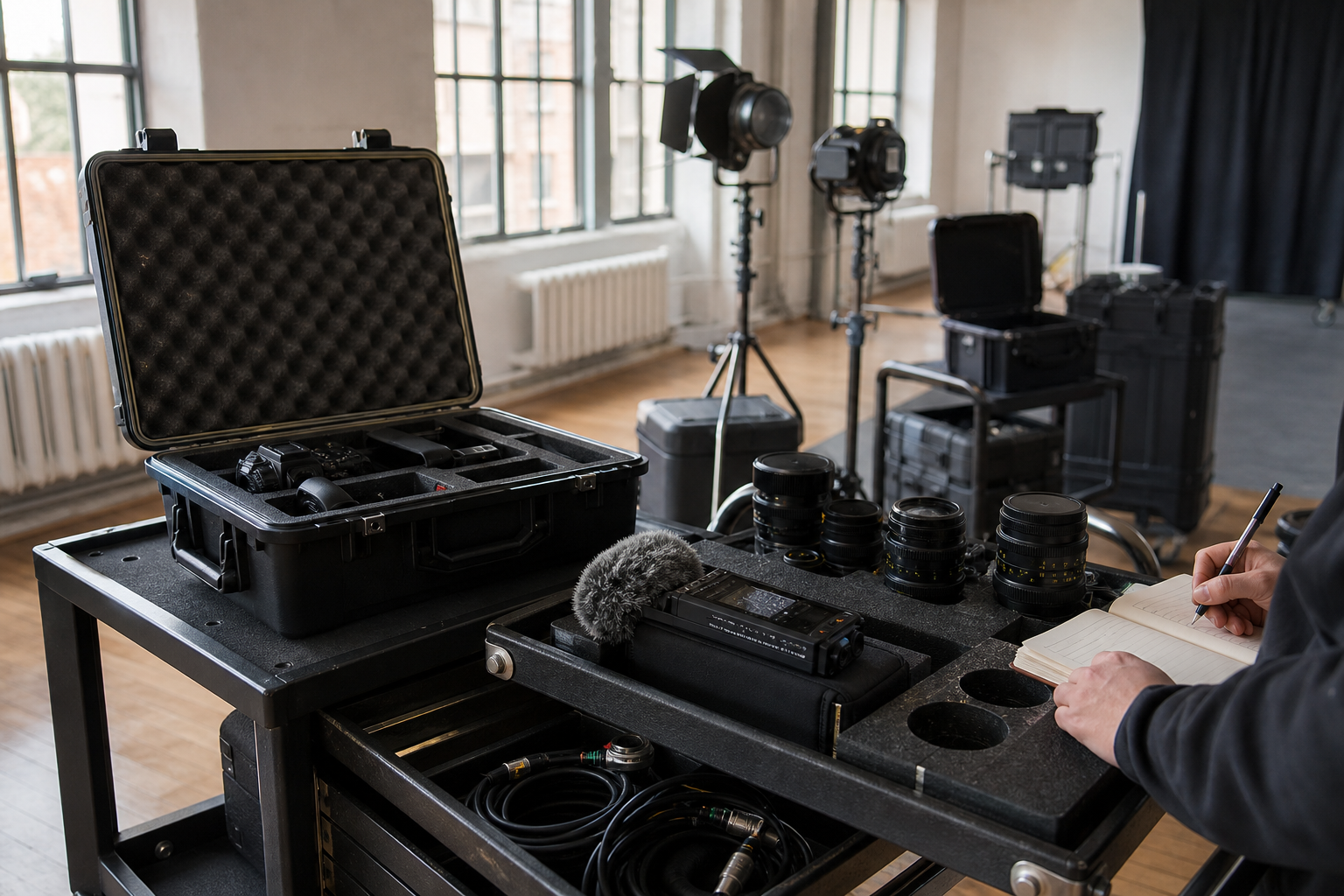
Inventorying film equipment before a location shoot
A practical checklist for cameras, lighting, sound and rented film equipment: confirm inventory, values, transport, storage and claims procedures before the shoot.

Film insurance for a production at a prepared location by OpenAI image generation for SetScout Original image generated for SetScout; no third-party source image used
Which insurance modules a film production should review, which details affect the premium and how to include locations properly in the risk assessment.
SetScout is funded through the EXIST program by the Federal Ministry for Economic Affairs and Energy and the European Social Fund Plus (ESF Plus).