
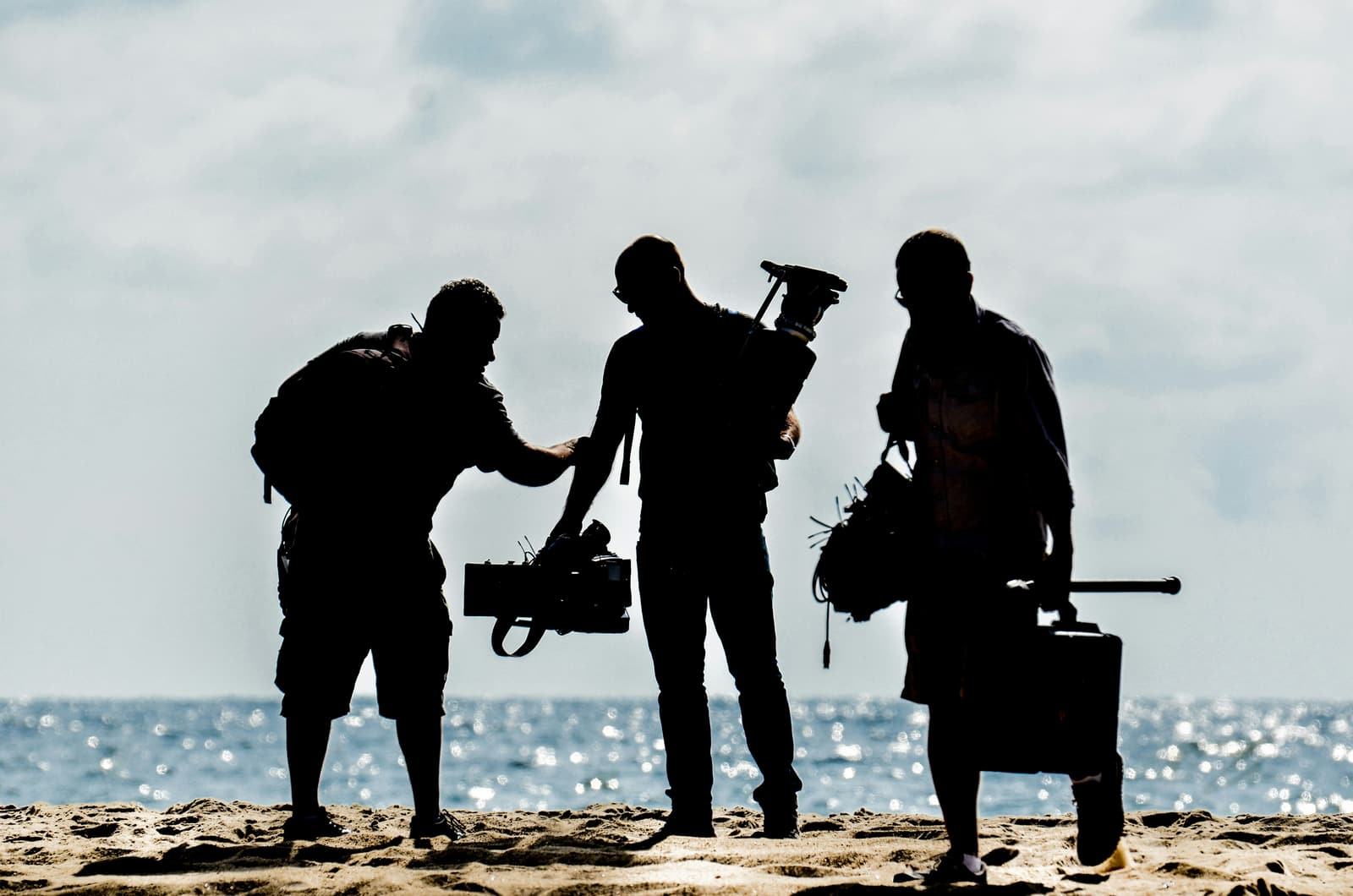
Camera crew on a beach location by Stephane YAICH / Unsplash Unsplash License
Location Recce Checklist: 50 Checks Before Shoot Day
Field checklist for production, camera, lighting, sound and location teams deciding whether a shortlisted location can hold the shoot.
A location recce succeeds only when every relevant department knows whether the location can carry the planned shoot. Good reference photos are not enough. Image, sound, lighting, power, rigging, access, protection, safety and operating conditions need evidence and a decision.
This operational checklist combines the broad location visit with the technical scout. If you first need to separate the terms, read the guide to recce, location recce, tech recce and location scout.
Use it before final location approval. On a small production, one person may own several areas. Team size is not the test. Every check still needs an owner, a finding and a consequence.
Key takeaways: what the recce must deliver
- One agreed plan for set areas, technical space, crew routes, vehicles and support rooms.
- Evidence instead of assumptions: measurements, photos, power data, sound recordings, approvals and operating windows.
- Named responsibility for open questions, protection, permits and communication with the host or operator.
- A documented go, go with conditions, hold or no-go with budget and schedule impact.
1. Preparation: production and locations set the test
Owner: production manager or location manager. Before the visit, every attendee needs the same version of the creative brief, scenes, technical scope and unresolved decisions.
- Mark scenes, scripted time of day, dialogue, stunts, vehicles, animals, effects and exterior areas.
- Share the shot list, frame directions, lighting approach, sync-sound needs and intended set changes.
- Use realistic numbers for crew, cast, client, extras, technical vehicles, catering and unit base.
- Invite a host or operator who can make decisions. A visit without an authorized contact must not create false approval.
- Prepare one decision log with check, finding, photo or measurement, status, owner and deadline.
2. Directing and camera test frames, dimensions and movement
Owners: director and camera department. They turn creative intent into specific setups and name any compromise that changes the scene.
- Photograph each principal frame from camera height and mark mirrors, logos, windows, private areas and visual obstructions.
- Measure shooting depth, ceiling height, doors, corridors, stairs, lifts and turns for camera, dolly, gimbal, stands and cases.
- Check window orientation, daylight path, reflections, fixtures, flicker and blackout options during the intended shoot window.
- For every complex move, define start, end, operator path, focus path, safety clearance and crew return route.
- Decide for each key shot: possible, possible only with a change, possible only at a set time or replan.
3. Production and locations plan access, flow and neighbors
Owners: production and location management. They prove that people, equipment and vehicles can move from arrival through strike without unresolved conflicts.
- Walk the load-in from stopping point to set. Record doors, thresholds, turns, stairs, lift capacity, keys, access codes and operating hours.
- Plan loading, technical trucks, picture vehicles, generator, crew cars, client, catering and shuttle separately.
- Assign set, holding, makeup, wardrobe, art, video village, equipment, catering, breaks, waste and toilets to actual areas.
- Confirm deliveries, public traffic, building management, security, neighbors, quiet periods, locked areas and required notices.
- Record confirmed routes and areas, required lock-offs, named contacts, time buffers and unresolved permits.
Test the route from parking to workspace for mobility, vision and hearing needs. The film-location accessibility guide covers ramps, bathrooms and crew routes in more detail.
4. Lighting, electrical and grip verify power, cable routes and rigging
Owners: gaffer, qualified electrical lead and grip, depending on scope. Sockets are not a load plan. Unknown capacity or unidentified circuits remain open technical issues.
- Photograph and label the distribution board, circuits, sockets, CEE supplies, operator contact and approved use.
- Map planned loads to the electrical plan. Have responsible specialists confirm supply, distribution, protection and shutdown routes.
- Confirm generator position, exhaust, noise, fuel handling, earthing, weather protection and cable length with responsible specialists.
- Route cables without blocking exits, doors, public movement or accessible paths. Name covers, ramps and fixing methods.
- For rigging, document fixing points, loads, surfaces, ceilings and rails. Only the responsible operator or qualified specialist can provide required approval or structural evidence.
- Check exterior lights, stands, flags, lifts and work at height against footprint, wind, fall protection and exclusion zones.
- Record confirmed supply, distribution, cable plan, rigging approvals, setup time, conditions and technical no-gos.
For the electrical detail check, use the guide to household power, CEE, generators and load plans.
5. Sound tests sync sound, room tone and controllable noise
Owner: sound department. A room may seem quiet during the visit and fail during the intended shoot window.
- Record at least one minute of room tone at planned positions. Note time, window state, operating equipment and public activity.
- Separate constant sources such as HVAC, refrigeration, heating, servers, fixtures and lifts from deliveries, schools, trains, flight paths and neighbors.
- For each switchable source, record who may shut it down, when, what operational consequence follows and how normal service is restored.
- Check reverb, hard surfaces, creaking floors, loud doors, wireless conditions and working space for the sound team.
- Decide: sync sound possible, possible only in a defined window, possible only with controls or not reliably planable.
For the deeper sound check, use the specialist guide to sync sound, HVAC, fridges, street noise and echo.
6. Art and the host define changes, protection and reset
Owners: art department with the host or operator. Every intended intervention needs clear permission and a realistic route back to the original condition.
- Inventory furniture, art, plants, stock, private photos, documents, brands and sensitive equipment. State what may move, be covered or never be touched.
- Approve or reject tape, nails, drilling, paint, haze, water, dirt, flame, set builds and exterior dressing item by item.
- Specify protection for floors, walls, doors, lifts and transport routes. Assign supply, installation, inspection and removal.
- Agree before photos, condition notes, storage for removed items, cleaning standard and final reset sign-off.
- Record allowed and forbidden changes, protection plan, extra costs, strike time and the person authorized to approve reset.
7. Production and safety owners verify safe operation
Owner: production with qualified people for each relevant risk. The recce supplies site observations for the safety plan. It does not replace a required risk assessment or specialist approval.
- Confirm exits, fire doors, extinguishers, alarms, assembly point, occupancy and emergency-service access.
- Mark trip hazards, low ceilings, loose surfaces, wet areas, narrow stairs, open edges and conflicts with public movement.
- Log work at height, water, vehicles, animals, drones, stunts, haze, pyro, prop weapons and hazardous substances as separate decisions.
- Set weather limits, wind, heat or cold measures, rain plan, exterior-route lighting and protected equipment storage.
- Record accepted risks, required controls, specialist approvals, named owners and stop-work conditions.
8. Go or no-go: turn findings into a location decision
Owner: production manager. The final review combines department findings into one visible status with consequences for cost, schedule and the location agreement.
- Go: every critical point is evidenced and workable within the planned scope.
- Go with conditions: the location works only with named controls, costs, approvals or operating windows.
- Hold: a decision-grade fact is missing. Assign an owner, deadline and decision threshold.
- No-go: a creative, technical, logistical or safety requirement cannot be solved proportionately.
- For every open item, record evidence, owner, deadline, cost impact and effect on schedule or agreement.
The final record must feed the request, estimate, technical plan, call sheet, location agreement and set rules. The recce is complete only when every affected department sees the same decision.
If the location does not pass, use its documented no-gos as filters for the next search for film locations.
Recommended articles
More posts you might be interested in

none by Jakub Zerdzicki All photos and videos on Pexels can be downloaded and used for free.
Tax rules for income from renting out a film location
How to report profits from renting out your location correctly for German tax purposes
Inventorying film equipment before a location shoot by OpenAI image generation for SetScout Original image generated for SetScout; no third-party source image used
Film Equipment Insurance: Documenting Owned and Rented Gear
A practical checklist for cameras, lighting, sound and rented film equipment: confirm inventory, values, transport, storage and claims procedures before the shoot.
Film insurance for a production at a prepared location by OpenAI image generation for SetScout Original image generated for SetScout; no third-party source image used
Film Insurance for Productions: Coverage, Costs and Location Risks
Which insurance modules a film production should review, which details affect the premium and how to include locations properly in the risk assessment.