

Sign here by Scott Graham / Unsplash Unsplash License
Film Location Agreement in Germany: Clauses and Release Terms
Clause checklist for productions and hosts reviewing a German Motivvertrag, property release or location rental agreement before a shoot.
A film location agreement turns a promising property into a production-ready location. It does more than confirm that filming or photography is allowed. It identifies who approves the shoot, which spaces may be used, when access begins, how the material may be used, what the fee covers and how insurance, damage and handback work.
The terms location release form, property release, location rental agreement and Motivvertrag are often used interchangeably. In German production practice, a Motivvertrag is usually the broader document: A short release may suit a small photo job, while a professional shoot normally needs rental, scheduling, liability and usage terms as well.
This article is not legal advice and is not a contract template. It is a practical clause checklist for productions and hosts who want to know what should be reviewed before signing.
Location agreement, location release and permit: the terminology
A location release form records permission to film or photograph at a defined place and use the resulting material within an agreed scope. Property release is a common international synonym. The term describes consent, but it does not automatically settle every commercial and operational condition of a shoot.
In Germany, a Motivvertrag is normally broader. It combines consent with temporary use of the location and covers the parties, spaces, schedule, location fee, extra costs, usage rights, liability, insurance, house rules, cancellation and handback. Advertising, television, streaming, music videos, larger photo shoots and sensitive properties usually need this fuller agreement.
A filming permit is different again. It often concerns public land or a specific authority requirement. A private location may still need other permissions when vehicles, equipment, road occupation, drones, exterior filming or access routes affect public space.
The property release also does not automatically clear people, trademarks, artwork, music or other third-party rights visible at the location. The agreement should state what the location provider can approve and which rights the production must clear separately.
Key takeaways
- A location agreement should name the exact property, approved areas, access times, crew scope, usage rights, fee, insurance, damage process and reset condition.
- The person signing must actually be able to approve the location. Owners, property managers, tenants, operators and owners' associations can all matter.
- Prep, wrap, overtime, hold days and cleaning belong in the agreement because they often create more disruption than filming itself.
- Usage rights should match the production. A commercial photo shoot may need different limits than a fiction film, TV series or documentary.
What does a film location agreement cover?
A film location agreement covers the temporary use of a property for filming or photography. It joins three issues that are often confused: permission to enter the property, practical use during production and rights to the footage or images created there.
The Berlin Brandenburg Film Commission states that filming on private property and in private or public facilities always requires approval from the relevant owner or authority (BBFC: Filming in private locations). The agreement is where that approval becomes operational.
The larger the crew, equipment package, usage scope and property impact, the less a short email can carry. The agreement needs to anticipate the points that would otherwise become a shoot-day argument.
Parties and authority: who can approve the location?
The agreement should clearly name the production, the location provider and the people authorized to sign for each side. The key question is not who has the keys. It is who can legally and practically approve commercial filming at the property.
Rental properties, leased premises, condominium units, apartment buildings, hotels, museums, schools, offices and restaurants can require additional approvals. The BBFC sample agreement refers, for example, to landlord, property-management and owners' association permissions in certain situations (BBFC sample location agreement).
Describe the exact property, rooms and support areas
A useful agreement does more than list an address. It identifies rooms, exterior areas, loading route, staircase, lift, corridors, bathrooms, holding, makeup, catering, storage, parking and areas that are off limits. Anything the crew touches on shoot day should appear in the agreement or an attachment.
This protects both sides. Productions know what they can schedule. Hosts can exclude private rooms, sensitive objects, branded areas, customer data, artwork, operating areas or resident-only spaces.
Dates and times: shoot, prep, wrap, overtime and hold days
Access time is often the first real stress test. The German Federal Association of Location Scouts notes in its guide that a use day for film, prep and wrap is generally understood as 12 hours, while photo use is 10 hours; beyond that, overtime should be defined (BVL guide to location agreements).
In practice, that means earliest arrival, latest handover, night work, breaks, loading, prep, wrap, test days, hold days and extensions should be in writing. Leaving them open means negotiating under pressure later.
Location fee, deposit, cleaning and extra costs
The agreement should say which location fee covers which scope of use. That includes shoot days, prep and wrap days, hold days, cleaning, power, heating, water, security, host staff, key handling, parking areas and any deposit.
The BVL guide recommends settling location fees before filming begins, at the latest on the first use day, and defining cleaning either as a flat fee or as a specific service (BVL guide). For a SetScout request, that means budget, duration and special requirements should be visible before booking, not after approval.
Usage rights: media, territory, duration and sensitive content
A location agreement should define how footage and stills created at the property may be used. TV, cinema, streaming, online ads, social media, websites, press, trade-fair films, pitch decks, behind-the-scenes material and still images are not the same exposure for a host.
The BVL guide notes that broad unlimited usage rights can be customary for films, while commercial shoots or advertising photography may call for different territorial or time-limited terms (BVL guide). This is exactly the distinction that should be discussed before signing.
Sensitive categories such as alcohol, pharmaceuticals, political messaging, adult content, weapons, religion, gambling or highly private spaces should not be handled vaguely. If a host wants to exclude certain uses, the exclusion needs to be specific.
Specify media, channels, territory, term, paid media, edits and still-image use. The specialist guide to location usage rights explains buyouts, reach and practical limits in more depth.
Insurance, liability, damage and restoration
Insurance is a core clause, not an attachment to chase later. The BBFC sample agreement expects a valid production liability policy covering personal injury, property damage and custody damage (BBFC sample agreement). The BVL guide also recommends requesting a copy of the policy and checking whether coverage is appropriate for the property.
Confirm the insurer, policy period, insured production activity, personal injury, property and custody damage cover, suitable limits and a claims contact. The production liability insurance checklist explains what location hosts should request before the crew arrives.
The practical process matters as much as the clause: condition photos before and after, floor and wall protection, named contacts, claim deadlines, deposit handling, deductibles, cleaning, key return and a signed handback. A contract that mentions damage but does not define handover is incomplete.
A damage clause is only as strong as the handover process. The guide to damage on set and handover records covers condition photos, deposits, reporting deadlines, cleaning and final inspection step by step.
House rules, neighbors, data protection and confidentiality
Not every useful clause sounds legal. Some of the most important rules are simple: no smoking, no shoes on sensitive floors, no drone in the courtyard, no generator after 10 p.m., no filming of customer lists and no social posts from the property without approval.
For homes and commercial properties, the agreement should cover neighbors, house rules, noise, loading zones, fire safety, access control, data protection and confidentiality. The more recognizable the property, the more useful a short communication plan becomes for neighbors, employees or guests.
The pre-signing checklist
- Are the production, location provider, billing party and authorized signatories clearly named?
- Are the property, rooms, support areas, loading, parking, holding, catering and off-limit areas described?
- Are shoot days, prep, wrap, hold days, overtime, night work and final handover defined?
- Are location fee, deposit, cleaning, extra costs, invoice timing, payment date and cancellation clear?
- Do usage rights, media, territory, duration and sensitive-content limits fit the production?
- Are insurance evidence, liability, damage reporting, restoration, handover protocol and contacts covered?
- Are the project name, production type, scene context, crew size, significant equipment and sensitive subjects described?
- Are house rules, protection measures, privacy, confidentiality and requirements for neighbors, guests or staff recorded?
- Is it clear who may approve overtime, scope changes, furniture moves and final sign-off on the shoot day?
How SetScout requests become more contract-ready
A location agreement is easier to complete when the request before it is precise. Productions should share project type, dates, access times, rooms, crew size, equipment, usage, sensitive content, budget and insurance status from the first serious inquiry.
On SetScout, that clarity helps both sides: hosts can judge whether the property fits, and productions can build a request that later translates into contract, insurance and payment. Build a shortlist of film locations and make the final agreement reflect the exact approved scope.
FAQ: film location agreements in Germany
Is a location release form the same as a location agreement?
Not always. A release can be a short consent to record and use material. A full location agreement usually adds rental time, fees, insurance, damage, house rules, cancellation and reset. Professional film and photo shoots usually need the broader approach.
Can an English location release template be used in Germany?
It can help as a question list, but it should not be treated as a finished answer. Parties, language, governing law, VAT, insurance, privacy, rental status, usage rights and local permits must fit the specific German production.
Is a location agreement the same as a filming permit?
No. A location agreement covers the arrangement with the location provider. A filming permit usually concerns public land or specific authority requirements. For a private location, both can become relevant if equipment, parking, exterior shots or access routes touch public space.
Does the agreement need to be signed before a recce?
Usually not for a first viewing. Before the actual shoot, the agreement should be complete and signed. For extensive recce photos, confidentiality or sensitive rooms, a separate early permission can make sense.
Who pays for damage to the location?
The agreement should say this directly. In practical production terms, the production is typically responsible for damage caused by filming, crew members or contractors. The useful proof is insurance evidence, condition documentation, a claim deadline and a clear handback process.
Does every photo shoot need a location agreement?
Not every small shoot needs a long contract, but written permission is almost always useful. The more commercial the use, the more recognizable the property and the greater the impact on rooms or operations, the clearer the agreement should be.
Recommended articles
More posts you might be interested in

none by Jakub Zerdzicki All photos and videos on Pexels can be downloaded and used for free.
Tax rules for income from renting out a film location
How to report profits from renting out your location correctly for German tax purposes
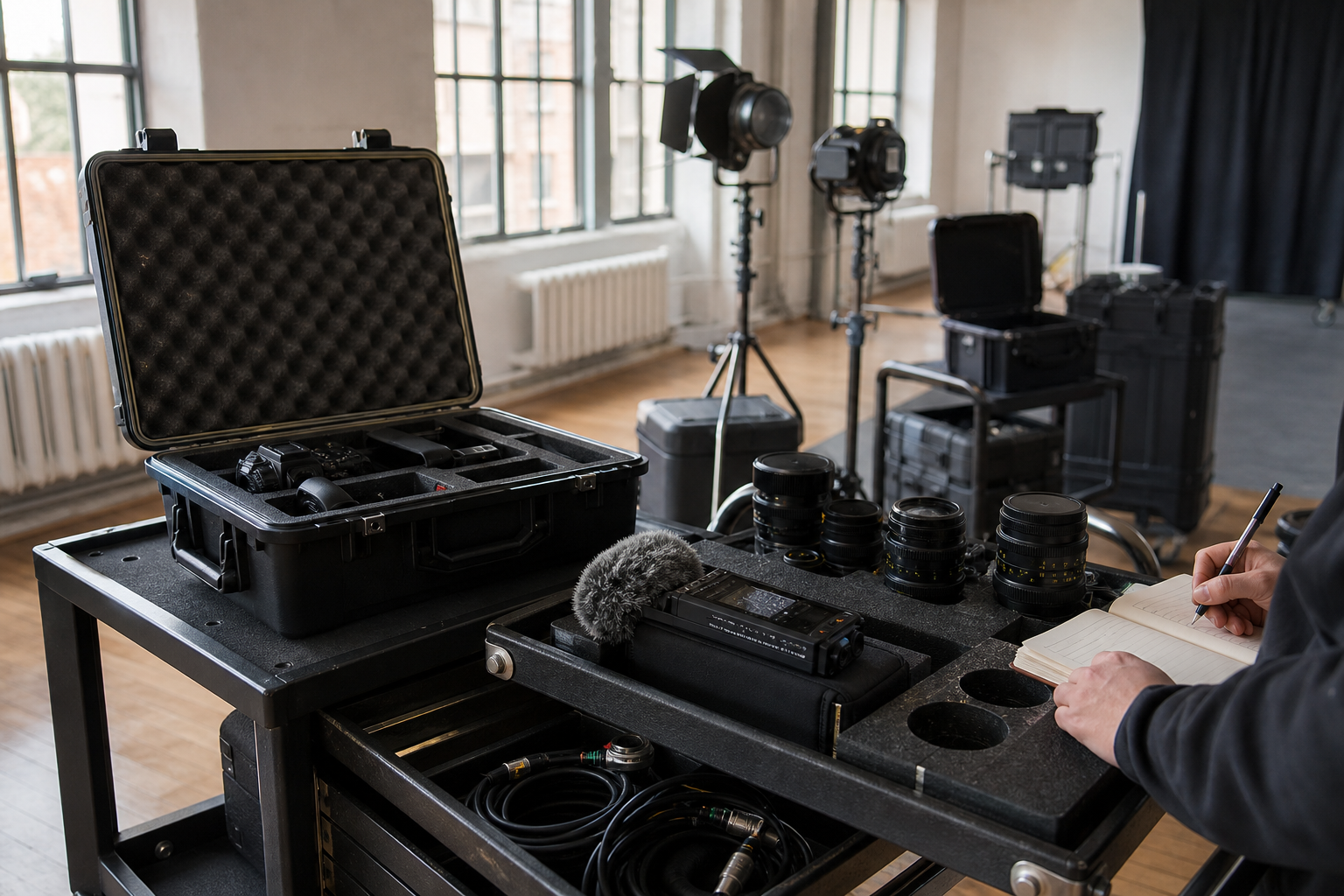
Inventorying film equipment before a location shoot by OpenAI image generation for SetScout Original image generated for SetScout; no third-party source image used
Film Equipment Insurance: Documenting Owned and Rented Gear
A practical checklist for cameras, lighting, sound and rented film equipment: confirm inventory, values, transport, storage and claims procedures before the shoot.

Film insurance for a production at a prepared location by OpenAI image generation for SetScout Original image generated for SetScout; no third-party source image used
Film Insurance for Productions: Coverage, Costs and Location Risks
Which insurance modules a film production should review, which details affect the premium and how to include locations properly in the risk assessment.