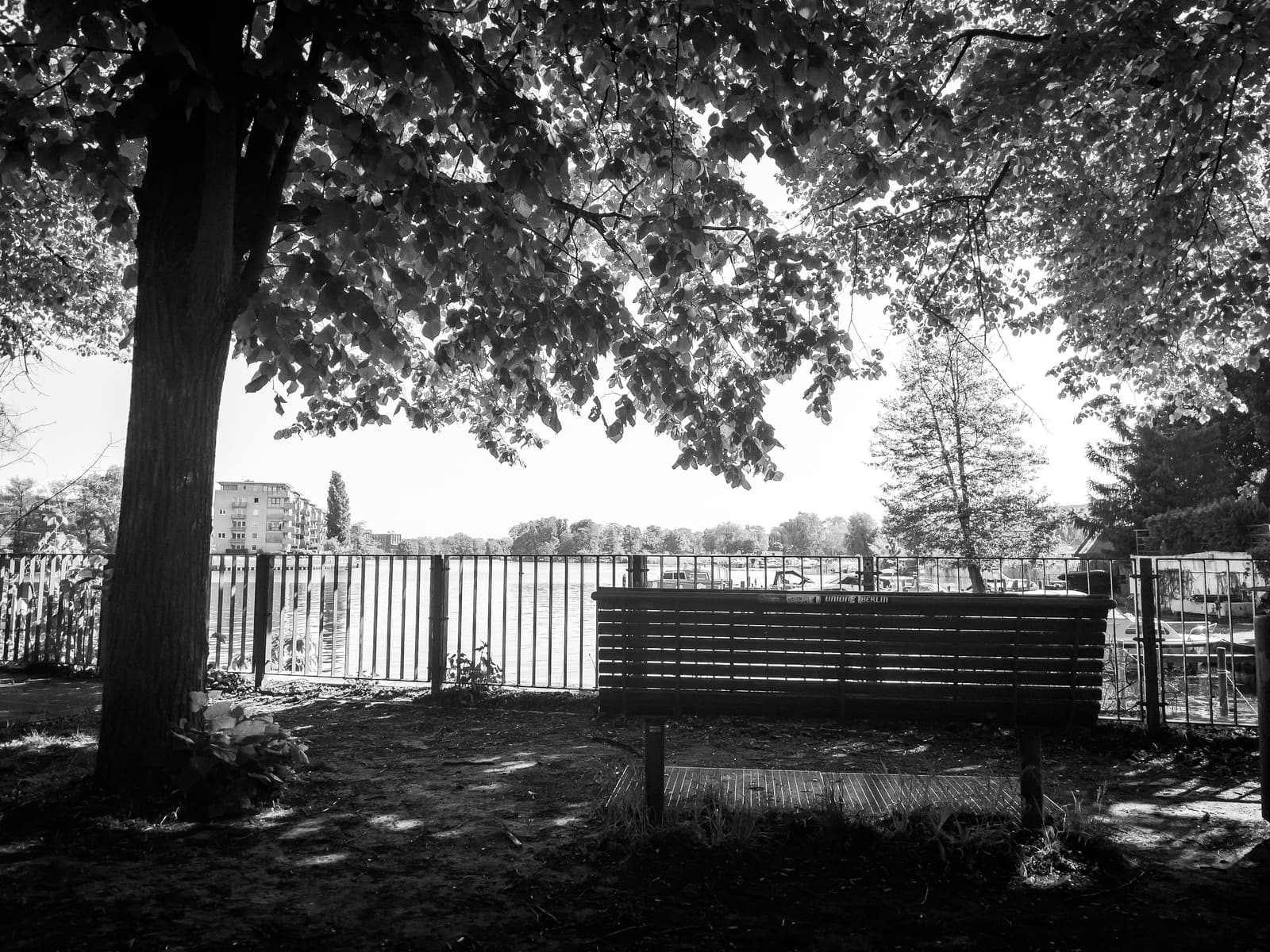
Park bench near a lake by Bernd 📷 Dittrich / Unsplash Unsplash License
How productions should choose between Berlin and Brandenburg locations by comparing look, permits, location fees, parking, noise, travel time, crew base and production risk.
The better film location is not simply the one with the stronger image. Berlin gives you density, recognisable urban surfaces and short distances inside the city. Brandenburg can give you more space, different landscapes, industrial areas, country houses, lakes, forests and quieter surroundings, but may add travel time, base logistics and local coordination.
For the shortlist, compare shootability with shootability. Look matters, but so do permits, parking, noise, basecamp, light, schedule, location fee and fallback options.
Berlin is the stronger choice when the city character is part of the story or when many production elements need to sit close together. If the day needs an apartment in the morning, an agency at noon, a street in the afternoon and a restaurant in the evening, urban proximity and existing infrastructure matter.
The tradeoff is friction. Density means more neighbors, more traffic, more visual interruptions, more delivery zones and more surfaces where the production cannot decide alone. A Berlin location can be visually perfect and still fail on parking, noise windows, sidewalk use, courtyard access or house rules.
Brandenburg becomes attractive when the production needs room: for light, vehicles, basecamp, animals, exterior space, landscape, industry, water or a quieter environment. The look may sit closer to the brief, especially when Berlin is too dense, too renovated, too loud or too complicated to operate.
The price is planning. Travel time, crew call, catering, weather cover, accommodation, shuttle, fuel, daylight and the return to Berlin can consume the location advantage. Brandenburg is strong when the schedule takes those movements seriously and does not compare only the location fee.
The look decision starts as a story decision. Berlin works for neighborhood streets, courtyards, offices, clubs, rooftops, older apartments, modern architecture and recognisable urban surfaces. Brandenburg works for open land, forest, lakes, villages, estates, yards, industrial estates, halls, roads without constant background traffic and places where the surroundings are easier to control.
The common mistake is treating Brandenburg only as a cheaper substitute. For some images, Brandenburg is the actual answer because distance, horizon, light and sound environment are part of the motif.
For public areas, the BBFC treats Berlin and Brandenburg as permit-relevant when filming goes beyond ordinary public use. The authority path then differs. In Berlin, depending on the measure, district offices, special use and the central road traffic authority can matter. In Brandenburg, the BBFC points productions to the competent lower road traffic authority of the district, independent city or large district city where filming takes place.
That matters for location choice. A place can be close on the map but still have a different authority route. A location farther out can also be easier if there is less traffic, less resident pressure and a clearer ownership structure.
For public roads in Brandenburg, the BBFC states that applications must be submitted at least 14 days before filming begins. For certain Berlin road measures, it recommends applying as early as possible, at least two weeks and ideally three weeks or more before the measure starts. Those dates belong in the first shortlist review, not in a late production note.
For private motifs, the key question is not the federal state. It is who can approve the shoot. The BBFC states that filming on private property and in private or public facilities requires approval from the responsible party. For rented properties, owners' associations, public institutions, museums, schools or hospitals, that approval chain can get longer.
Berlin can be complicated because of multi-party buildings, neighbors and dense use. Brandenburg can be complicated because of public bodies, municipal responsibility, heritage, nature areas, agriculture or distance. You cannot read that from photos alone.
Berlin can feel expensive because of rental fees, parking pressure and special-use needs. Brandenburg can become expensive through travel, shuttle, transport, accommodation, extra equipment, longer scheduling and weather cover. The useful cost question is: which option makes the shoot day more stable?
Compare at least four blocks: location cost, permit path and conditions, movement time for crew and equipment, and risk reserve. If Brandenburg adds drive time but saves parking, basecamp and sound, it can be more economical. If Berlin shortens movement and the scene is indoors, Berlin may be the better choice despite higher pressure.
Logistics are often where the more beautiful location loses. In Berlin, check no-stopping needs, load-in routes, neighbors, stairs, lift size, generators, sound interference and holding areas. In Brandenburg, check access roads, load-bearing surfaces, power, mobile coverage, toilets, catering, weather cover, hotels and return times.
A good brief does not separate these points from the search. It asks not only: where does this look right? It asks: where can this crew shoot on this day without unnecessary risk?
SetScout helps in the early comparison phase. You can search Berlin locations, place variants next to each other, and decide with a clearer brief whether to stay inside the city, widen the radius or bring in scout support for specific motifs.
For Berlin searches, start with /en/film-locations-berlin. For AI-assisted motif search, use /en/ai-film-location-search. If the comparison turns into a real recce, use /en/blog/location-recce-checklist-tech-sound-light-access-neighbors.
No. Brandenburg can help with space, parking or quiet surroundings, but travel time, vehicles, shuttle, catering, accommodation and weather cover can increase costs. Compare total cost and production risk, not only the location fee.
Not as a rule. In Brandenburg, the responsible authority depends on the local district or city. The BBFC points public-road applications to the competent lower road traffic authority. Lower density can help, but it does not remove checks for public space, traffic, ownership and conditions.
Search both when the look is not tied to a specific Berlin neighborhood. Industry, country houses, lakes, forests, yards, warehouses or quiet roads may have stronger options outside the city. Decide after logistics and permit risk have been checked at a basic level.
Berlin can be better for small crews when travel, equipment and interior access are simple. Brandenburg can be better when the crew needs quiet, parking, exterior space or less resident pressure. The shoot footprint matters more than crew size alone.
Build your shortlist as a location comparison, not as a Berlin-versus-Brandenburg argument. If two options look equally strong, choose the one that makes permits, access, sound, parking and schedule more stable.
More posts you might be interested in
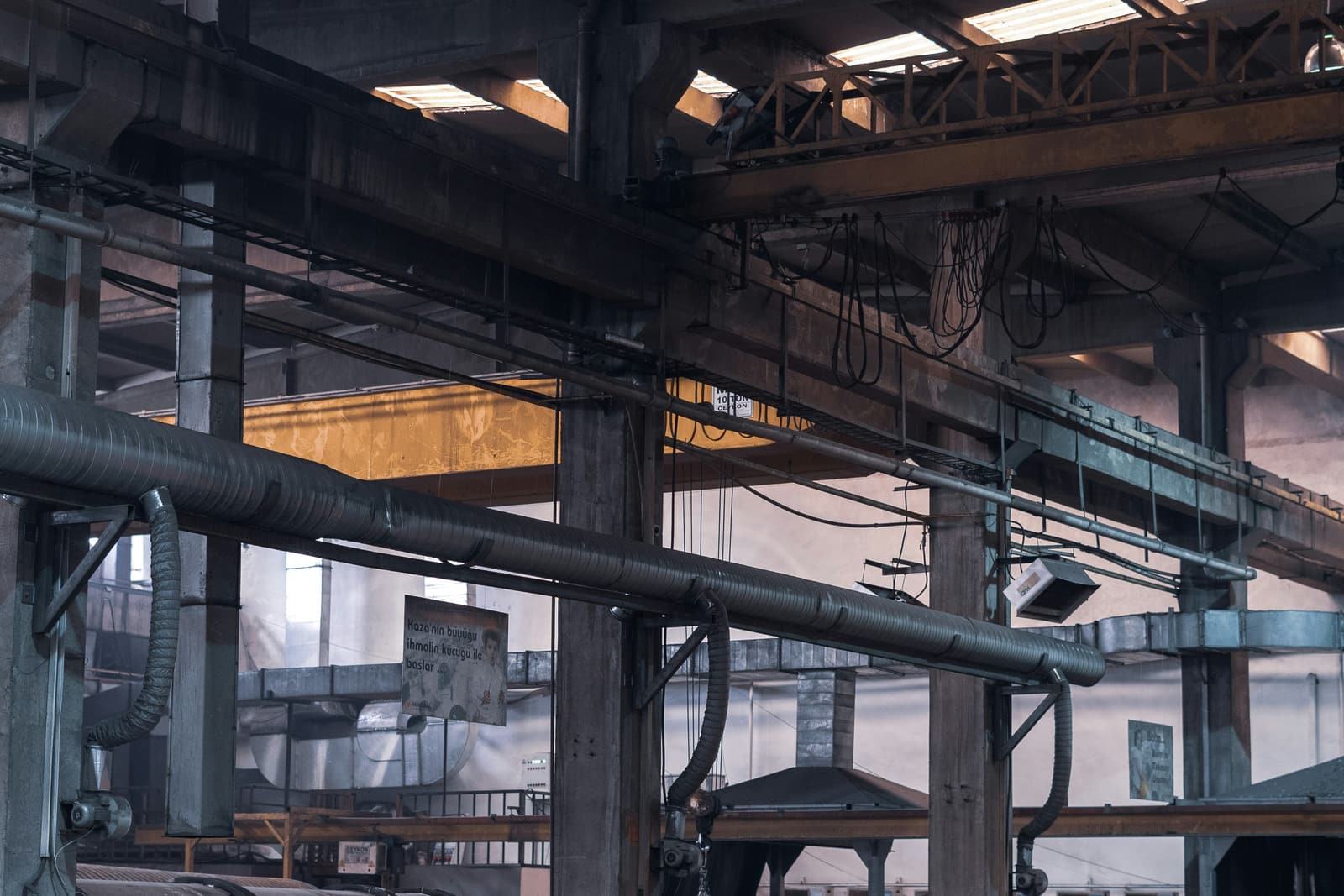
Industrial interior location by Ümit Yıldırım / Unsplash Unsplash License
Searching film locations by motif works best when each category is briefed with look, era, rooms, logistics, rights and hidden constraints.

Production planning board by Walls.io / Unsplash Unsplash License
Production schedule templates, shot lists and storyboards help location planning only when they expose rooms, access, light, sound, permits and recce risks.
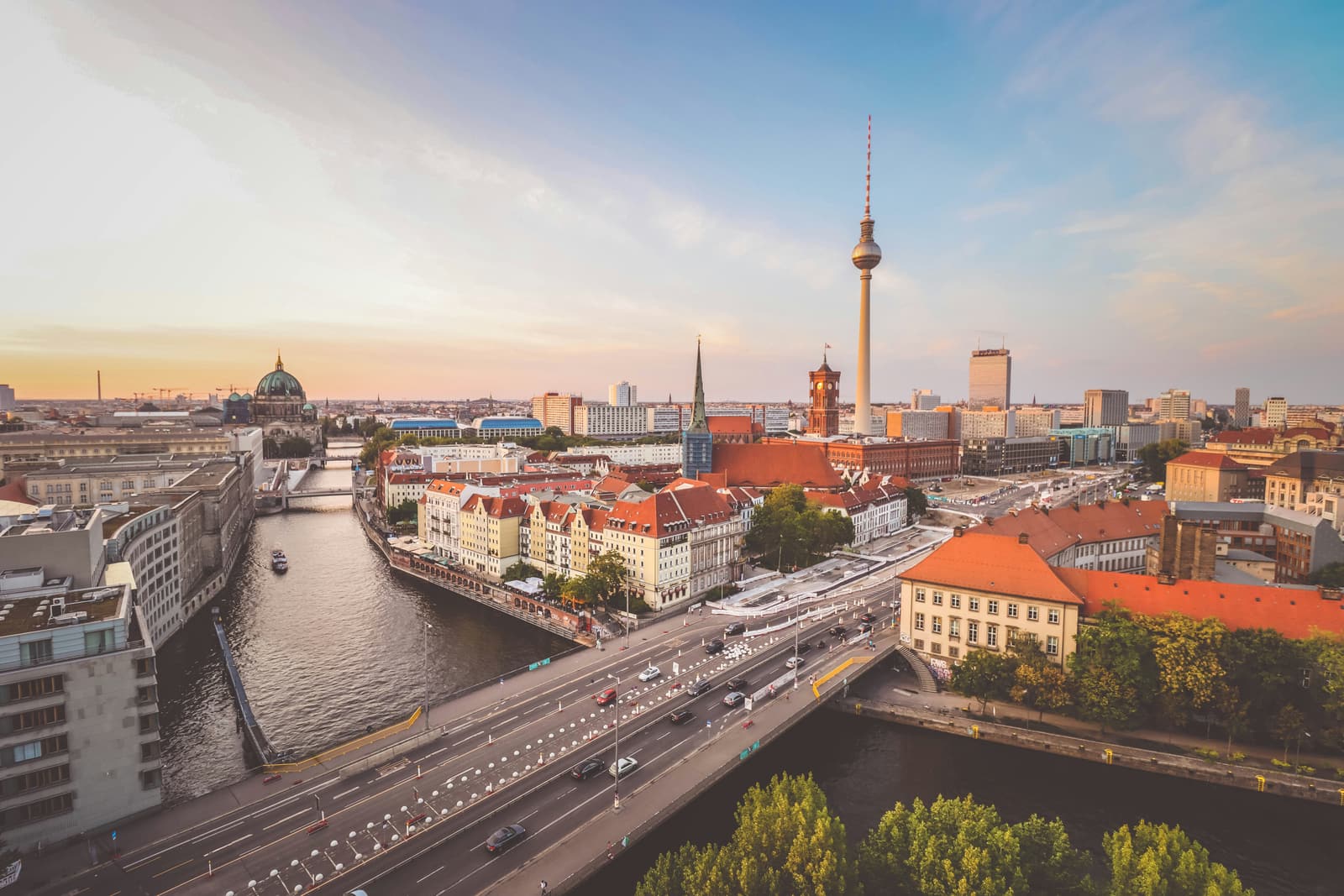
German city skyline by Florian Wehde / Unsplash Unsplash License
A practical comparison of Germany’s production hubs: Berlin, Hamburg, Cologne, Munich and Rhine-Ruhr by look, permits, crew base, transport, seasonality and private-location search.
