
Industrial interior location by Ümit Yıldırım / Unsplash Unsplash License
Searching film locations by motif works best when each category is briefed with look, era, rooms, logistics, rights and hidden constraints.
Searching film locations by motif sounds simple: choose altbau, clinic, office, school, lake, forest or industry, then review the results. In real production work, the category matters less than the precision of the brief.
A film location search gets stronger when motif, period, rooms, sightlines, technical needs, rights and constraints are described together. Then a database can surface options that are useful for a request, a recce and the production schedule.
Key Takeaways
Official location databases use categories because they make large inventories searchable. The Berlin Brandenburg Film Commission’s public search, for example, shows location categories such as airport and apartment. Filmlocations Bayern also says its database lets productions find desired motifs through filters.
That is valuable for the first pass, but it does not replace the brief. An altbau can be spacious or tight. A clinic can be real, vacant, simulated or usable only as a hallway. A forest can look right and still fail because of access, power, toilets or conservation rules.
Use two layers: category for search, brief for selection. The category tells you where to start. The brief tells you which result deserves a request.
For altbau motifs, altbau apartment is not enough. Clarify period, ceiling height, stucco, floors, window size, daylight, elevator, stairwell, noise and whether the facade or house corridor appears on camera. The guide to loft or altbau as a film location expands on those checks.
Do not write beautiful and bright. Write: Berlin altbau, 1900 to 1930, connected kitchen and living room, large east-facing windows, stairwell can be filmed, 20-person crew, sound sensitive, no construction work in the building.
Clinic is a sensitive motif because real medical spaces can involve operations, hygiene, privacy and sensitive imagery. Many productions therefore search for vacant corridors, practice rooms, training rooms or spaces that can credibly play as a clinic.
The brief should say whether the scene needs a patient room, operating-room feel, waiting area, reception, lab, corridor or exterior. Add prop needs, brand neutrality, rights around visible equipment, tone of the scene and whether real patients or staff must be excluded.
Offices feel interchangeable until logos, monitors, whiteboards, files, employees, access cards and glass walls become visible. When you search for an office, describe company scale, style, meeting rooms, reception, desks, view, privacy-sensitive surfaces and blocked times. Use the guide to office film locations for deeper checks.
A good office brief also says whether a real business can be recognizable or whether the space needs to feel neutral. For commercial shoots, that may matter more than square footage.
School is not one motif. A primary school, a 1970s high school, a modern campus and a vacant vocational school tell different stories. Add holidays, house rules, minors, privacy, fire safety and public-building use to the decision path.
Clarify classroom, hallway, auditorium, gym, schoolyard, staff room, exterior and bathrooms separately. Also say whether real school furniture and wall dressing are required or whether production design can transform a neutral space.
For lake and forest motifs, logistics often matter more than the look. Do you need shore access, a jetty, boat, water sightline, forest road, clearing, fog mood or deep darkness? Check power, mobile signal, toilets, waste, parking, weather and nature protection. The guide to planning outdoor film locations is the next planning step.
Brandenburg shows why these motifs are attractive: Location Germany describes landscapes, forests, fields, lakes and river settings, plus industrial buildings and former military sites. That range is useful only when the search language is specific.
Industry can mean factory hall, workshop, warehouse, power plant, vacant site or active production facility. The difference is substantial for safety, power, dust, noise, machinery, floor loads, fire protection and insurance.
State whether the hall can be empty, what load-in is needed, whether vehicles appear on camera or inside the building, whether local power will be used and whether work continues in parallel. The guide to factory and warehouse film locations covers more checks.
SetScout works best when you combine category and context. Start with the motif, add mood and hard limits, and state no-gos explicitly. For less obvious searches, use AI film location search as a starting point, then check each result against the production brief.
If an image defines the direction, separate reference from requirement. A moodboard can show altbau atmosphere, clinic light or industrial patina. The request still needs to say what must exist in the real place. The guide on turning a creative brief into a booking-ready request helps with that translation.
A strong query can look like this: office with real desks, neutral brand surfaces, glass meeting room, evening light, 18-person crew, controllable sound, elevator and loading zone, Saturday shoot. That is far stronger than modern office in Berlin.
Search by motif, but brief by shoot day: look, rooms, logistics, rights and no-gos belong in the same request.
Motif means the playable place type or visual job of a scene, such as altbau kitchen, clinic corridor, school, forest road or industrial hall. For search, it is the category. For a request, the motif needs extra detail about look, use, technical needs and constraints.
Detailed enough for a host or scout to decide whether the place is basically viable. Include motif type, rooms, image requirement, crew size, dates, times, technical load, dressing, rights, sensitive content and no-gos. The recce can handle the deeper checks.
Use both. The category keeps results inside the right place type. Mood, period, material, light and no-gos help you find the right options inside that category. For complex scenes, the combination beats a single keyword.
A database is not enough when permits, operations, safety, weather, privacy, neighbors or set construction decide the shoot day. Then you need search results plus a clear request, focused follow-up questions and a recce built around those risks.
More posts you might be interested in
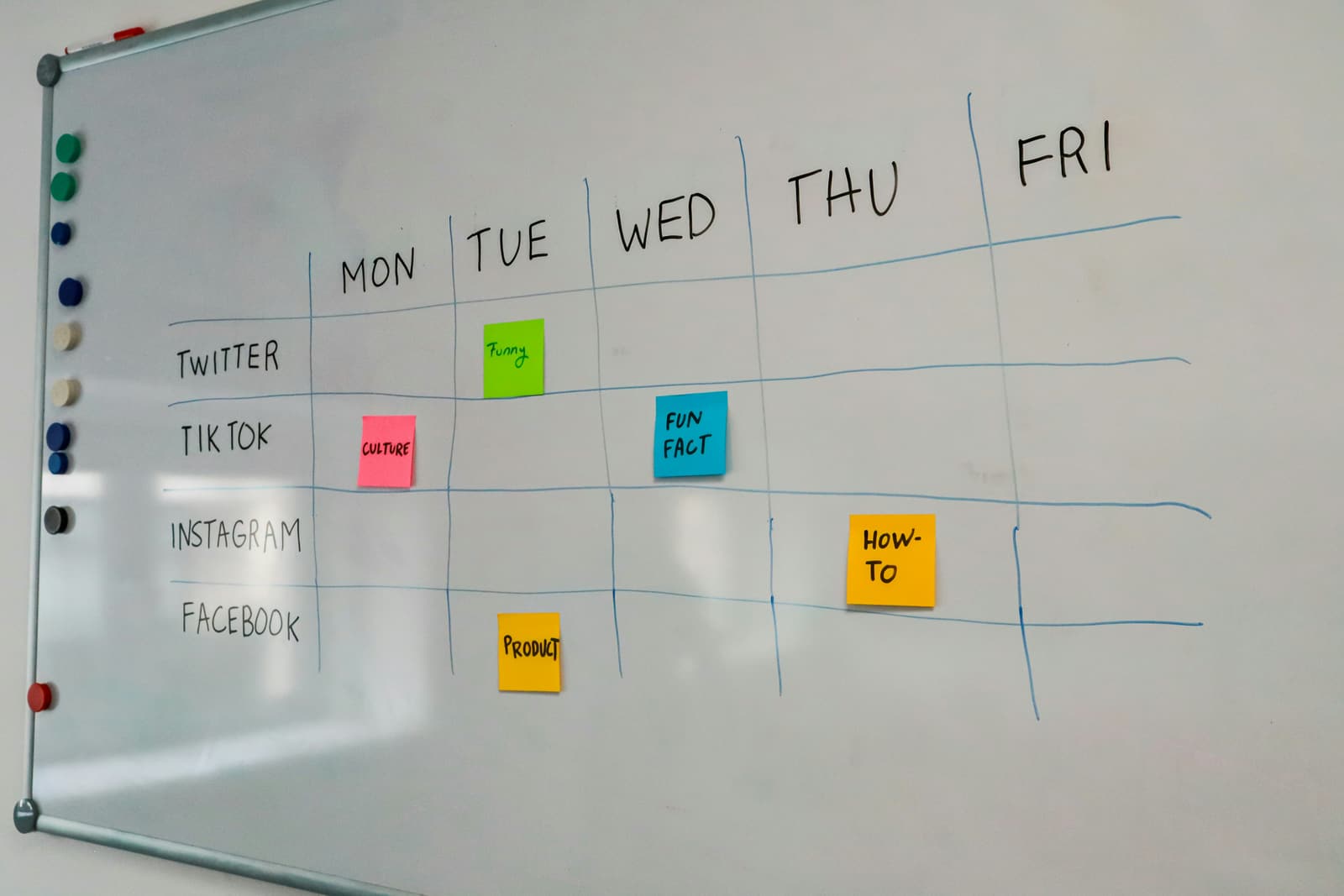
Production planning board by Walls.io / Unsplash Unsplash License
Production schedule templates, shot lists and storyboards help location planning only when they expose rooms, access, light, sound, permits and recce risks.

German city skyline by Florian Wehde / Unsplash Unsplash License
A practical comparison of Germany’s production hubs: Berlin, Hamburg, Cologne, Munich and Rhine-Ruhr by look, permits, crew base, transport, seasonality and private-location search.
Film crew in a city street by Robert Andall / Unsplash Unsplash License
A practical starting directory for filming permits in Germany: Berlin, Hamburg, Munich, Cologne, NRW, Frankfurt, Stuttgart and Leipzig with official links and request checklist.
