Film crew in a city street by Robert Andall / Unsplash Unsplash License
A practical starting directory for filming permits in Germany: Berlin, Hamburg, Munich, Cologne, NRW, Frankfurt, Stuttgart and Leipzig with official links and request checklist.
Filming permits in Germany do not come from one national form. Depending on the city, surface and location, you may deal with a film commission, district office, public-order office, traffic authority, parks department, transit operator, museum, owner or building management.
This article is not legal advice. It is a practical starting point for production coordination, collecting official pages and first checks for common German production hubs. Link check date: July 4, 2026.
Use the list to find the right authority or film commission faster. The actual permit, deadline and fee rules still need checking on the official page for your exact location.
Do not start with the form. Start with the surface question: who controls the place and what does the shoot change? A handheld camera on private property is different from lighting stands on a sidewalk, a car rig, a drone over a park or a generator on a residential street.
Check in this order: private permission, public ground, traffic, parks, buildings, transit or rail, drones, police or fire, noise, night work and personality rights. Many shoots need more than one approval.
These starting points are intentionally compact. They help you find the right direction before you go deeper into city, district, owner or special-location rules.
Start with the Berlin Brandenburg Film Commission for permits and the visitBerlin information page for filming in Berlin. For public streets and grounds, the BBFC says filming that goes beyond common use generally requires a permit.
Also check district, public road use, parks, no-parking zones, police support, BVG, Deutsche Bahn, private owners and drones. Berlin can involve several parallel responsibilities depending on the location.
Start with MOIN Filmförderung Hamburg Schleswig-Holstein, especially the Film Commission and permits section. MOIN describes the Film Commission as the first point of contact for locations, permits and local production infrastructure.
Important: MOIN notes that Hamburg and Schleswig-Holstein do not require a general company filming permit like some other German cities. That does not make every surface free; harbor, roads, parks, transit, private sites and special use remain separate topics.
Start with Film Commission Bayern and the City of Munich's filming-permit page. For larger shoots in public space, Munich's Servicebüro Film is an important contact point.
In Munich, check public paths, streets, parks, squares, parking needs, MVG, police, private buildings and drones. Small-team exceptions can exist, but they depend on the footprint and surface.
Start with the City of Cologne permit page. The city says filming in Cologne city territory and on city-owned areas requires a filming permit, and applications should be submitted at least ten working days before the shoot.
For Cologne, clarify public ground, no-parking zones, the cathedral area, Rhine promenade, KVB, private locations, noise and night work early. Short deadlines become difficult quickly.
Start with Film Commission NRW and Location NRW. Film Commission NRW states that there is no general NRW-wide permit process and that the respective cities and specialist offices are responsible.
For Düsseldorf, the relevant path can include municipal special use, parks, Rhine areas, private sites, airport, transit, parks or local authorities. Use NRW as a network starting point, not as a substitute for the local request.
Start with the City of Frankfurt filming-permit page and Filmhaus Frankfurt's process notes. Frankfurt names the Service-Center Veranstaltungen at the public-order office as the central contact and also points filmmakers to the film advisory office.
Frankfurt is attractive for skyline, banking district, Main river, traffic, trade-fair, transit and airport-related looks. That makes it important to separate public ground, traffic, VGF, private buildings and image rights.
Start with Film Commission Region Stuttgart and city information on film and photo permits. The region provides application material; Stuttgart also has separate pages for areas such as public parks and cemeteries.
Check downtown streets, no-parking needs, pedestrian zones, SSB, airport, parks, universities and private locations separately. Once equipment touches sidewalks or vehicles need exemptions, traffic law can become central.
Start with the City of Leipzig's service page for film and television productions. The page is aimed at productions needing information on permissions and permits.
For Leipzig, check public ground, parks, water, traffic, Leipziger Gruppe, railway-station areas, universities, clinics, museums and private locations separately. Many attractive locations are institutional or semi-public.
Forms differ, but the underlying information is similar. Prepare it before writing to individual authorities.
Many delays come not from the main form but from special locations. Transit operators, stations, airports, shopping centers, universities, clinics, museums, parks, cemeteries and harbors have their own rules.
Treat drones, night work, rain machines, fire, prop weapons, stunts, animals, music playback, larger extras and no-parking zones as separate checks. If you mention them only after first approval, you lose time.
For homes, offices, hotels, restaurants or courtyards, you need permission from the rights holder. But if crew, lights, vehicles or camera spill onto public ground, you also need the matching public permission.
This is the typical SetScout intersection: first find the right private location, then use the correct city page to check what is needed for sidewalk, parking, exterior view or drone work.
Once you know the city's permit path, you can search more precisely on SetScout. Use /drehorte to find private locations that require fewer public interventions, or to build alternatives when a city surface takes too long.
Good permit planning and good location search belong together: the better you know place, use and footprint, the better the request becomes for both host and authority.
No. Responsibility and process depend on city, surface, owner, traffic impact and shoot type. Start with the local film commission or city page and check special locations separately.
It depends on city and surface. Some cities distinguish by footprint, common use, equipment, traffic impact and commercial use. Check the official page before planning around an exception.
As early as possible. Cologne, for example, asks for at least ten working days. Traffic measures, drones, larger crews, parks, police or several offices usually need more lead time than simple requests.
Only for the private area and only within the permission granted. If sidewalk, road, parking, drone, neighboring land, public facade or special use is involved, you need additional checks.
More posts you might be interested in
Industrial interior location by Ümit Yıldırım / Unsplash Unsplash License
Searching film locations by motif works best when each category is briefed with look, era, rooms, logistics, rights and hidden constraints.
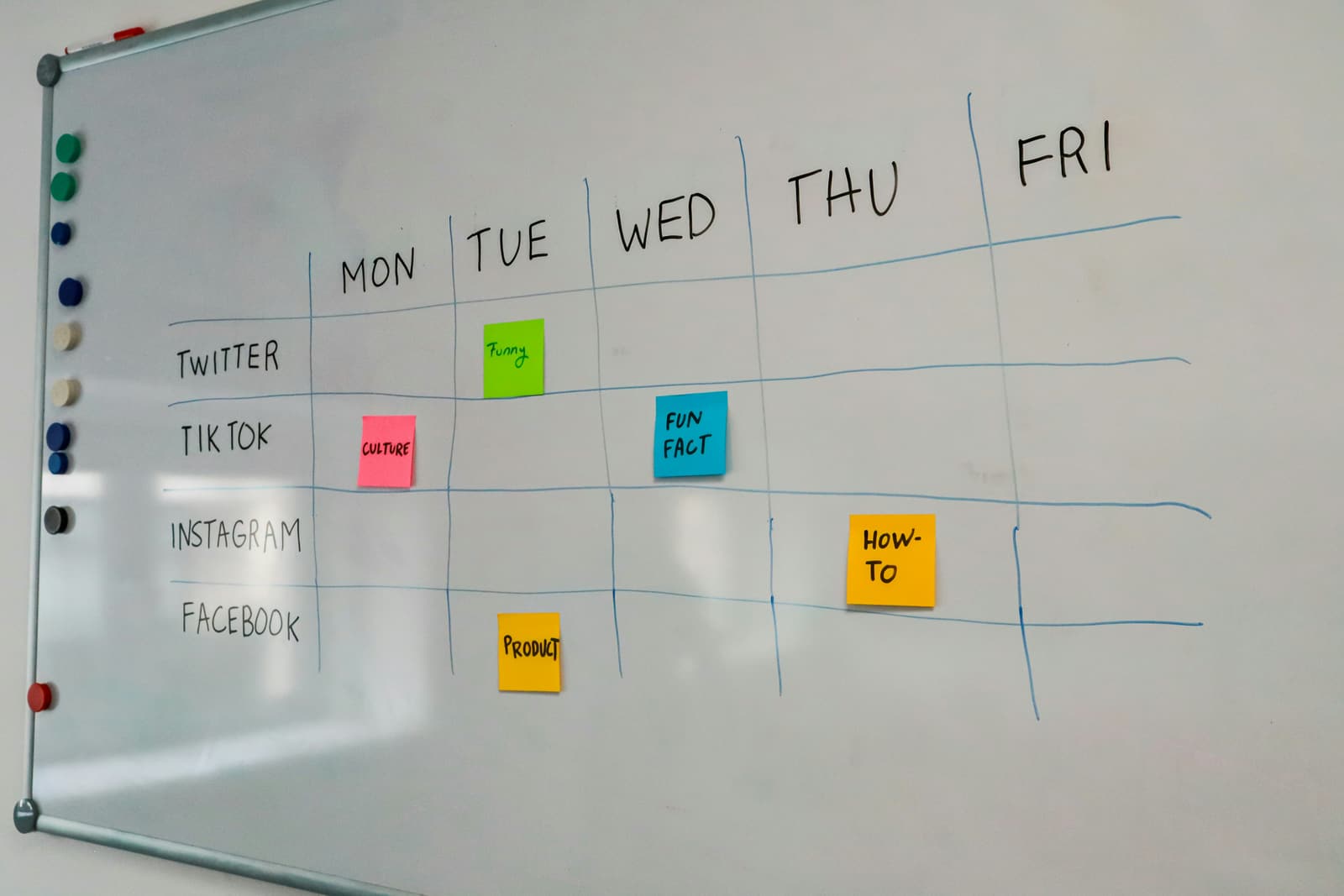
Production planning board by Walls.io / Unsplash Unsplash License
Production schedule templates, shot lists and storyboards help location planning only when they expose rooms, access, light, sound, permits and recce risks.
German city skyline by Florian Wehde / Unsplash Unsplash License
A practical comparison of Germany’s production hubs: Berlin, Hamburg, Cologne, Munich and Rhine-Ruhr by look, permits, crew base, transport, seasonality and private-location search.
