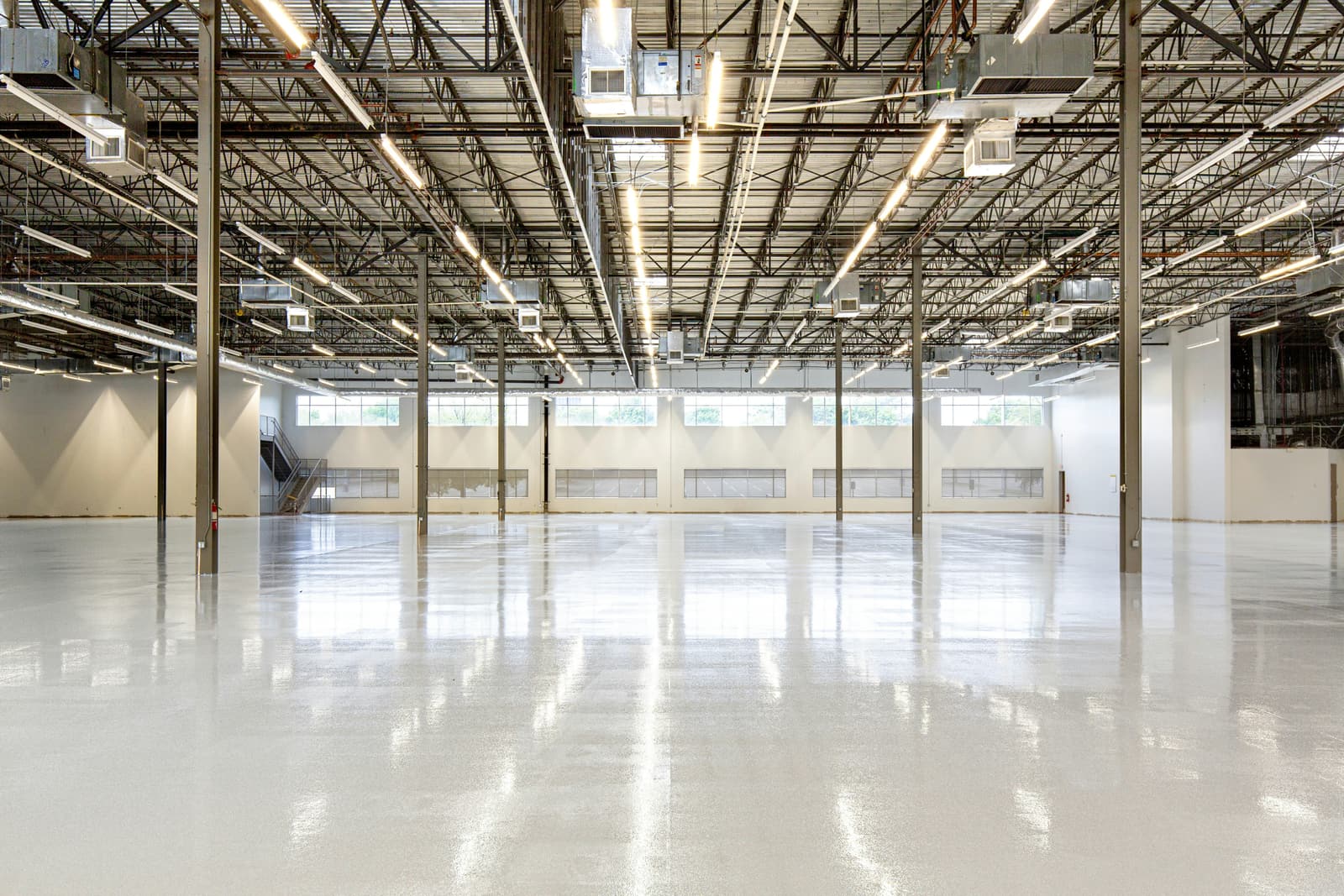
Warehouse industrial interior by Craftsman Concrete Floors / Unsplash Unsplash License
A warehouse or factory can be a strong film location, but only when power, access, safety zones, operating areas and contract limits are clear before the booking.
A factory or warehouse can give a production what a studio often cannot: scale, texture, concrete, steel, loading doors, machines, long sightlines and real industrial traces. As a film location, it only works when power, access, safety, operations and the location agreement are treated as part of the creative brief.
The difference from a house, office or hotel is simple: industrial risks cannot be handled casually. Forklifts, pits, racks, cranes, dust, noise, heavy loads, traffic routes and electric systems need to be translated into the shoot plan before anyone approves the booking.
A factory is strong when it combines visual value with workable logistics. Large doors, load-bearing floors, long sightlines, old machines, raw surfaces and high ceilings matter only if crew, equipment, vehicles and safety can share the space without conflict.
Productions often like these spaces because one address can offer several looks: workshop, warehouse, loading bay, break room, yard, office block, roof edge or machine hall. For owners, that means the strongest listing is not just the most cinematic corner. It is the set of areas that can actually be filmed.
A good request separates picture area, working area and logistics area. The picture area is in front of camera. The working area needs lighting, sound, camera, direction, makeup, video village and gear. The logistics area needs access, loading, parking, waste, bathrooms and safe routes.
The first request should show whether the shoot fits the building. A line like "we need a cool warehouse" is not enough. Useful details include the intended use, crew size, vehicles, equipment, schedule, noise, effects, number of performers, night work and whether the site stays operational during filming.
Hosts should state hard limits before the scout: no open flame, no drone, no access to rack aisles, no machine operation by external people, no blocked fire access, no loud scenes during shift changes.
For productions, that honesty saves time. If a music video needs a forklift in shot, a commercial wants to drive a car into the hall, or a drama plans a night scene with rain, haze and large fixtures, the site needs early technical review.
Power in a factory is not just a question of sockets. The real questions are available load, distribution, protection, cable runs, risk of damage, wet areas, exterior areas and who is allowed to inspect or change electrical systems.
DGUV guidance on electrical systems for construction and installation sites highlights that electrical equipment can need special protective measures because of mechanical stress and moisture. For a shoot, that means cable routes, distribution, outdoor runs and crossings over traffic areas need a plan.
The most useful host detail is not "power available". It is specific: which connections exist, where they are, what capacity is available, when they can be used, who may access distribution, and when the production needs a generator.
Productions should also ask whether sensitive machines, cold storage, servers, fire alarm systems or active lines share the electrical setup. A film light must not disrupt the business or overload protective systems.
For a warehouse film location, access can decide the booking before camera does. A strong visual space is hard to use if trucks cannot turn, vans block the loading bay, a roller door is too low or the freight elevator only runs during operating hours.
A recce should capture dimensions and paths: door height, door width, loading dock height, floor load, elevator dimensions, turning radius, yard use, parking, stopping restrictions, delivery windows and the route from unload to set.
Hosts should not only show where the camera can go. They should show where cases, stands, cable ramps, catering, makeup, wardrobe and waste can live without blocking operations, fire routes, neighbors or other tenants.
An active or former industrial site is not an empty playground. Germany's Betriebssicherheitsverordnung requires employers to assess risks before work equipment is used. For filming, that does not mean every industrial location is off limits. It means visible risks need owners, controls and rules before the shoot.
Typical issues include forklift traffic, unprotected edges, machines, pits, racks, heavy doors, dust, hazardous substances, slippery areas, noise, dark zones, hanging cables and areas that may not be entered.
The agreement should therefore cover more than fee and time. It should name the areas approved for filming, who gives the induction, who opens and locks, what personal protective equipment applies, whether a site representative must be present and who can stop the shoot for safety reasons.
If forklifts, pallet trucks, cranes or machines appear in shot or support logistics, the shoot needs one clear rule: who operates what, with which permission, under whose supervision and in which area?
BGHM points to DGUV rules and the Betriebssicherheitsverordnung for industrial trucks such as forklifts. For productions, the practical translation is direct: a spontaneous set idea that a performer should briefly drive a forklift is not a plan.
If vehicles are only picture dressing, keys, batteries, movement areas and loads should be secured. If they move, the production needs closed routes, communication, clear sightlines, induction and one responsible person who is not doing three other jobs.
Escape routes, emergency exits and fire access are not storage space for cases, costume racks, extras or camera vehicles. Germany's ASR A2.3 sets out workplace requirements for escape routes, emergency exits, safety lighting and escape and rescue plans.
For shoots, the simple rule is this: anything that people need to exit through, or emergency services need to enter through, stays clear. If a production brings a lot of material, it needs real holding areas, not a hope that corridors and doors will do.
Night scenes, smoke, haze, pyrotechnics, vehicles, welding looks or blocked hall doors can require early coordination with fire safety, building management, the local fire service or security.
Industrial spaces often sound different from how they look. Ventilation, cooling, machinery, trucks, hall reverb, rain on metal roofs, alarms and shift work can affect sync sound more than the images suggest.
A good recce includes a sound check at the same time of day as the planned shoot. If the site is operating, the team needs to know which noises can pause, which cannot, and whether a pause costs money, staff time or lost production.
Dust, oil, smells, cold, heat and drafts are also production questions. They affect wardrobe, makeup, camera, grip, safety, cleaning and whether sensitive products or props should enter the hall at all.
The location agreement should describe the actual use, not just the address. In factories and warehouses, areas, operating limits, safety rules and technical use are as important as the location fee.
Before approval, hosts should request proof of production insurance and check which risks are covered. In industrial spaces, the exposure is not only a scratch on the floor. It can include machines, doors, racks, interruption to operations, keys, stock, neighboring units and personal injury.
Productions should also ask whether the host has building, business liability or property cover and which duties apply around damage, fire alarms, security or third-party contractors. The agreement does not replace that review. It records the use that both sides approved.
A technical recce should cover at least these points. The more active or hazardous the site, the more likely it is that a safety specialist, electrician or responsible site representative should join.
SetScout can sort the location search earlier: which halls feel industrial, which have doors, yards, raw surfaces or large volume, and which should enter the request at all? The final approval still needs a concrete check with the host, production and responsible safety people.
For a first shortlist, start with /drehorte/industrie-location-film and /drehorte/fabrikhalle-filmlocation. A strong request describes not only the look, but crew size, equipment, timing, vehicles and the points that can make an industrial site complicated.
Yes, but only with a clear split between filming and operations. The practical issues are supervision, safe routes, noise, shifts, machines, restricted areas and whether parts of the business need to pause for specific scenes.
Not without explicit approval, suitable operators, induction and a safety plan. Industrial trucks are covered by specific workplace safety rules. If a forklift is only set dressing, it should be secured against use.
The useful details are connection types, capacity, protection, distribution locations, available times, cable lengths, exterior areas and who may make technical changes. If this information is missing, the production should expect generator or electrical planning.
Beyond fee and time, include an area plan, access, power, supervision, restricted areas, safety rules, reset, cleaning, damage, insurance, noise, night work and visible brands.
More posts you might be interested in
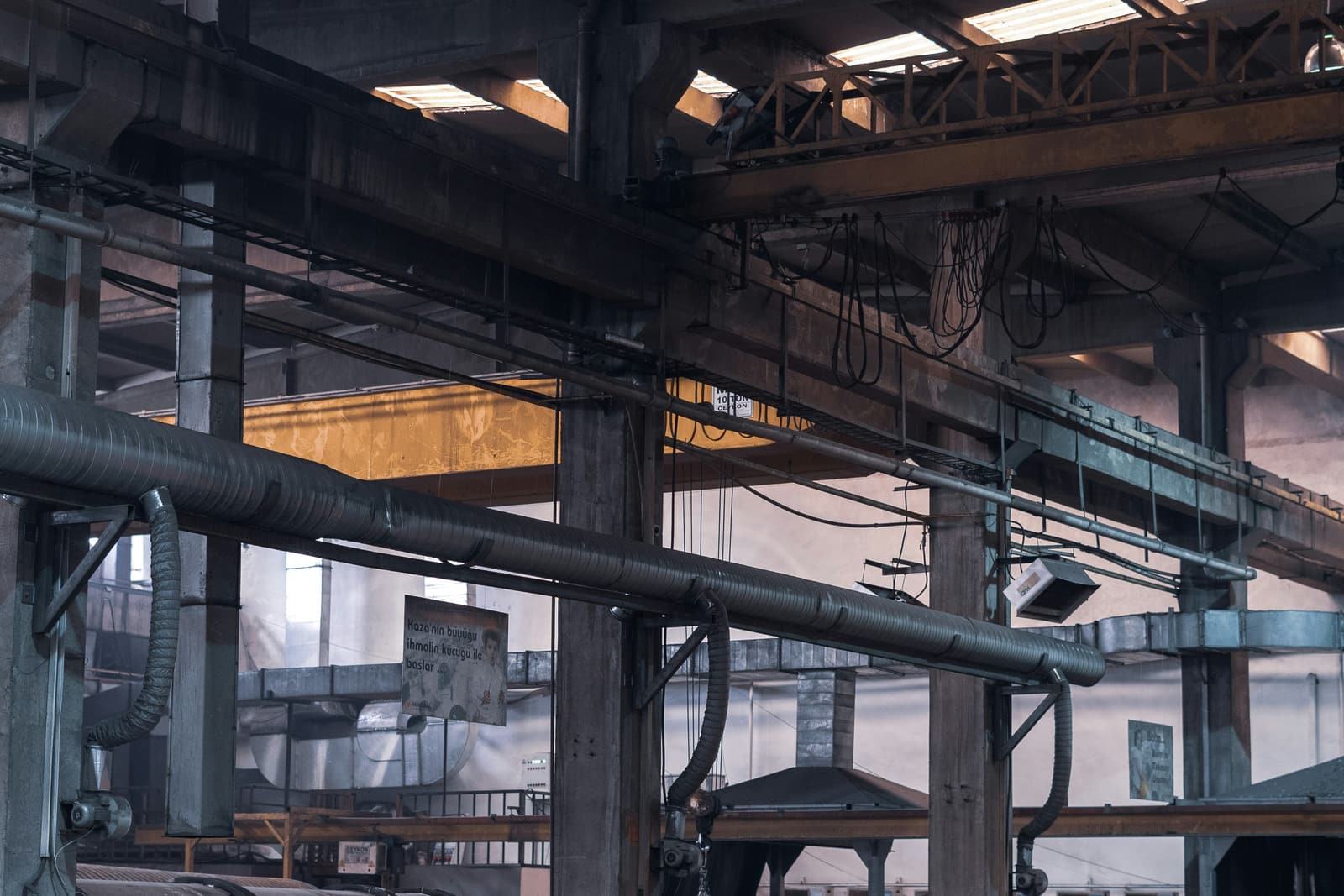
Industrial interior location by Ümit Yıldırım / Unsplash Unsplash License
Searching film locations by motif works best when each category is briefed with look, era, rooms, logistics, rights and hidden constraints.

Production planning board by Walls.io / Unsplash Unsplash License
Production schedule templates, shot lists and storyboards help location planning only when they expose rooms, access, light, sound, permits and recce risks.
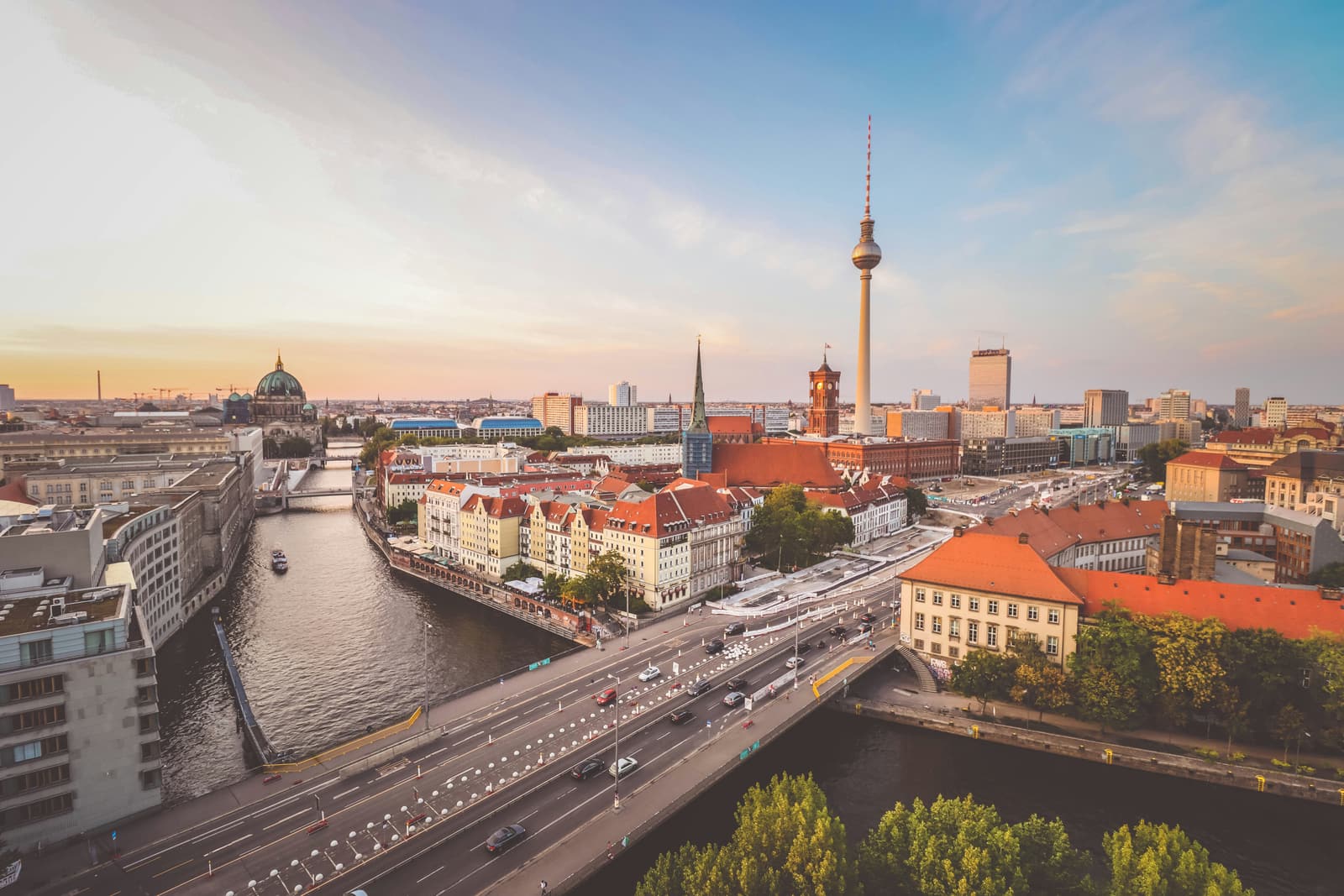
German city skyline by Florian Wehde / Unsplash Unsplash License
A practical comparison of Germany’s production hubs: Berlin, Hamburg, Cologne, Munich and Rhine-Ruhr by look, permits, crew base, transport, seasonality and private-location search.
