
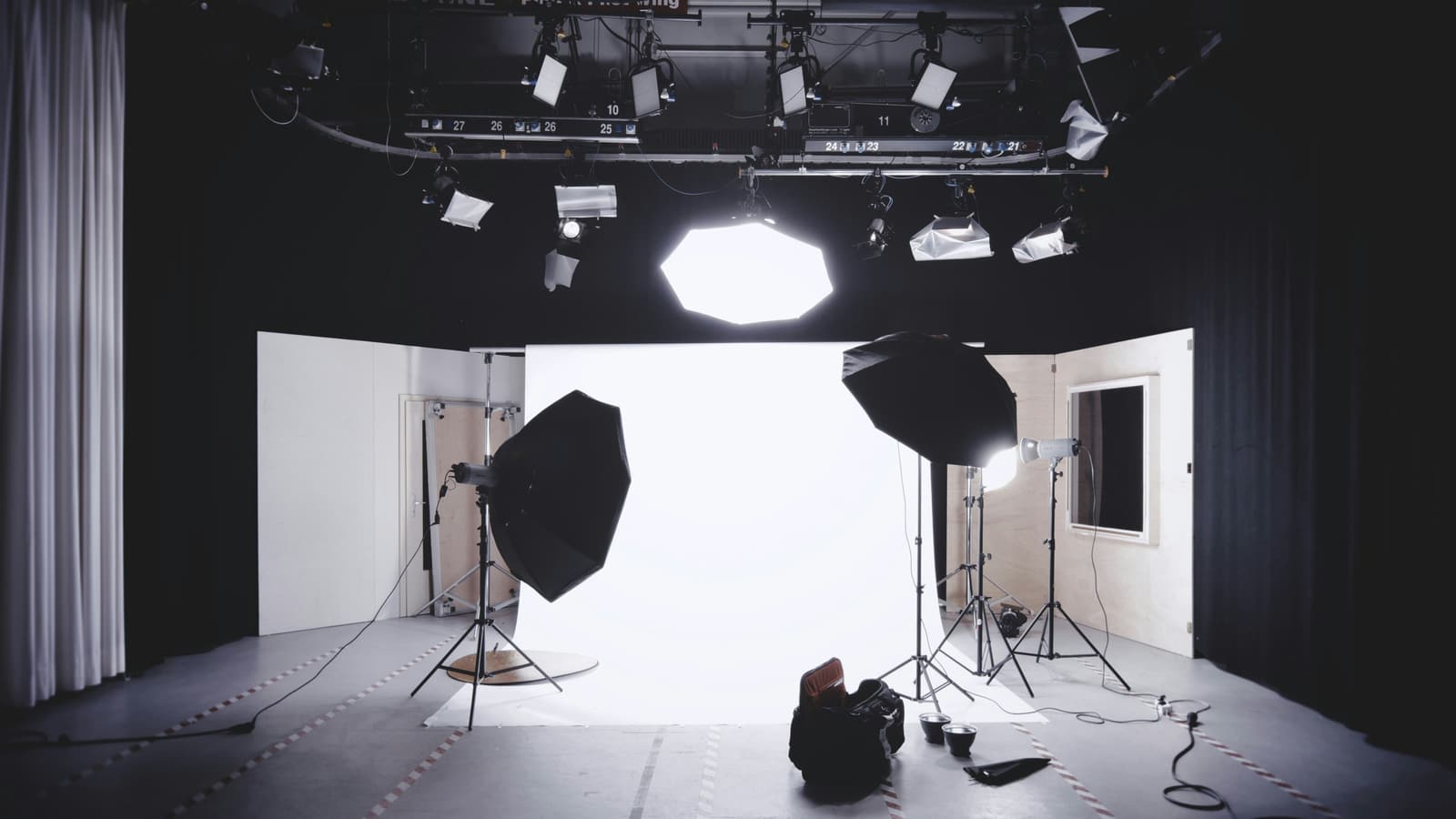
Photography studio setup by Alexander Dummer / Unsplash Unsplash License
How to Book a Photo Shoot Location: A Producer Checklist
A production-side checklist for photographers and brand teams comparing photo locations and sending a complete request for a short, efficient booking.
Renting a location for a photo shoot can look simpler than filming: fewer people, shorter hours, less equipment. In practice, many shoots still fail on light, styling space, image rights, tight booking slots or unclear host rules.
Photo productions need different details from film sets. The perfect space is useful only if it supports look changes, wardrobe, makeup, client review, image usage and fast handover.
This guide helps photographers, brand teams and content producers evaluate and request a photo location properly.
Quick takeaways
- For stills, light control often matters more than square meters.
- Plan styling, makeup, wardrobe, product, props, client review and image selection as separate needs.
- Clarify image usage, model and property releases, private details and brand surfaces before booking.
- Short bookings work only with clear handover, load-in, wrap time and overtime rules.
Why a photo location is checked differently from a film location
For photography, one angle can be enough. But the shoot often needs more look changes, styling decisions and image variants in a short time. The location must not only look right. It must be fast to control, easy to reset and clear in its details.
A film crew often asks about sound, movement, parking and longer access. A photo team also asks about makeup mirrors, rails, steamers, product tables, background variety, flash use and client review space.
Light: daylight, control and repeatability
The most important location criterion for stills is often light. Do not ask only whether the room is bright. Ask when, from where and how controllable the light is.
- Windows: size, direction, shade, curtains, privacy and reflections.
- Time of day: direct sun, diffuse light, winter light, evening light and weather risk.
- Artificial light: outlets, breakers, flicker, mixed color and space for stands.
- Blackout: whether windows can be covered or diffused without damage.
Plan styling, makeup and product areas
A good photo location needs backstage space. If styling happens directly on set, images, movement and schedule slow down.
- Makeup: mirror, power, daylight or even light, chair and work surface.
- Wardrobe: rail, steamer, changing area, privacy and safe storage.
- Products: table, clean surfaces, packaging waste, hanging options and stylist access.
- Client: quiet corner for laptop, selects, chargers, water and short approvals.
Background variety without set chaos
For social, e-commerce and campaign images, variety often matters. A strong photo location offers multiple usable backgrounds without requiring a full reset for every frame.
Check walls, windows, doors, floors, stairs, seating, exterior areas and neutral surfaces. Also ask what decor can be removed and which details should stay out of frame for privacy or brand reasons.
Image rights, people and property releases
For photography, later use is often the heart of the project. Clarify where images will appear: organic social posts, ads, website, print, press, out-of-home, packaging, e-commerce or internal use.
In Germany, Section 22 of the KunstUrhG says portraits may generally be distributed or publicly displayed only with the consent of the person depicted. Section 23 contains exceptions. This is not legal advice, but it is a strong reason to handle model and people releases before the shoot.
The GDPR defines personal data broadly as information relating to an identified or identifiable natural person. Recital 51 clarifies that photos are not automatically special-category data unless processed through specific technical means for unique identification. Productions still need to consider whether people, employees, guests or private details are identifiable.
For the location itself, a property or location release should state which rooms, objects, exteriors, house numbers, artworks, logos and uses are allowed.
Short bookings: half-day sounds easy, but needs discipline
Photo shoots are often planned as half-day or hourly bookings. That works only when load-in, styling, shooting, selects, wrap and handover realistically fit the slot.
- Start time: does it begin at arrival, setup or first frame?
- End time: does it mean last frame, wrap or empty room?
- Overtime: increment, price and hard cutoff.
- Handover: photos, condition, cleaning, waste, furniture and keys.
Be honest about crew size and equipment
Photo teams can sound small and then grow quickly: photographer, assistant, stylist, hair and makeup, model, client, social team, runner and courier. Hosts need a real headcount, not “small team.”
Also state whether you will use strobes, continuous light, stands, background systems, props, textiles, animals, children, food, liquids or haze. These details drive protection, cleaning and risk.
What belongs in a good photo-location request
- Project: brand shoot, editorial, e-commerce, portrait, campaign or content production.
- Usage: where and for how long the images will appear.
- Time window: arrival, load-in, shoot, wrap and handover.
- Team: exact headcount and roles.
- Equipment: light, flash, background, power needs, props and protection.
- Areas: set, styling, makeup, wardrobe, product, client, storage and break space.
How SetScout supports the search
SetScout helps narrow photo locations by look, room type and production needs. For photo jobs, the best shortlist is not the prettiest gallery. It is the list of spaces that clearly support light, styling areas, short booking windows and rights.
Use search to preselect strong spaces, then send a request that makes light, team, usage and timing specific.
FAQ: renting a photo shoot location
Do I need a location release for a photo shoot?
For private or controlled locations, use written permission. It clarifies which rooms, views, uses, times and reset duties are allowed. For commercial use, verbal permission is usually too weak.
What should I consider when people appear in photos?
If people are identifiable, you need a suitable legal basis before publication and use, often consent or a model release. In Germany, Section 22 KunstUrhG is a key starting point, with exceptions in Section 23.
Is a two-hour booking enough for a shoot?
Only for very small setups. Count load-in, styling, light tests, look changes, selects, wrap and handover. If clients, multiple looks or many products are involved, a half-day is often more realistic.
What is the difference between a photo location and a studio?
A studio offers control, infrastructure and usually clear technical rules. A photo location offers real look, furniture, atmosphere and context, but needs more clarity on light, protection, rights, changes and reset.
Recommended articles
More posts you might be interested in

none by Jakub Zerdzicki All photos and videos on Pexels can be downloaded and used for free.
Tax rules for income from renting out a film location
How to report profits from renting out your location correctly for German tax purposes
Inventorying film equipment before a location shoot by OpenAI image generation for SetScout Original image generated for SetScout; no third-party source image used
Film Equipment Insurance: Documenting Owned and Rented Gear
A practical checklist for cameras, lighting, sound and rented film equipment: confirm inventory, values, transport, storage and claims procedures before the shoot.
Film insurance for a production at a prepared location by OpenAI image generation for SetScout Original image generated for SetScout; no third-party source image used
Film Insurance for Productions: Coverage, Costs and Location Risks
Which insurance modules a film production should review, which details affect the premium and how to include locations properly in the risk assessment.