
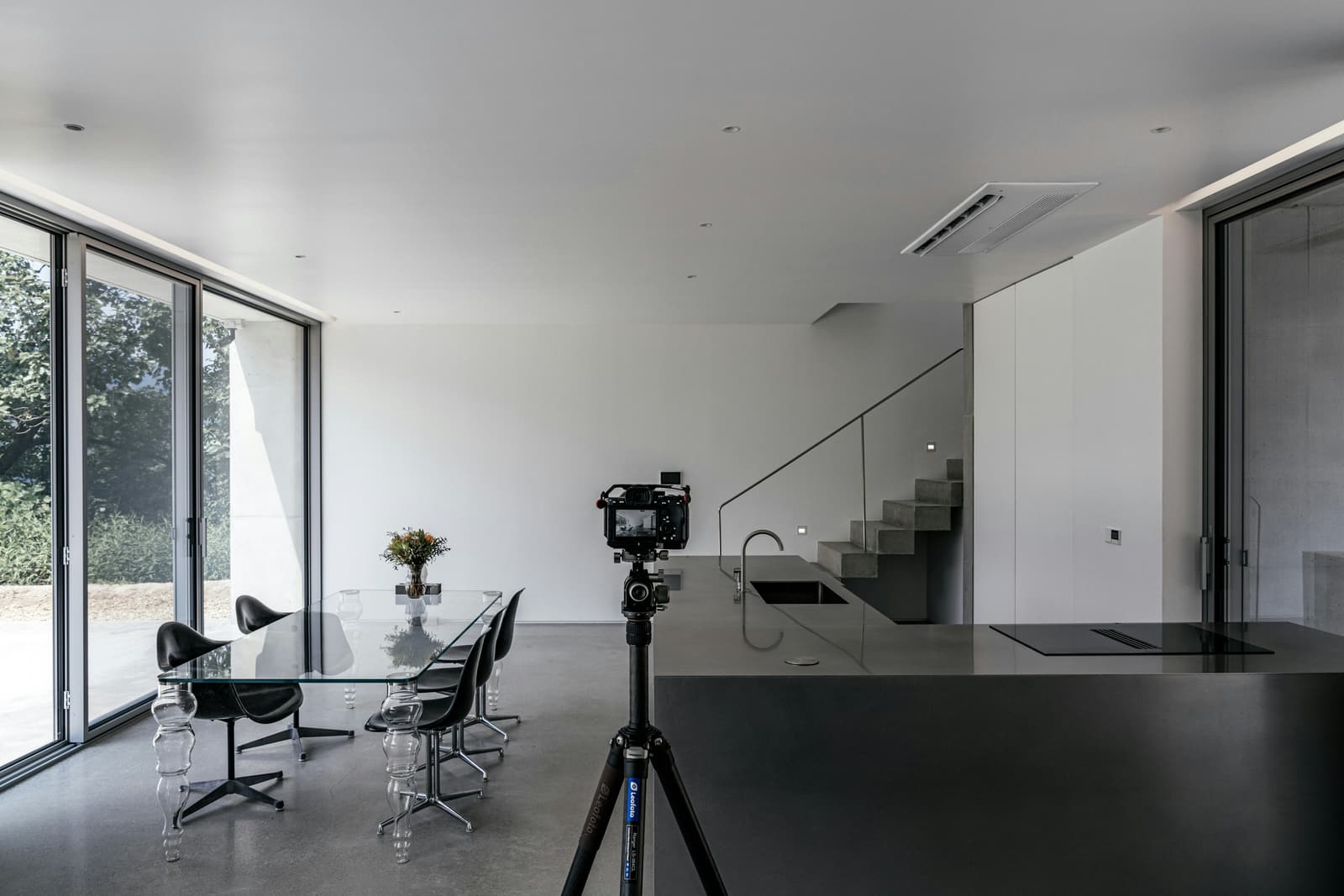
A camera set up in front of a dining room table by rawkkim / Unsplash Unsplash License
Filming on Private Property: Consent, Public Spillover and Releases
Practical permission checklist for productions and hosts using homes, offices, hotels, restaurants or other private filming locations.
Filming on private property does not automatically require a public filming permit. It does require written consent from the person who can control the space, plus a precise boundary plan for every camera, light, cable, crew member, vehicle and support area.
The difficult cases begin at the edge of the property: a lamp on the sidewalk, a generator in a loading bay, a reverse angle from across the street, a drone above the garden, or ten crew members waiting in a shared entrance. The location may be private while part of the production is not.
This guide is a practical production pre-check, not legal advice. Permit processes vary by city and setup, so confirm the current requirements with the responsible authority.
Key takeaways
- Private consent covers only the rooms, land and uses the signer is entitled to approve. Leases, house rules, co-owners and property management can narrow that authority.
- A shoot crosses into a separate permission path when people, equipment, vehicles, cables, parking or traffic measures use public or shared space.
- Exterior lighting, load-in, generators, drones, night work and neighbor impact belong in the first location request, not in shoot-day improvisation.
- A location release should define the footprint, schedule, usage rights, protection, costs and reset instead of recording only a general yes to filming.
Where private permission stops
Private permission stops wherever the approving person cannot decide alone. That can be the sidewalk or street, but it can also be the stairwell, elevator, courtyard, underground garage, shared driveway or facade of a rented building.
For a private location, the Berlin Brandenburg Film Commission recommends a location rental agreement and notes that rented properties may require approval from the owner or property management (BBFC: filming in private locations). A friendly verbal yes from a tenant or employee is therefore not enough evidence of authority.
Map the operational footprint, not only the frame. Ask where gear is stored, where talent and clients wait, where catering operates, which bathrooms are used, how the crew enters, and whether anyone or anything stands beyond the approved private area.
If the plan touches a street, park, pavement or other public land, use the Germany filming-permit guide to find the relevant city starting point. A host cannot replace the responsible public authority.
Scenario 1: camera inside, lighting outside
An interior camera does not keep the whole shoot private when a lamp, frame, stand or ballast sits outside. Record the exact stand position, cable route, power source, weather protection and clearance for pedestrians before approving the setup.
A light on a private balcony is different from a light in a shared courtyard or on a public sidewalk. The host may approve the interior and still lack authority over the exterior setup. Cable ramps and a spotter reduce physical risk, but they do not create permission.
Scenario 2: exterior angle, doorway or neighboring facade
A short establishing shot changes the permission map as soon as the camera, tripod or crew stands outside the private property. The brief should identify the camera position, direction of view, duration, crew size and any effect on pedestrians or traffic.
Doorway scenes create the same issue. Repeated exits, a boom operator on the pavement, a monitor by the entrance or background control can turn an interior booking into public-space use. If a neighboring facade, sign, window or person is prominent, clarify that separately rather than assuming the host controls the view.
Scenario 3: parking, load-in and generator
A visually strong private location can still fail operationally when trucks cannot stop, equipment must cross a busy pavement or the load-in route blocks residents. Confirm private parking, driveway width, lift access, carry distance, vehicle heights, turnaround space and delivery times during the recce.
A generator adds space, exhaust, noise, cable and safety questions. State where it will stand, how power reaches the set, whether ventilation is safe, and who is affected. A generator in a public bay or delivery zone is not covered by the interior location agreement.
If the crew needs reserved public bays, a no-stopping area or timed loading access, follow the separate no-parking zone guide for film shoots. Do not promise street space until the traffic measure and its installation requirements are confirmed.
Scenario 4: drone above a private garden
A property owner can approve take-off and landing on their land, but not the entire flight. Airspace rules, geozones, operator and pilot requirements, insurance, privacy, neighboring land and people on the ground remain separate checks.
Treat every aerial shot as its own workstream and use the drone filming permits and location-clearance guide before adding it to the shot list. The production should know the intended flight area, camera direction and contingency plan before asking the host to consent.
Scenario 5: night work, sound and neighbors
A quiet private interior can still affect the neighborhood. Bright windows, repeated doorway takes, radios in a courtyard, idling vehicles, generator noise and crew conversations after dark can trigger complaints even when no camera stands on public land.
Plan a named neighbor contact, arrival and wrap discipline, quiet holding areas and a response path for complaints. Neighbor information can reduce friction, but it does not replace a permit, building approval or the rights of identifiable people whose image or conversation may be recorded.
Scenario 6: tenant, hotel, restaurant or office approval
The person welcoming the scout may not be entitled to approve commercial filming. In a rented apartment, clarify the lease, landlord and property management. In a hotel, shop, restaurant or office, identify who controls the premises, brand assets, guest or customer areas, staff areas, security rules and operating hours.
Shared corridors, lifts, courtyards, reception areas, mailboxes, signs and customer data should be named in the plan. If the shoot cannot avoid them, obtain the approval of the party that actually controls them.
What the location release should cover
The release should turn the scout’s plan into a written boundary. It should state the parties, exact address, approved and excluded areas, access and shoot times, crew size, permitted activities, intended footage use, fee, additional costs, alterations, protection measures, insurance, damage, cleaning, keys, reset and handover.
The German Association of Location Scouts provides sample location documents and guidance (BVL downloads). Templates help teams identify missing terms, but they do not replace project-specific legal review.
Attach the real footprint when it matters: room list, floor plan, exterior camera position, load-in route, parking plan, generator position and drone area. The agreement should distinguish what the private signer approves from what still depends on a third party or authority.
Use a traffic-light check before the request
- Green: a small crew remains inside approved private rooms, uses private access and parking, has no exterior setup or drone, and has a clear authorized signer.
- Yellow: rented property, shared areas, neighbors, night work, exterior light, sensitive content, identifiable people or a larger crew require additional written checks.
- Red: sidewalk or road use, public parking reservations, closures, traffic control, drone flights, generator placement in public space, stunts, pyrotechnics or special effects need separate specialist and authority review.
What to put in the location request
Do not ask only whether you can film at an address. State the format, dates, prep and wrap times, crew size, approved rooms, support spaces, exterior positions, vehicle count, load-in route, lighting, power, drone work, noise, intended use and protection measures.
A useful sentence is specific: “We film in the living room and kitchen, store equipment inside, load through the private driveway, use no shared areas and need no public parking.” If that is not true, name the sidewalk camera position, vehicle bays, exterior lights or other public use explicitly.
Private-property filming checklist
- Who can sign for each private, rented or shared area?
- Where will camera, lighting, sound, video village, holding, catering and storage be?
- Will any cable, stand, crew member, vehicle or load-in movement use a sidewalk, road or public bay?
- Are exterior shots, neighboring facades, identifiable people, night work, sound or privacy-sensitive areas involved?
- Does the parking and generator plan work without assuming unapproved public space?
- Has drone work been separated from the host’s property consent?
- Does the written agreement cover usage, costs, insurance, damage, cleaning and reset?
When you shortlist a private location, compare the operational boundary as carefully as the look. Browse production locations and send a request that names the rooms, access, crew, vehicles and exterior needs a host must actually assess. Property owners can list a location for shoots with clear rules for private, shared and excluded areas.
FAQ
Is filming on private property always permit-free?
No. Private consent covers only what the authorized signer controls. Public or shared space, traffic measures, drone work, neighboring property, special effects and other regulated activity may require separate approval.
Can a light or cable on the sidewalk require approval?
Yes, depending on the city, setup and effect on public use. Once production equipment occupies public space or affects pedestrians, treat it as a separate public-space question and ask the responsible authority.
Is a tenant’s consent enough for an apartment shoot?
Not automatically. The lease, house rules, commercial use, shared areas and external setup may require approval from the landlord, owner or property management. Confirm signing authority before the booking.
Can a host approve a drone flight?
A host can approve use of their property, including take-off or landing where lawful. The flight must still satisfy aviation, geozone, insurance, privacy, neighboring-property and people-on-the-ground requirements.
Recommended articles
More posts you might be interested in

none by Jakub Zerdzicki All photos and videos on Pexels can be downloaded and used for free.
Tax rules for income from renting out a film location
How to report profits from renting out your location correctly for German tax purposes
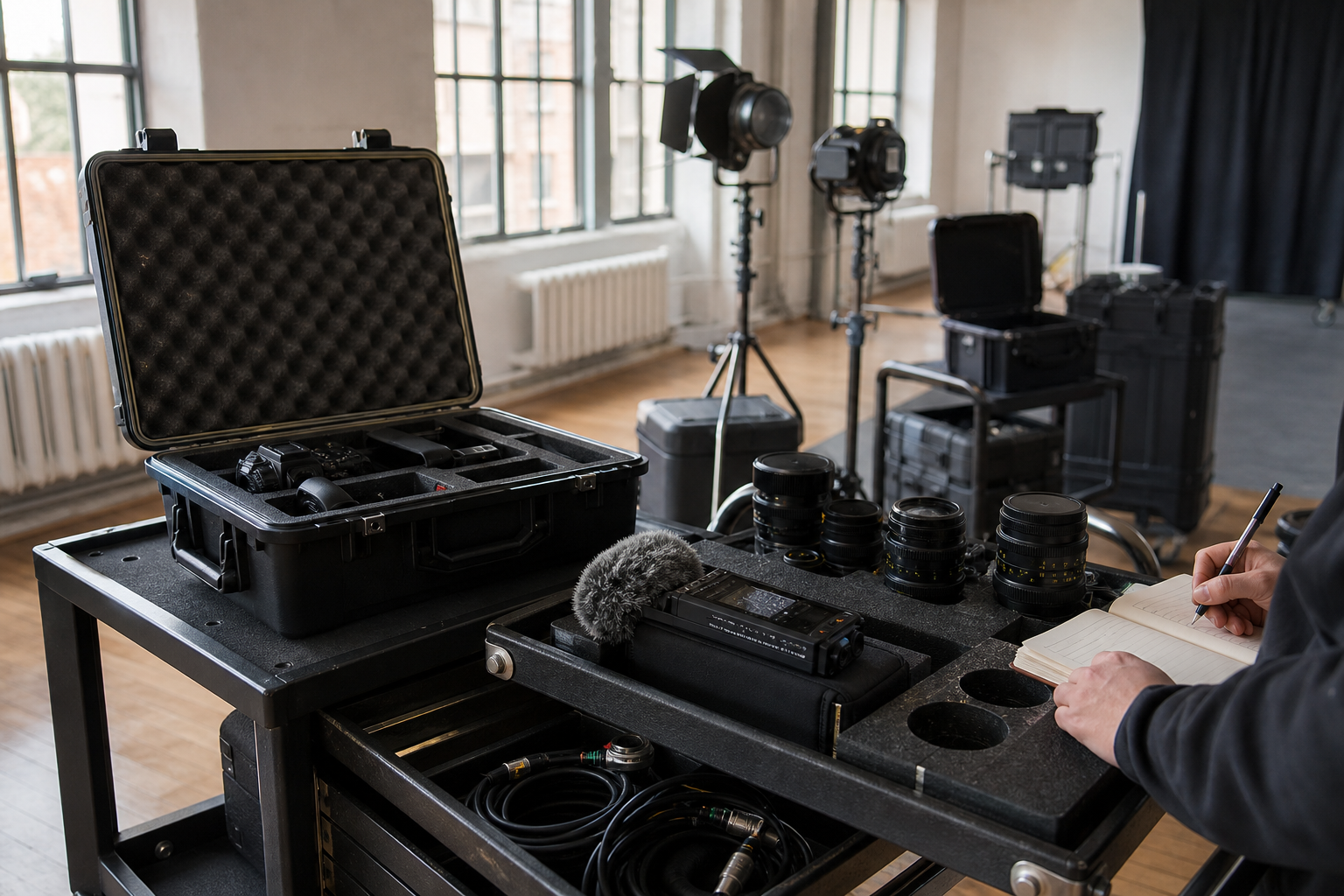
Inventorying film equipment before a location shoot by OpenAI image generation for SetScout Original image generated for SetScout; no third-party source image used
Film Equipment Insurance: Documenting Owned and Rented Gear
A practical checklist for cameras, lighting, sound and rented film equipment: confirm inventory, values, transport, storage and claims procedures before the shoot.
Film insurance for a production at a prepared location by OpenAI image generation for SetScout Original image generated for SetScout; no third-party source image used
Film Insurance for Productions: Coverage, Costs and Location Risks
Which insurance modules a film production should review, which details affect the premium and how to include locations properly in the risk assessment.