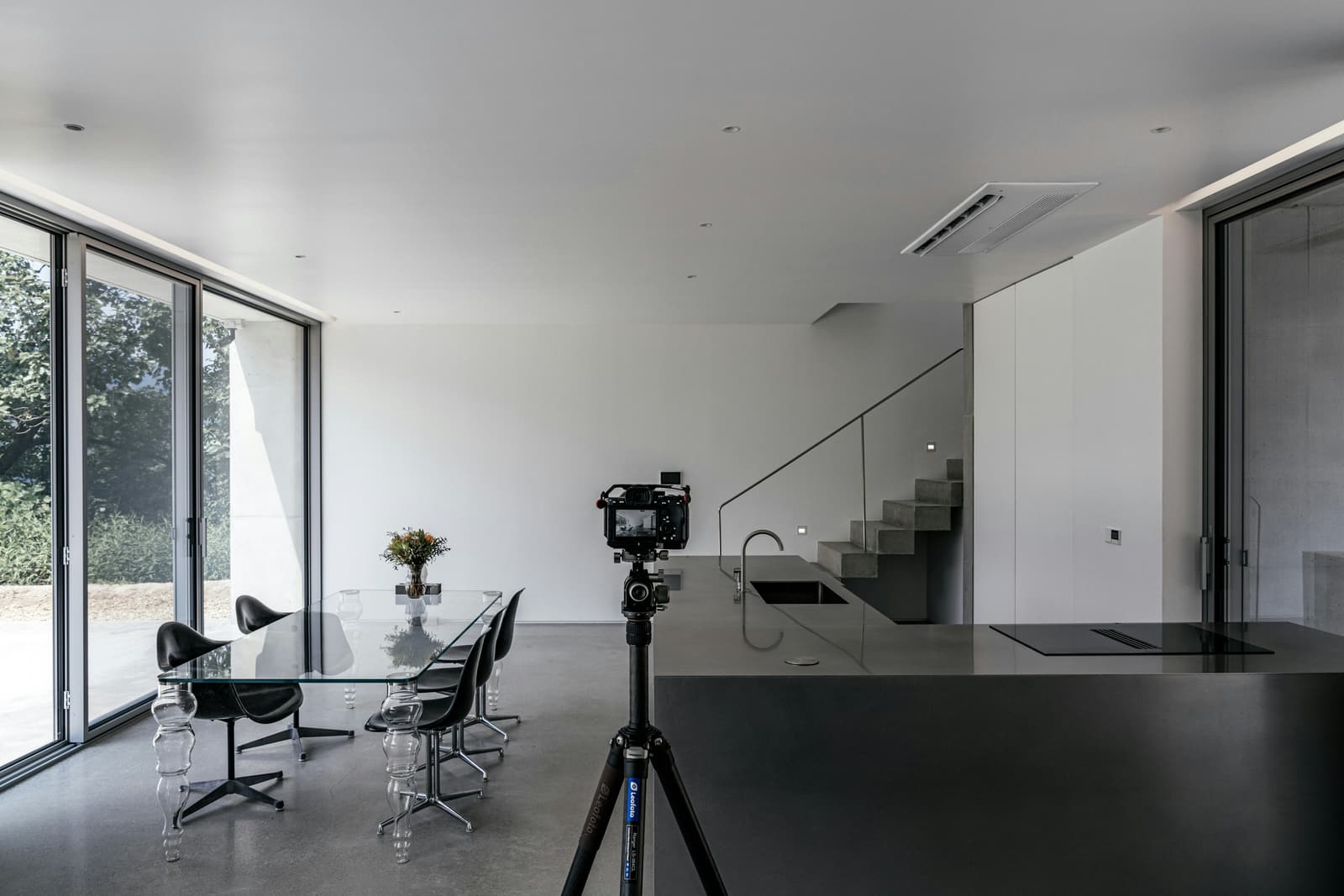
A camera set up in front of a dining room table by rawkkim / Unsplash Unsplash License
Filming on private property usually starts with the owner’s written consent, not a city permit. The risk appears when the shoot touches sidewalks, parking, drones, neighbors, rental rules, sound or usage rights.
Filming on private property does not automatically mean you need a public filming permit. It does mean you need clear consent from the person who can actually approve the location, and you need to separate the private space from everything around it: sidewalks, rental rules, neighbors, drones, sound, privacy and usage rights.
Most private-location problems do not start in the living room. They start with the light stand outside the window, the generator on the pavement, the camera position across the street, the drone over a garden, or a tenant assuming their approval is the same as the owner’s approval.
This guide is not legal advice. It is a production checklist for teams and hosts who want to know what has to be clarified before a private location request becomes a booking.
Private consent is a reasonable starting point only when the production stays fully inside the approved private area and does not touch other rights. That includes camera, lighting, sound, crew, catering, vehicles, holding areas and storage. If any of those move outside the approved space, the question changes.
The Berlin Brandenburg Film Commission points private-location shoots toward a location rental agreement and notes that rented locations may require permission from the owner or property management (BBFC: Filming in private locations). That distinction matters for apartments, offices, restaurants, hotels and private homes.
Do not rely on a friendly verbal yes. Confirm who can sign, whether commercial filming is allowed under lease or house rules, whether shared areas can be used, and which rooms, objects or views are explicitly off limits.
A private location does not end at the edge of the frame. If the shoot uses a sidewalk, public road, parking bay, green space, driveway entrance or public holding area, another layer may apply: special use, traffic law, parking restrictions, public safety and neighbors.
For Berlin and Brandenburg, the BBFC explains that filming beyond ordinary public use generally requires a permit, especially where traffic, pedestrians, no-stopping zones or closures are involved (BBFC: public streets and grounds). Other cities have their own process, but the operational logic is similar.
Common edge cases include a dolly track on the pavement, a light outside a shopfront, a reverse angle from the street, a picture vehicle in public parking, or a generator in a delivery bay. The location may be private, but the shoot is using public space.
A location release is not just a polite yes to filming. It should prove which rooms and areas are approved, when the production can enter, what the footage may be used for, and who is responsible if something is damaged, moved, cleaned or used longer than planned.
The German Association of Location Scouts provides sample location rental documents and guides (BVL downloads). Templates do not replace legal review, but they show the kind of issues professional shoots normally put in writing.
At minimum, clarify the parties, exact address, permitted rooms, support areas, shoot and prep times, crew size, location fee, additional costs, usage purpose, media channels, term, sensitive categories, alterations, furniture movement, protection measures, insurance, deposit, cleaning, keys, reset and handover.
For rented spaces, the person on site may not be able to approve everything. A tenant can discuss their own use, but filming, subletting, commercial activity, shared areas and external visibility may require landlord or property-manager approval.
In apartment buildings, stairwells, elevators, courtyards, entryways, mailboxes and parking spaces quickly become shared-space questions. If the camera is in the living room but ten people are waiting in the stairwell, the production is affecting more than the apartment.
For offices, hotels, shops and restaurants, add brand marks, customer data, staff areas, security rules, operating hours, noise, cleaning and guest privacy. The right approver may be management, ownership, the operator or a property manager, not the person at reception.
A drone is not just another camera angle. It touches aviation rules, privacy, neighboring properties, geozones, insurance and sometimes separate permissions. A host can approve use of their own garden, but not automatically a flight path over neighboring property, roads or sensitive areas.
The German Federal Aviation Office explains operator registration, including for UAS with sensors that collect personal data (LBA operator registration). The Federal Ministry of Transport also summarizes EU competency certificates and drone categories (BMV drone rules). Treat drone work as its own checklist item, not a casual extra shot.
Sound matters too. Neighbor conversations, guests, employees or passers-by may end up in the recording. Plan not just the camera angle, but signage, restricted areas, contact people and a way for people on site to ask questions or object.
Use a simple traffic-light check. Green: a small shoot fully inside the approved private rooms, no drone, no public parking, no exterior setup and a clear signer. Yellow: rented property, neighbors, shared areas, sensitive content or a larger crew. Red: any use of road, sidewalk, public parking, drone, closure, night noise, pyrotechnics, stunts or special effects.
For yellow and red cases, the request should not simply ask, can we film here? It should state the format, dates, crew size, rooms, exterior areas, vehicles, usage rights and protection measures. That lets the host judge the real impact of the production.
SetScout helps most when the request is structured early. A clear brief does not replace permits or contracts, but it reduces the common misunderstandings between production teams and location providers.
If you want to offer a private location, start with a realistic suitability check and clear house rules. If you are planning a shoot, browse production locations and send a request that names the actual rooms, access, crew and edge cases. Hosts can list their location for shoots when the operational boundaries are clear.
They should have written permission. A location release clarifies access, rooms, dates, image use, alterations, insurance, damage, cleaning and reset. Without that, the practical disputes usually appear after wrap.
Not automatically. A tenant can discuss their own use, but the lease, house rules, shared areas and commercial filming may require landlord or property-manager approval. Make that clear before the request becomes a booking.
It matters when equipment, crew, lighting, vehicles or camera positions use public space. The location can be private while the production activity outside the door still needs separate review.
A host can approve use of their own property, but drone operation must still comply with aviation rules, geozones, insurance, privacy and neighboring-property constraints. Treat it as a separate permission path.
More posts you might be interested in

Industrial interior location by Ümit Yıldırım / Unsplash Unsplash License
Searching film locations by motif works best when each category is briefed with look, era, rooms, logistics, rights and hidden constraints.
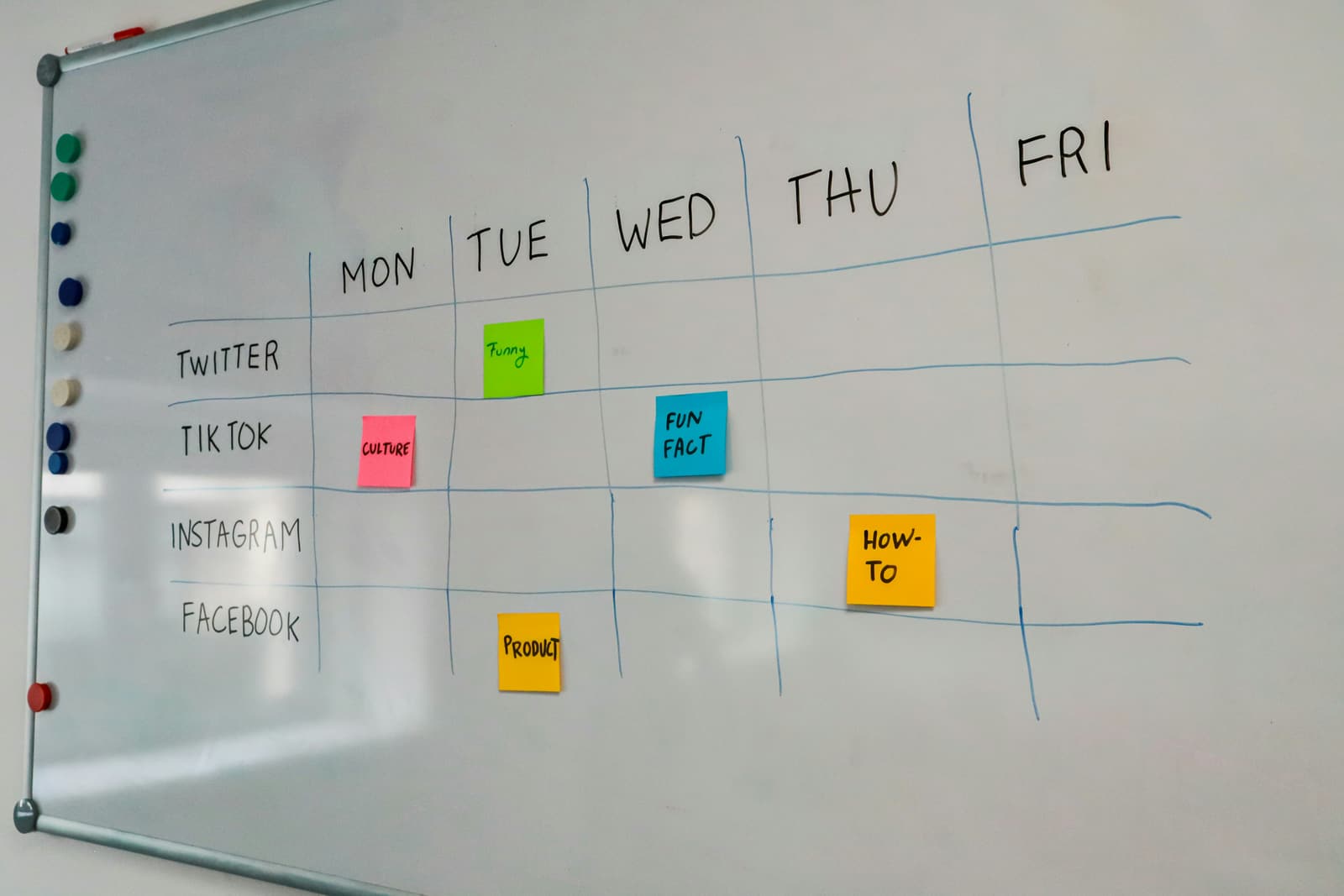
Production planning board by Walls.io / Unsplash Unsplash License
Production schedule templates, shot lists and storyboards help location planning only when they expose rooms, access, light, sound, permits and recce risks.
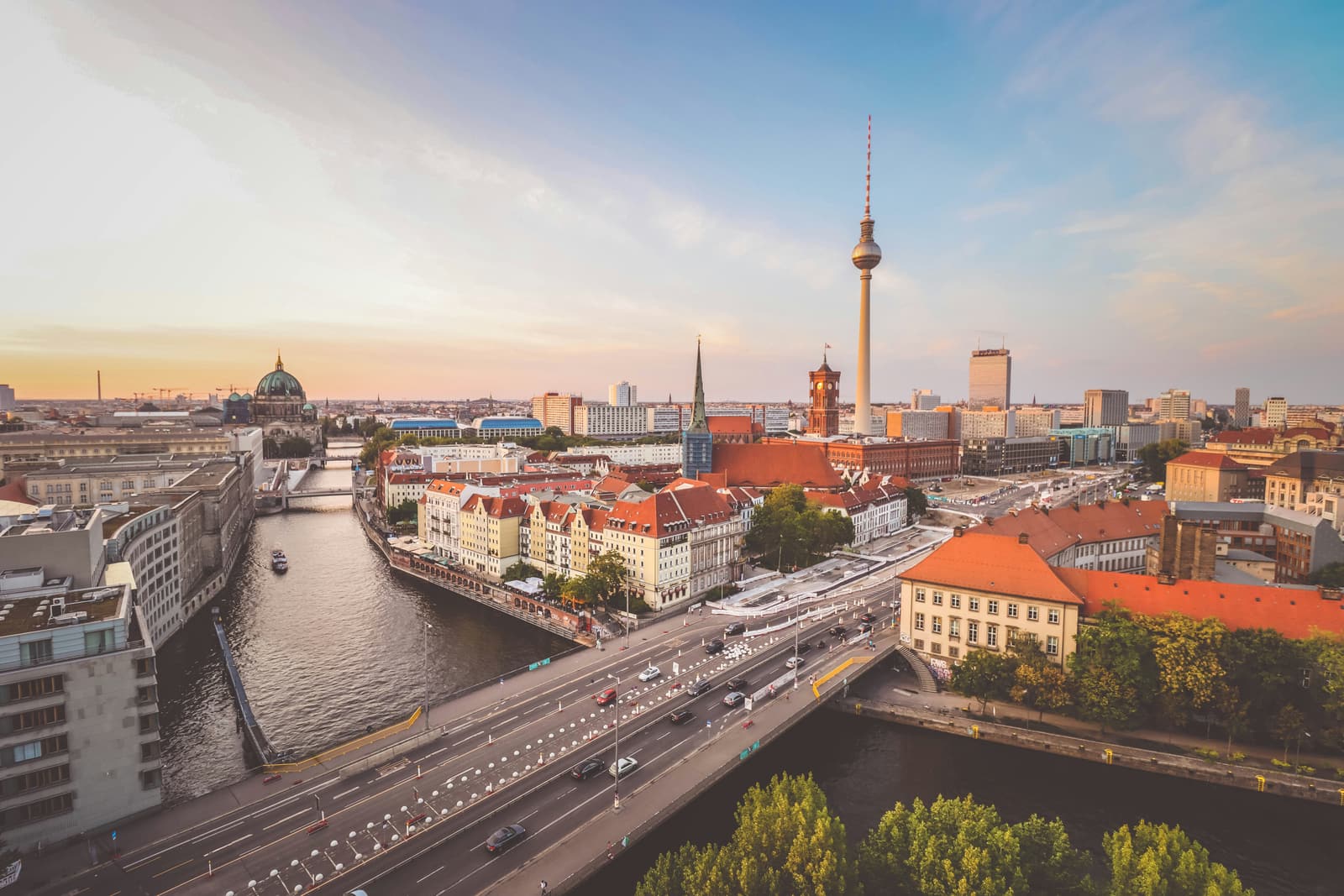
German city skyline by Florian Wehde / Unsplash Unsplash License
A practical comparison of Germany’s production hubs: Berlin, Hamburg, Cologne, Munich and Rhine-Ruhr by look, permits, crew base, transport, seasonality and private-location search.
