

Small film crew by Jakob Owens / Unsplash Unsplash License
Find a Low-Budget Film Location: Serious Requests and Cost Control
Small productions can find affordable locations when they narrow the ask, prove responsibility and budget for permits, insurance and reset.
Finding a low-budget film location does not mean asking someone to absorb your production cost. It means shaping the shoot so a host, school, cafe, office or private owner can understand the risk, the work and the value of saying yes.
Small teams get better answers when they are precise about budget, crew size, timing, changes, noise, insurance and reset. A vague request for a quick free shoot usually tells the host that the hidden work has not been priced.
This guide is for short film, student film, indie and small brand-content teams that need to control cost while still approaching locations professionally.
Quick takeaways for small productions
- A lower fee is more realistic when crew, time, equipment and used areas stay small.
- Public space is not automatically free: Berlin and Brandenburg generally require a permit when filming goes beyond common public use.
- Low-budget productions still need clear liability, reset, image usage, timings and a simple written agreement.
- The best way to reduce cost is to reduce work for the host, not to pressure them.
What low budget really means for locations
Low budget is not a reason to skip payment. For a host, the real question is operational load: how long the space is blocked, how many people arrive, what is moved, how loud it gets, who is liable and whether normal business is disturbed.
A small team controls cost by choosing for workload as much as look. A daylit apartment with a short scene and three people is a different request from a restaurant with furniture moves, customer disruption, holding space and a night finish.
The planning rule is simple: the less a host has to prepare, supervise and restore, the more likely a smaller budget can work.
Why vague free-location requests usually fail
Many rejections come from uncertainty, not only from price. A host sees unknown people, unknown liability, unknown usage rights, unknown handover conditions and a possible workday with no clear return.
A serious request turns the creative idea into operational facts. The host needs to see whether the shoot fits their day, which areas are affected and what happens if the team runs late or something is damaged.
Which locations are realistic on a small budget
The best candidates are spaces whose normal use is not heavily interrupted. Small productions should look for locations that can handle short windows, few people and minimal changes.
- Private homes or apartments when ownership, house rules and neighbors are clear.
- Offices, club rooms, workshops or studios outside normal peak hours.
- Cafes or small shops only when the shoot happens outside business hours or in a clearly separated area.
- Schools, universities or cultural spaces when the institution has rules for student or internal productions.
Public locations can be attractive, but they are not automatically easier. The Berlin Brandenburg Film Commission says filming on public streets and grounds that goes beyond common use generally requires a permit. Munich also distinguishes by production impact and points to a separate permit for public green spaces.
How to write a serious low-budget request
The first message should prove that you are not treating the location as a consequence-free backdrop. After two minutes, the host should know whether the shoot might fit.
- Project type: student film, short film, music video, social clip or internal brand video.
- Use: scene, rooms, interior or exterior, dialogue or simple cutaways.
- Team: exact headcount, roles and whether actors, clients or extras attend.
- Time: load-in, shoot, wrap, buffer and hard out.
- Equipment: camera, tripod, lighting, sound, power needs and furniture moves.
- Budget: a concrete range, not only “small” or “no budget.”
- Protection: insurance, responsible contact, agreement, reset and damage reporting.
Costs you still need to budget for
Cost control starts before negotiation. Decide which items are unavoidable and which can be reduced through a smaller plan.
- Location fee or expense contribution for the blocked time.
- Cleaning, reset, furniture moves and handover time.
- Overtime if load-in or wrap runs longer than promised.
- Permits, parking, reserved stopping zones or public-space use.
- Production liability, equipment insurance or proof required by the location.
FilmLA notes that student film permit applicants may still owe government fees, municipal fees and deposits depending on the permit request. The source is Los Angeles-specific, but the working lesson is broader: “student” does not replace a location-by-location check.
How to lower the price without pressuring the host
The fairest lever is less work. Ask first about a smaller setup: shorter window, fewer rooms, fewer people, daylight instead of a large lighting package, no furniture changes and a fixed handover.
A host can compromise more easily when you offer concrete protections: clean handover, written liability, restricted areas, no publication of sensitive parts, flexible timing or a short booking outside normal operating hours.
Student and short films: what not to skip
A small project can use simple paperwork, but it should not use no paperwork. For student films, it helps if the school provides insurance, equipment cover, permit guidance or templates. If it does not, the team still has to close that gap.
Safety also remains part of the plan. BG ETEM treats film production and event technology as a specific occupational-safety area. A small shoot still needs clear paths, safe power use, unblocked exits and one person who owns on-site risk decisions.
Template for a better low-budget request
Subject: Request for a small short-film shoot on [date], [crew size] people, [time window].
Hi [name], we are looking for a location for [project type], specifically a short scene in [room/look]. We would be [number] people on site, using [equipment], needing [areas], and planning load-in, shoot and wrap from [time] to [time]. Our budget range is [amount/range].
We can confirm in writing which areas will not be shown, how reset and cleaning will work and who is responsible on the shoot day. We can send insurance or school documentation in advance. Would this setup generally work for you?
Where SetScout fits into this workflow
SetScout helps small teams find locations that match both the visual brief and the production footprint. For low-budget requests, that matters because you should not contact every beautiful space. You should contact the spaces where crew size, timing and rules look realistic.
Use the location search to build a short list, then send a complete request instead of an open-ended price question. That protects your budget and respects the host’s time.
FAQ: finding a low-budget film location
Can I film for free as a student production?
Sometimes, but it is not a reliable planning assumption. A location can still create cleaning, supervision, lost use, insurance or permit costs. Ask for a small, tightly limited setup and be clear about what you can take responsibility for.
Do small shoots need permits?
It depends on the place and the activity. On private property, the rights holder decides first. On public ground, permits may be required. In Berlin and Brandenburg, filming that goes beyond common public use generally needs a permit.
What is the biggest cost driver for low-budget locations?
Usually it is not only the fee. Time and workload drive cost: supervision, changes, cleaning, overtime, parking and risk. A compact shoot with little equipment and a fixed reset is much easier to price affordably.
How much budget should I state?
State an honest range instead of “no budget.” Even if the number is low, the host can decide whether a shorter window, fewer areas or a different time slot could fit. Without a number, they have to guess and are more likely to say no.
Recommended articles
More posts you might be interested in

none by Jakub Zerdzicki All photos and videos on Pexels can be downloaded and used for free.
Tax rules for income from renting out a film location
How to report profits from renting out your location correctly for German tax purposes
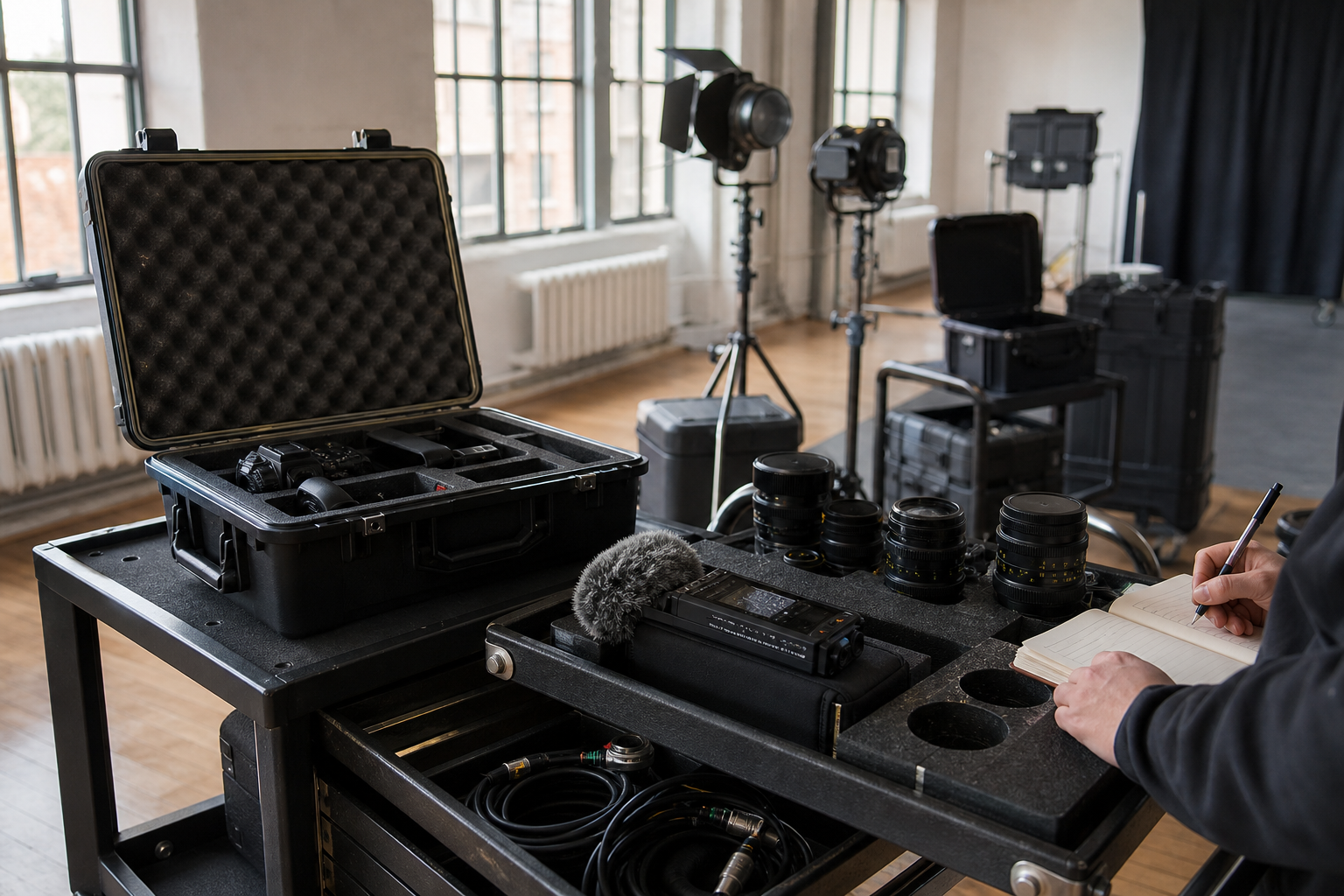
Inventorying film equipment before a location shoot by OpenAI image generation for SetScout Original image generated for SetScout; no third-party source image used
Film Equipment Insurance: Documenting Owned and Rented Gear
A practical checklist for cameras, lighting, sound and rented film equipment: confirm inventory, values, transport, storage and claims procedures before the shoot.
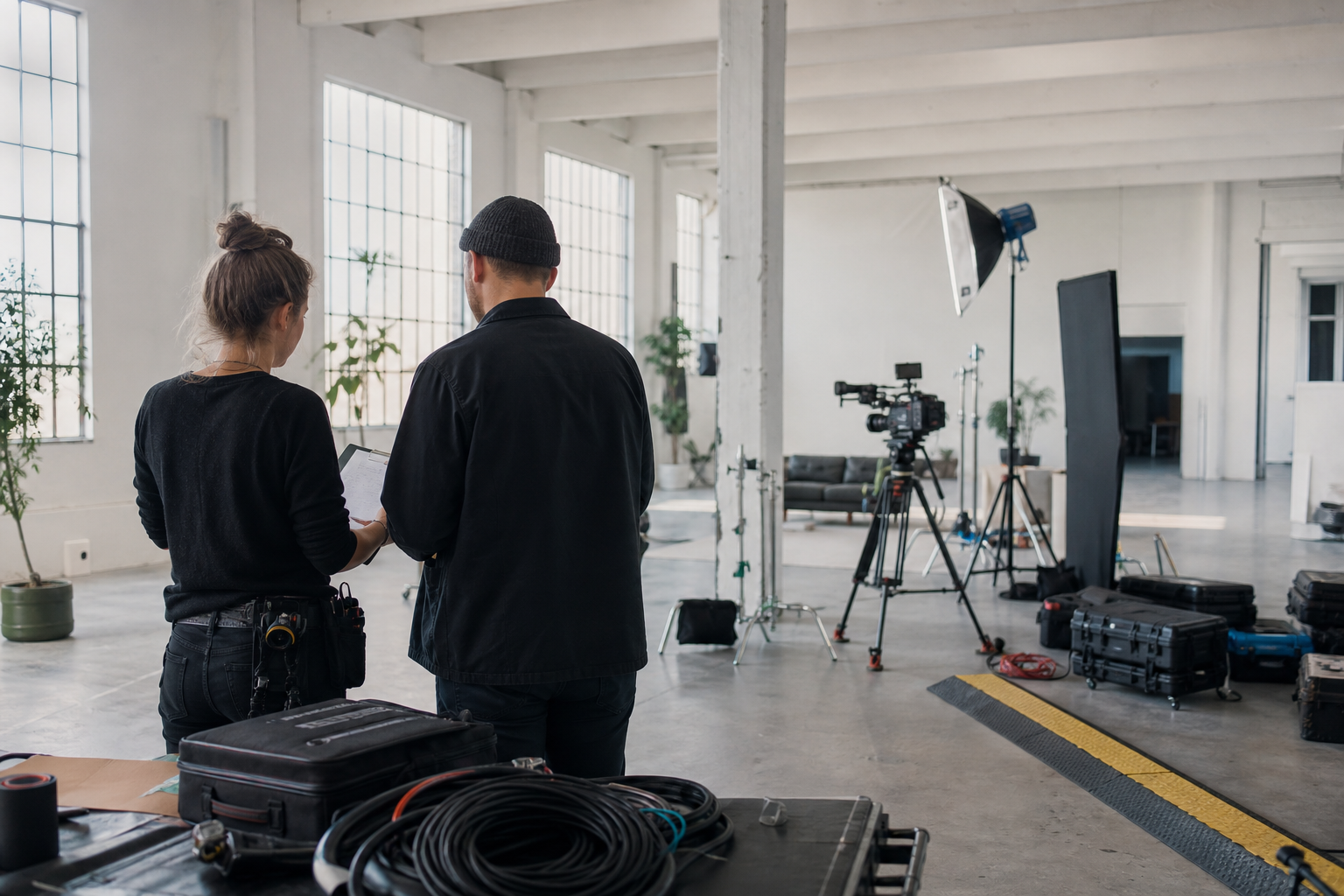
Film insurance for a production at a prepared location by OpenAI image generation for SetScout Original image generated for SetScout; no third-party source image used
Film Insurance for Productions: Coverage, Costs and Location Risks
Which insurance modules a film production should review, which details affect the premium and how to include locations properly in the risk assessment.