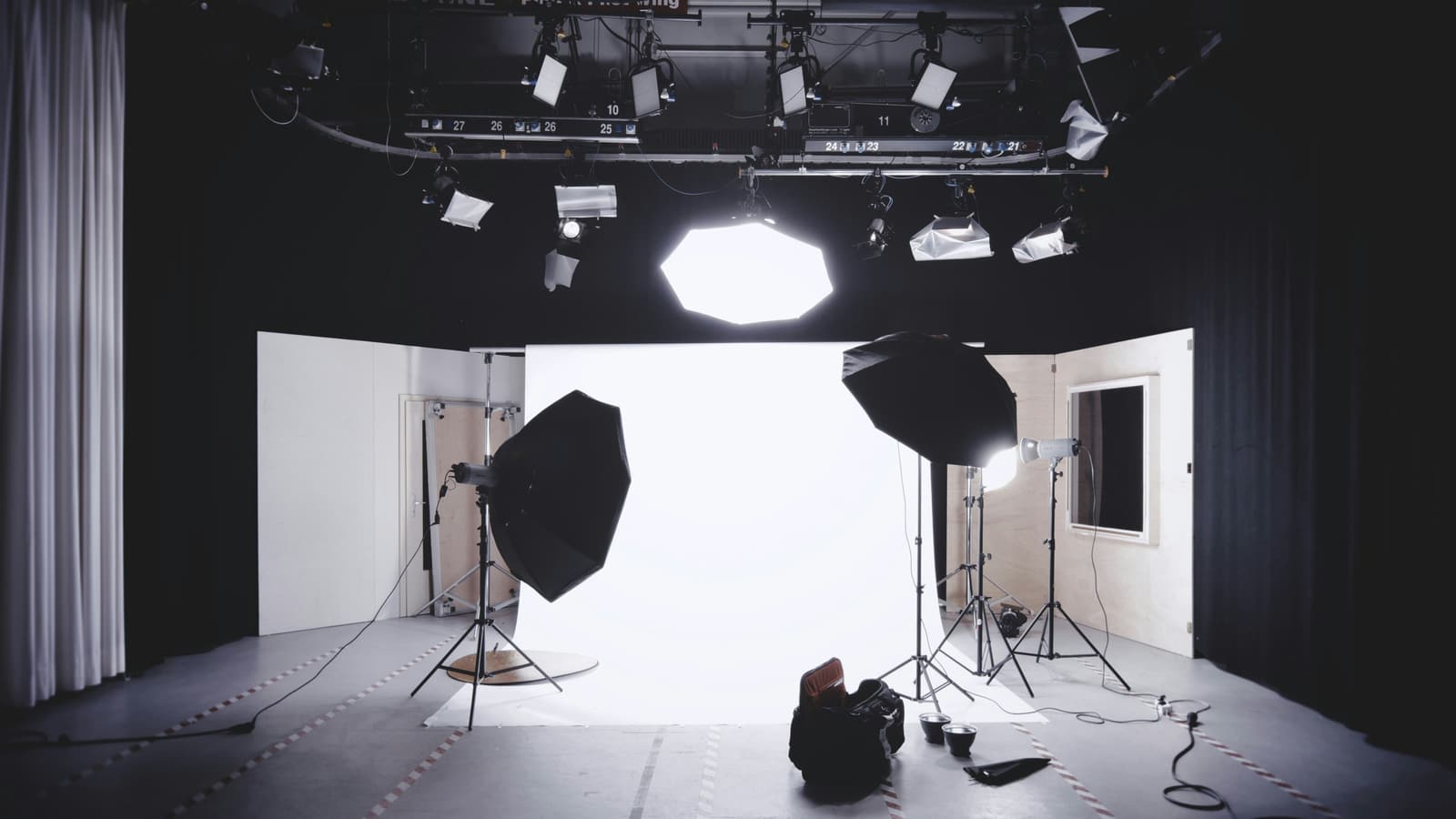
Photography studio setup by Alexander Dummer / Unsplash Unsplash License
How to choose the right location for product photography, ecommerce content and product video: kitchen, bathroom, showroom, daylight studio or controlled studio.
A strong product shoot location is not just a good-looking room. It affects clean surfaces, color consistency, reflections, food styling, packaging, storage and whether a product video can be shot without rebuilding the set all day. For small still-life setups, a controlled content studio may be enough. For furniture, cosmetics, homeware or campaign imagery, a real kitchen, bathroom, showroom or daylight studio can be stronger.
If the images are mainly for ecommerce listings, prioritize repeatability: neutral backgrounds, controlled light, consistent angles and little visual noise. Shopify’s product photography guide makes that point around clean backgrounds and light control. Marketplaces can be even stricter: Amazon’s Seller Central image guide describes pure white background requirements for main product images in many cases. For campaign images, social ads, product videos and lookbooks, context often matters more: how the product feels in use, what materials surround it and what story the space tells.
A kitchen makes sense when the product is understood there: food, drinks, kitchen tools, tableware, cleaning products, home care or household apps. A bathroom is useful for cosmetics, skincare, wellness, sanitary products and cleaning. Living spaces work for furniture, lamps, smart-home products, textiles and lifestyle bundles. The location needs to be more than visually appealing. Look for workable surfaces, limited private details, reliable power, controllable windows, product storage and a place where styling, packaging and spare items stay off camera. On SetScout, start with indoor photo locations that provide both the motif and the production space.
Showrooms are useful when several products need to work together: fashion collections, interiors, beauty lines, tech accessories or products shown on shelves, tables and walls. Their strength is a pre-built brand world. Their risk is control. Shelving, glass, mirrors, third-party brands, price tags and fixed light sources can create problems. International marketplaces already build dedicated pages for this demand, including Peerspace product photography studio listings. The practical SetScout angle is to qualify not only the look, but also the surfaces, rights and setup time before a production commits.
A daylight studio is strong when the product benefits from natural skin tones, material texture, soft shadows or a lived-in feel. It is especially useful for smaller sets, editorial shoots, social content and brand images where atmosphere matters more than perfect sameness. Still, plan for failure: when does the sun move, can windows be blocked, is there room for additional lights, and does the room still work in bad weather? Product shoots become expensive when the location only works for a short window each day.
A classic photo studio can look less exciting in a location deck, but it is often the professional choice. If 80 SKUs need the same angles, if packshots and still-life variants must stay comparable, or if product video, macro details and motion-control shots are planned, control matters more than character. Ask about ceiling height, blackout, power, background systems, stable tables, water access, freight access, storage, styling space and whether sets can stay built overnight.
For product video, a nice background is not enough. The location must allow movement: slider, turntable, handheld camera, gimbal, lighting shifts, sound and multiple framings. Glass, glossy packaging, water, steam, food styling and hands in frame all need more room than a single still photo. Check acoustics, footfall, refrigerators, HVAC, neighbors and where the product can be stored securely between takes.
Do not send only a moodboard. Include product type, number of motifs, number of SKUs, photo or video, required backgrounds, light requirements, crew size, delivery needs, support rooms, sensitive products, water or kitchen needs, power, setup time, wrap time and whether surfaces must be taped, moved or heavily cleaned. For showrooms and homes, also clarify whether third-party brands, artwork, private photos or recognizable design objects may appear in frame.
The best product shoot location is rarely just the prettiest room. First define what the product needs: light, color, surface, repeatability, context and space. Then decide whether a kitchen, bathroom, showroom, daylight studio or controlled studio gives you the best balance of look and certainty. On SetScout you can compare these motifs and clarify in the request whether the space is truly production-ready for product photography and product video.
More posts you might be interested in
Photo by Joey Banks on Unsplash by Joey Banks Unsplash License
A practical access planning guide for productions and hosts documenting real routes, bathrooms, ramps, holding and limitations before booking.
Photo by Ryan Liu on Unsplash by Ryan Liu Unsplash License
How productions should prepare bar, club and nightclub locations for music videos, fashion, commercials and nightlife content.
Photo by Peter Herrmann on Unsplash by Peter Herrmann Unsplash License
How productions should assess bunker, lost-place and special-motif locations without creating legal or safety risk.
