
Photo by Benjamin Wedemeyer on Unsplash by Benjamin Wedemeyer Unsplash License
A production glossary explaining which term refers to a search process, a role, a general site visit, or a detailed technical inspection.
In production, a recce is a practical inspection of a potential filming location before the shoot. It may also be called a location visit, location check, preliminary visit, or technical inspection. The label matters less than the central question: Can this place support the shoot when the requirements of directing, camera, sound, art department, production, and the client come together?
SetScout already has the static explainer What Recce Means, the practical location recce checklist, and the overview of location scouting. This article distinguishes the terms again for production use: recce, location visit, tech recce, scout, site inspection, and location scout.
A recce is a preparatory visit to a potential filming location. The team assesses whether the place works creatively, technically, organisationally, and legally for the production. Photographs and basic details are not enough because they reveal little about noise, changing light, neighbours, load-in routes, parking pressure, power, restrictions, or the owner's rules.
Location visit is often the clearest English term, especially for clients, hosts, owners, and non-technical teams. It describes the on-site appointment: viewing rooms, checking routes, explaining intended use, resolving questions, and deciding whether to book, pursue, or reject a location.
At SetScout, a location visit is also a specific marketplace process. In everyday use, however, the phrase can be broader: an initial visit with production and the client, a recce with the director and camera team, or a meeting with the host and location manager. When working with external partners, always state who will attend and what must be decided.
A location scout is the person or role responsible for researching, shortlisting, documenting, and coordinating potential locations with production. Scouting is the search process before a decision. A recce is the inspection of a specific candidate. The two are connected, but they are not the same.
A good scout delivers more than attractive photographs. They organise candidates by story function, owner contact, accessibility, cost range, risks, alternatives, and questions for the next visit. The recce then tests whether that shortlist stands up to reality.
A location recce usually means the general location check: Does the space suit the scene, brand, or interview? Which areas can actually be used? What are the sightlines, depth, windows, surfaces, colours, distractions, neighbourhood, and ambient noise like? Where will the camera, crew, client, hair and makeup, styling, catering, and equipment go?
The visit should produce concrete decisions: yes or no to the location, which rooms, what shooting area and time window, which restricted zones and rules, and what remains unresolved. If the recce only creates more uncertainty, it was not prepared properly.
A tech recce, also called a technical scout, is the detailed technical inspection. Camera, lighting, sound, assistant directing, art department, grip, safety, or VFX examine details beyond the first impression: electrical circuits, goods lifts, loading doors, cable routes, generator positions, radio frequencies, Wi-Fi, the sun's path, reverberation, floor loading, rigging, fire safety, escape routes, and setup times.
Not every small production needs a separate tech recce. For interviews, social content, or stills, a well-prepared location recce may be sufficient. For large sets, sensitive sound recording, alterations, night work, special effects, public spaces, or heavy equipment, a technical inspection can quickly become essential.
Site inspection is often used in international, events, or corporate contexts. It sounds less like film jargon and suits visits attended by client teams, agencies, safety leads, or operators. It may resemble a recce in substance, but often places more emphasis on access, operations, safety, capacity, and client experience.
If an international team asks whether a “site inspection” is possible, do not automatically schedule a technical scout. First clarify whether the purpose is creative approval, client confidence, safety, technical feasibility, or a booking decision.
A recce should always prepare decisions: Is the location visually right? Is it technically feasible? May we use the relevant areas? Can sound, lighting, power, parking, access, and neighbours be managed? Which costs, rules, and conditions remain unresolved? What alternatives do we need if the location falls through?
The outcome should be documented: photographs, short videos, a floor plan or sketch, contacts, house rules, outstanding permits, technical notes, parking and load-in plans, room allocations, time windows, risks, and next steps. Without this documentation, knowledge is lost between the recce and shoot day.
With clients and hosts, “location visit” is usually clearer than recce. With camera, sound, and lighting, “tech recce” is more precise when technical decisions are genuinely required. “Location recce”, “tech scout”, and “site inspection” all work with international teams, but only if you state the purpose. This prevents someone expecting an informal walk-through when production needs a binding technical checkpoint.
The simplest wording is: We are conducting a location visit to assess the visual result, intended use, technical requirements, access, and outstanding approvals. If the team then needs a deeper technical review, we will schedule a tech recce with the relevant departments.
A recce is a decision-making appointment. Location visit is the clearest general term, tech recce is the technical deep dive, location scout is the search role, and site inspection is the more neutral international term. Using these terms precisely prevents misunderstandings and produces better decisions about the shoot, budget, and risk at every on-site visit.
More posts you might be interested in

none by Jakub Zerdzicki All photos and videos on Pexels can be downloaded and used for free.
How to report profits from renting out your location correctly for German tax purposes
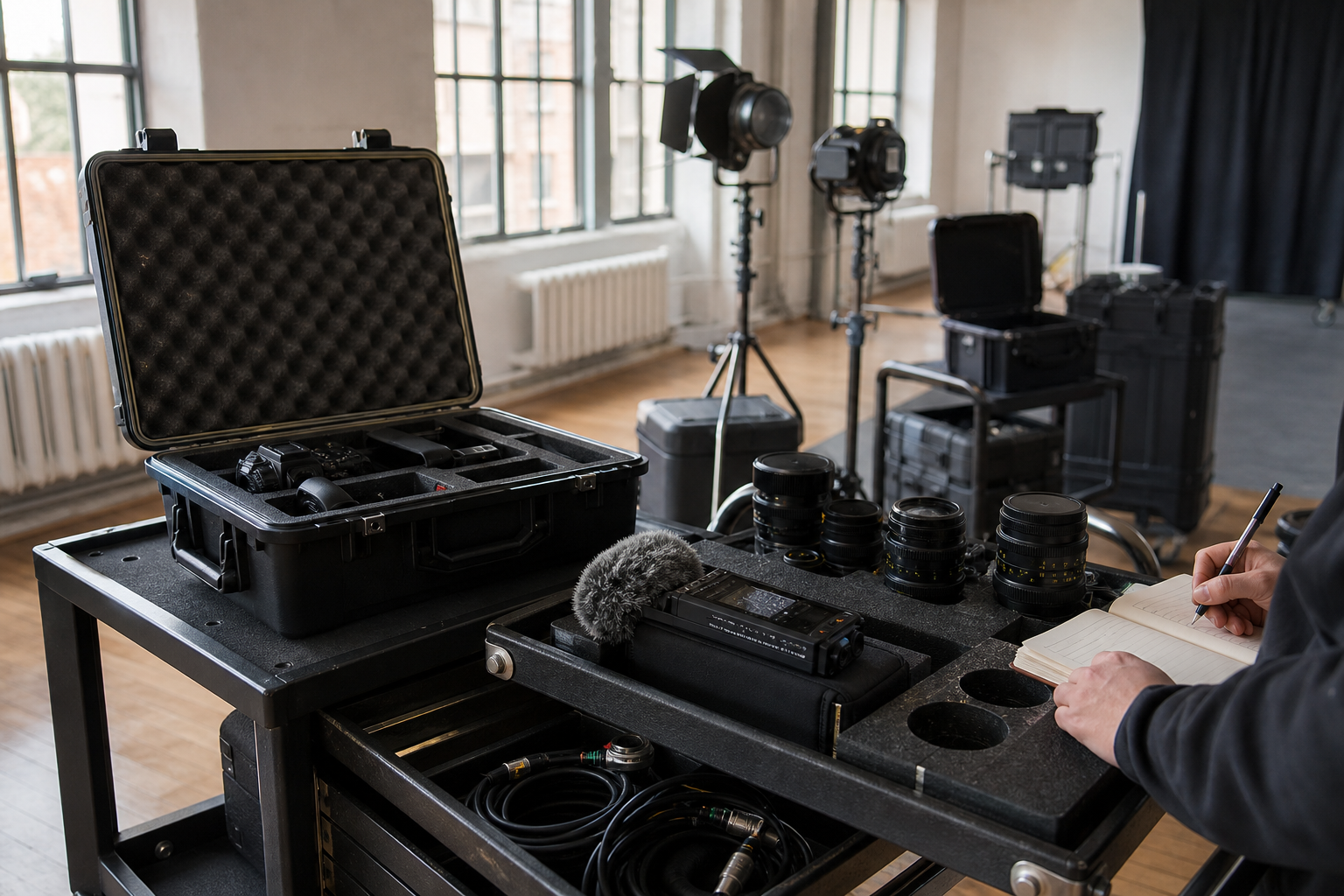
Inventorying film equipment before a location shoot
A practical checklist for cameras, lighting, sound and rented film equipment: confirm inventory, values, transport, storage and claims procedures before the shoot.

Film insurance for a production at a prepared location by OpenAI image generation for SetScout Original image generated for SetScout; no third-party source image used
Which insurance modules a film production should review, which details affect the premium and how to include locations properly in the risk assessment.
SetScout is funded through the EXIST program by the Federal Ministry for Economic Affairs and Energy and the European Social Fund Plus (ESF Plus).