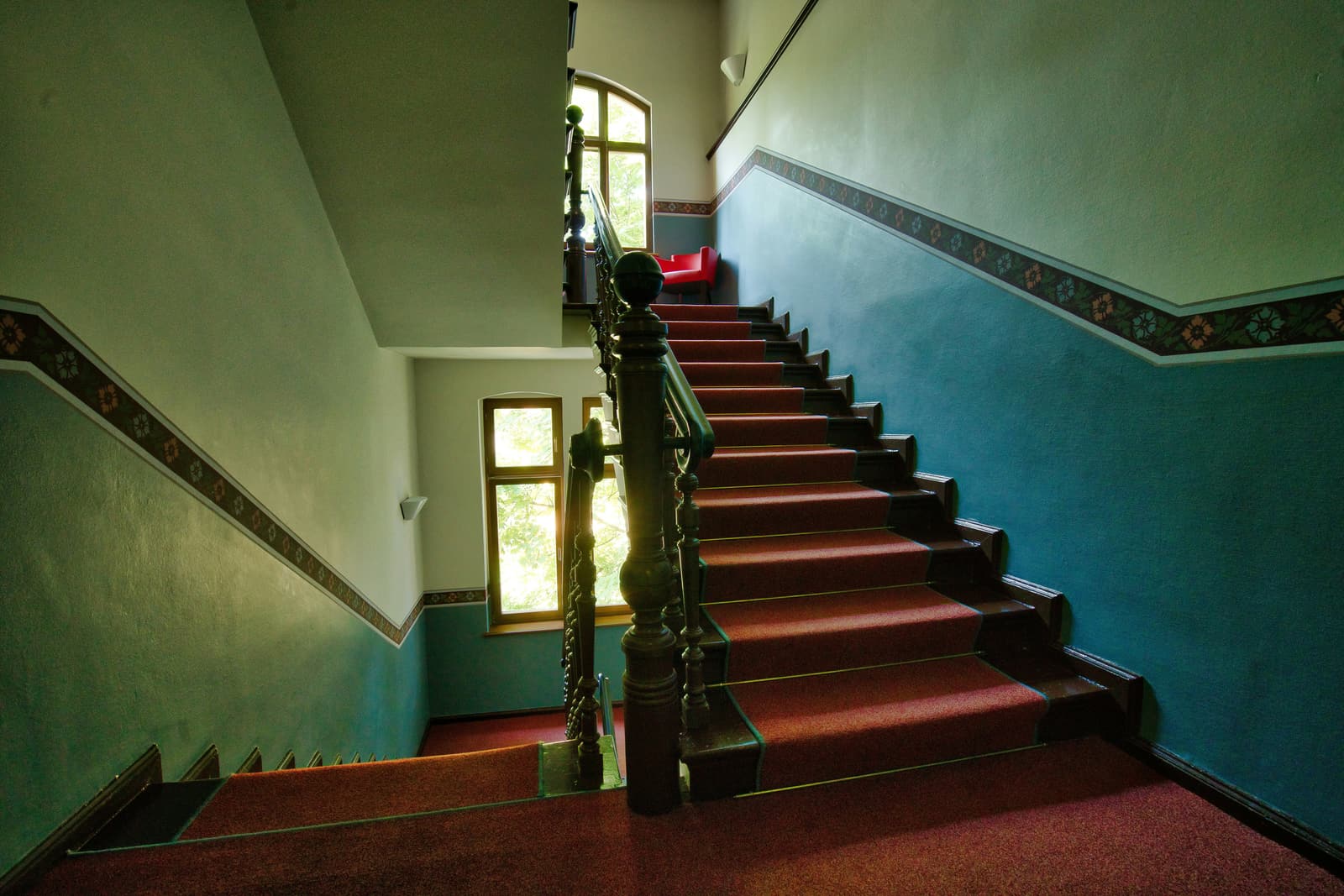
Historic villa interior by Stefan Steinbauer / Unsplash Unsplash License
Premium locations need more preparation than normal spaces: heritage rules, floor protection, security, crew limits, insurance, guests, drones and reset must be clear before approval.
A villa film location, castle or historic house can give a shoot immediate value, depth and credibility. Tall rooms, old staircases, gardens, libraries, salons and facades are not easy to recreate in a studio.
That is also why these locations carry more risk. Sensitive floors, protected architecture, expensive furniture, guests, security, public visitors, drones, insurance and reset all need clarity before approval.
This guide is for productions and high-value hosts who want strong locations without damaging the property or the relationship with the owner.
Castles, villas and historic homes are booked for visual impact. A production still needs to know whether the site can support access, power, support rooms, protection measures and approvals.
A salon may look perfect but only tolerate ten people. A staircase may be iconic but forbid a dolly move. A garden may look large but still ban vehicles, generators or drones.
For historic houses, the first question is not “can we enter?” but “what can be changed, moved, fixed or shown?” Heritage law in Germany is state-level law, so you need the authority or site management for the specific place.
Berlin's heritage law requires approval under Section 11 for certain changes to monuments and for changes to immediate surroundings when condition or appearance is affected. For shoots, that means set builds, outside light, banners, drones, facades and gardens cannot be cleared casually.
Even without formal heritage status, foundations, museums, hotels, owner families or building management can have their own rules. Those rules are part of the location.
High-value locations rarely fail because of camera. They fail because of protection. Wood floors, stone, rugs, wallpaper, plasterwork, wall fabric, frames, antiques, lamps, doors and railings need clear rules.
Define in advance which areas may be stepped on, driven over, taped, covered, moved or closed. Floor protection, weight distribution, felt, cable ramps, gloves, site supervision and restricted zones belong in the day plan.
The California Film Commission advises property hosts to secure restoration and a release after the property is returned to its original condition. The principle fits premium locations everywhere: document condition before, review condition after.
A villa may have a large driveway and still not tolerate a large crew. The deciding spaces are often outside the frame: holding, makeup, wardrobe, client area, DIT, catering, restrooms, equipment storage and safe cable paths.
VBG and DGUV treat stages, studios and scenic productions as occupational-safety environments. At changing workplaces such as historic locations, assess risks from lighting, cables, stairs, loads and visitor routes deliberately.
State headcount, vehicles, large equipment, lighting setup, generator, drone, haze, candles, water, food styling, animals, stunts and night work early. The higher the value of the site, the less room there is for surprises.
Many premium locations are not empty: hotels have guests, castles have visitors, villas have residents or staff, museums have opening hours. A shoot has to plan around that reality.
Clarify separate routes, closed areas, privacy screens, security, wardrobe, restrooms, catering, noise windows, parking and contacts. If guests or visitors are present, the production needs a clear plan for image rights, privacy and set boundaries.
Private approval does not automatically cover road, sidewalk, park, driveway, neighboring land or aerial images. Premium locations are often told through outside views, gates, facades and gardens, which is where extra permissions appear.
visitBerlin says filming permits in Berlin are handled through district offices and that prior permits may also be needed for indoor filming or filming on private property. For every state and city, check the concrete path.
Drones add aviation rules, owner consent, privacy, safety distances and often local coordination. At historic sites, also ask whether aerial images reveal layout, security or private areas.
For high-value locations, productions should provide insurance proof before approval. Depending on the shoot, this may include production liability, property damage, key loss, borrowed objects, vehicles, drones, special effects or unusual risks.
The location agreement should clearly cover liability, deductible, damage reporting, deposit, approval process, reset, cleaning, overtime and exclusions. Vague promises like “we will be careful” are not enough for historic or expensive spaces.
Premium locations live through their details. Advertising, film and photography still often need interventions: move furniture, remove pictures, bring products in, light from outside, close curtains, remove rugs or rearrange plants.
Create an intervention list: moving, removing, covering, taping, hanging, drilling, painting, water, fire, food, animals, haze, confetti, soil, shoes, heels, wheels and tracks. Each item needs approval or a clear no.
At a villa or castle, the shoot does not end with the final take. Reset, cleaning, waste, catering leftovers, shoe marks, garden areas, restrooms, parking and key handover need time.
Schedule reset as its own slot. A rushed wrap creates exactly the damage a premium host wants to avoid: hurried load-out, weak control and no shared sign-off.
A strong request makes the impact visible before anyone gets attached to the location creatively. It should be short enough to read and concrete enough for real risk review.
SetScout helps you compare high-value locations by visual impact and production risk. Use /drehorte to find villas, castles and special homes, then ask the shortlist about protection, access, insurance and permissions.
For hosts, that reveals which productions are prepared. For productions, it lowers the risk that a dream location fails after creative approval because of rules, damage risk or missing coordination.
Not automatically, but you need to check owner permission, site management, heritage status, public areas and planned interventions. Protected or publicly accessible sites may have additional approvals or house rules.
At minimum, liability and property-damage risks that match the shoot. Depending on the site, keys, art, furniture, drones, vehicles, special effects or high deductibles may matter. Hosts should see proof before approval.
Only with clear permission. At high-value locations, an intervention list should define which objects may be moved, covered or closed off. Condition is best documented with photos before and after.
Because support spaces are often more limited than the image suggests. A grand hall does not automatically solve makeup, catering, wardrobe, client area, equipment storage, restrooms, parking and safe routes.
More posts you might be interested in
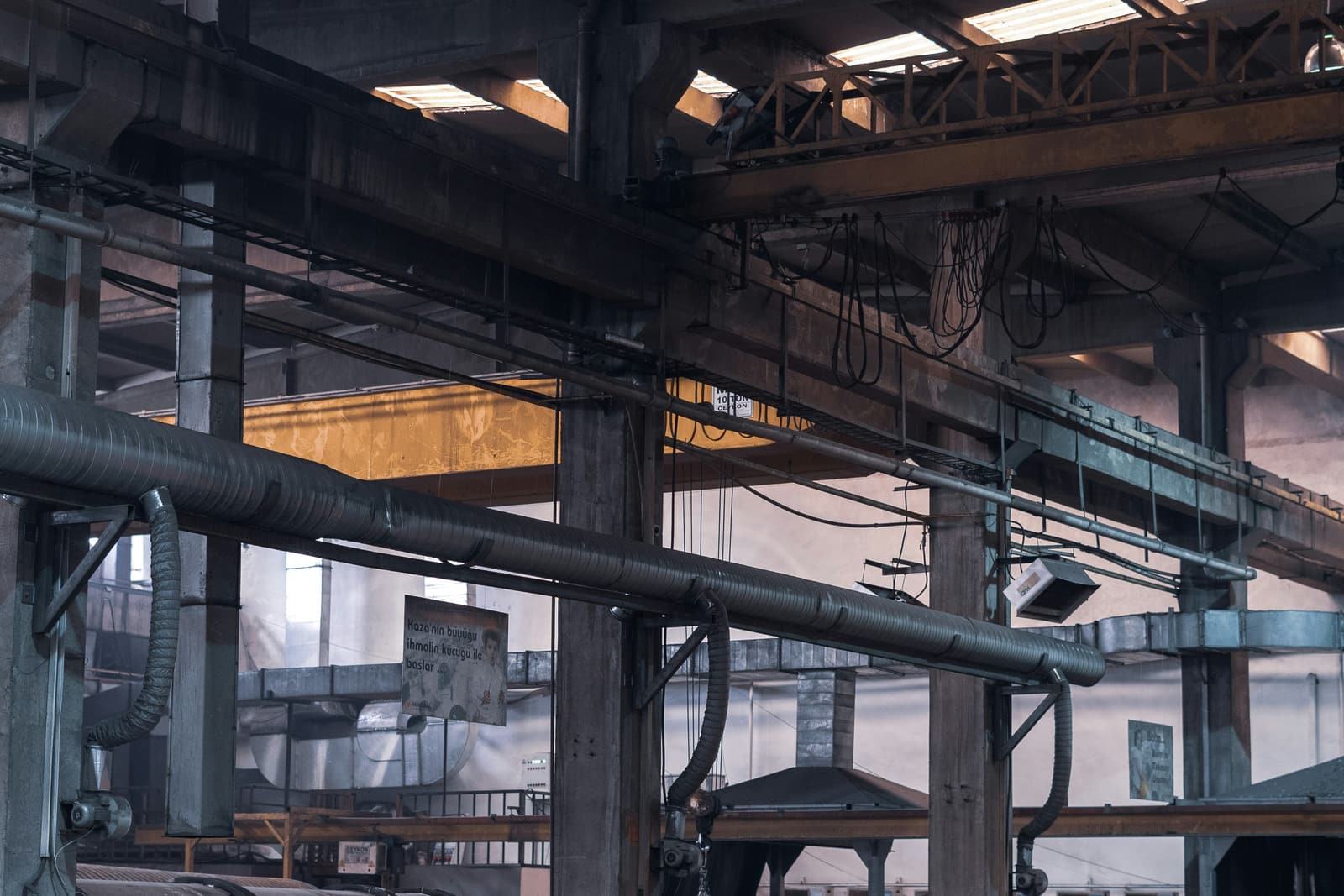
Industrial interior location by Ümit Yıldırım / Unsplash Unsplash License
Searching film locations by motif works best when each category is briefed with look, era, rooms, logistics, rights and hidden constraints.
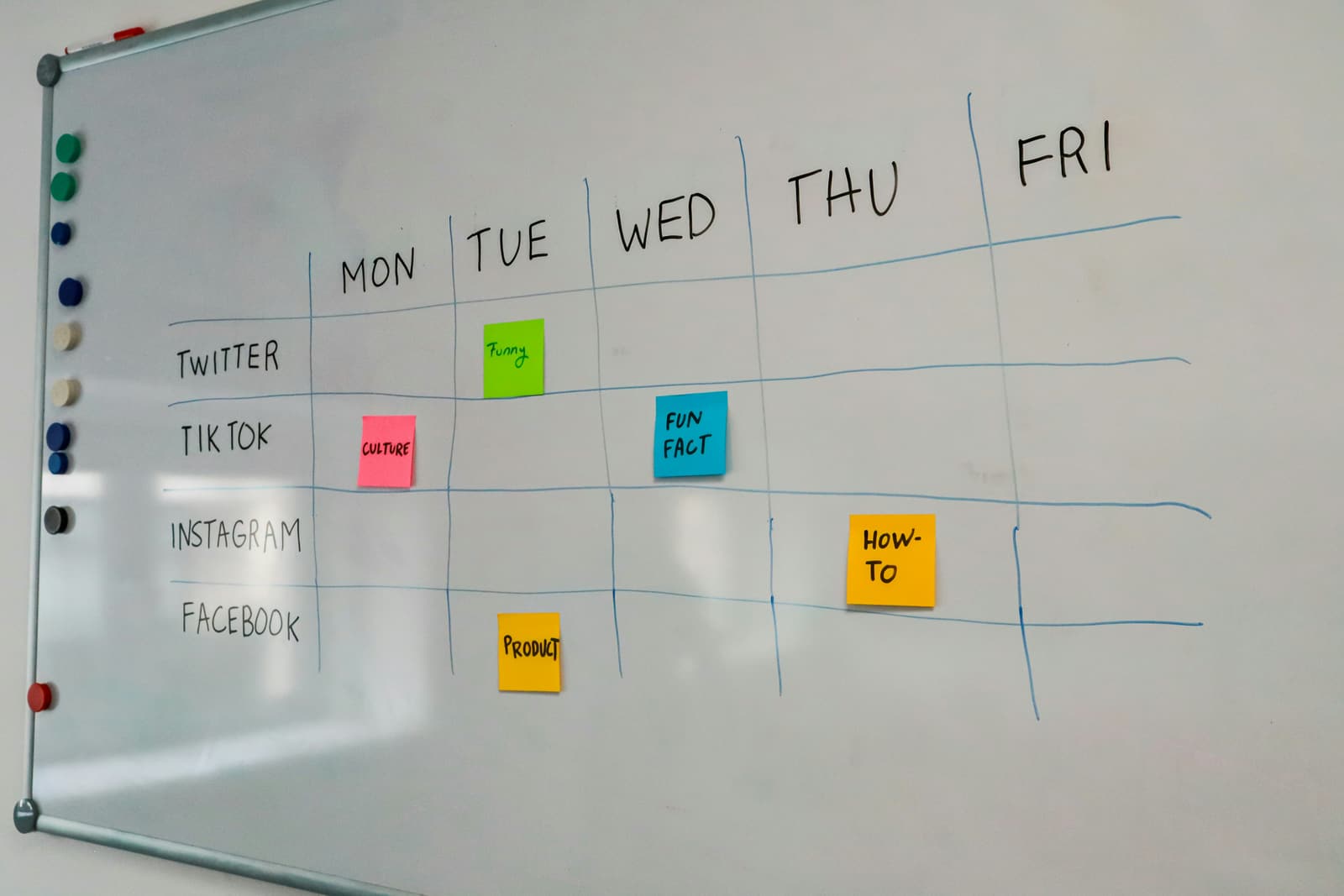
Production planning board by Walls.io / Unsplash Unsplash License
Production schedule templates, shot lists and storyboards help location planning only when they expose rooms, access, light, sound, permits and recce risks.
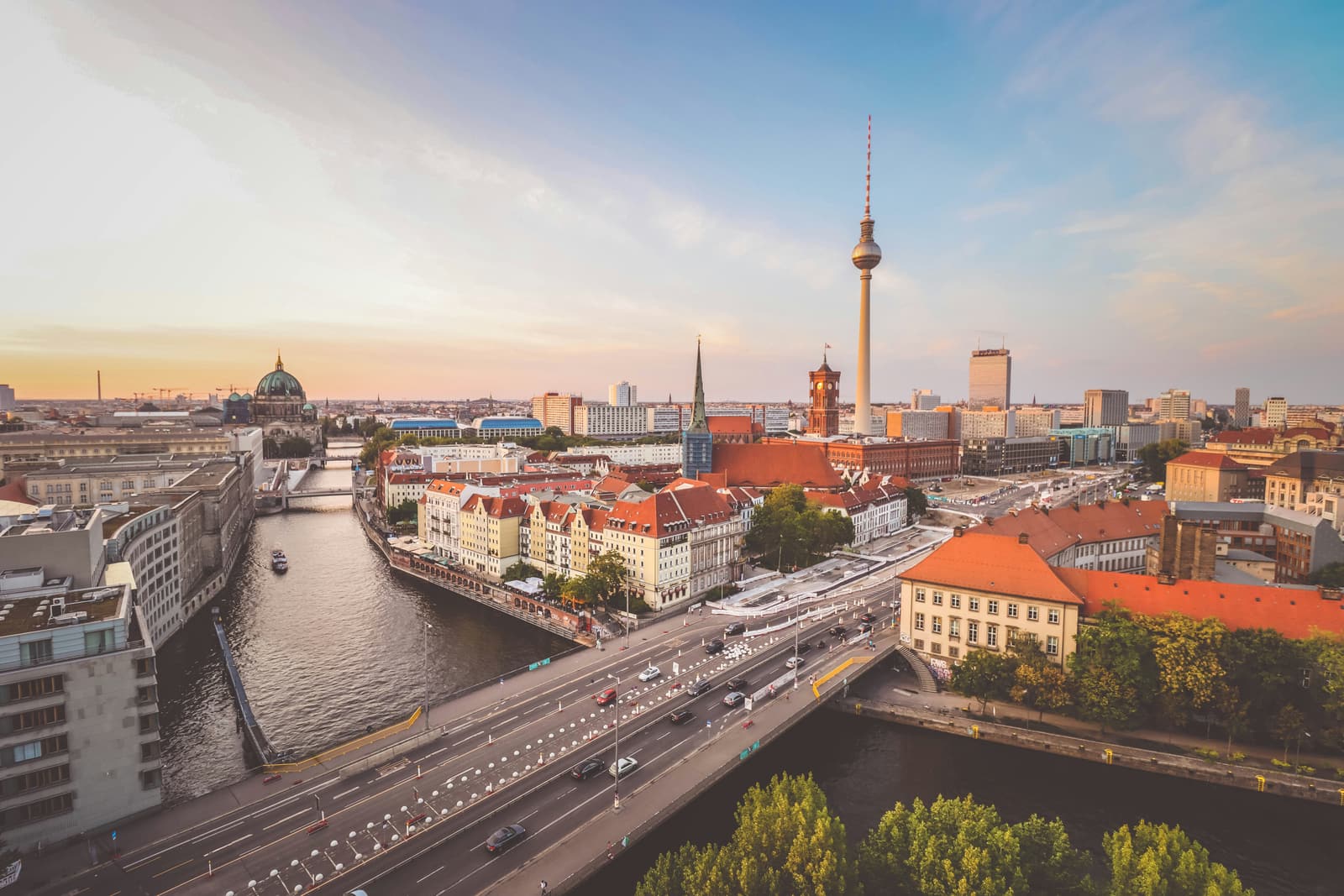
German city skyline by Florian Wehde / Unsplash Unsplash License
A practical comparison of Germany’s production hubs: Berlin, Hamburg, Cologne, Munich and Rhine-Ruhr by look, permits, crew base, transport, seasonality and private-location search.
