

Person using a laptop workspace by Christin Hume / Unsplash Unsplash License
AI Film Location Search: From Prompt to Verified Shortlist
A practical workflow for turning text, images and scripts into location shortlists that production teams can verify before inquiry and booking.
AI film location search is strongest at the beginning of research. It helps turn a look, a reference image or a scene into real options faster. It does not decide whether a location is legal, bookable, quiet enough, accessible enough or workable on a shoot day.
For production teams, the useful question is not whether AI replaces a location scout. The better question is which parts of the search it can accelerate, and which checks still belong to producers, location managers, scouts and department heads before inquiry, recce and booking.
Key Takeaways
- AI location scouting is useful for first shortlists, visual alternatives, reference-image search and scene-based briefs.
- It fails when production facts are missing: access, power, sound, parking, rights, neighbours, availability and permits.
- Good results come from production language, not vague adjectives. Describe what the camera and crew actually need.
- Every AI result needs human verification: page details, host or owner, restrictions, recce, agreement terms and possible authority requirements.
What AI film location search actually does
A useful AI film location search translates natural language, image similarity or scene information into a searchable shortlist. Instead of matching only exact tags such as apartment, loft or studio, it can work with visible relationships: period, material, light, scale, mood and scene use.
That matters when the creative brief is still in production language rather than database language. A director may not ask for an office of 220 square metres in Berlin. They may ask for a cold finance-world interior with glass, hard lines and a controlled corporate feel. AI can widen the search space before a human narrows it.
Better prompts use production language
The quality of the results depends on whether the brief sounds like a real location brief. “Nice apartment” is too soft. Better: bright period apartment, two connected rooms, large south-facing windows, little modern built-in furniture, room for 12 people, sound recording possible, Berlin or Potsdam.
Separate visual facts from hard no-gos. Visual facts include architecture, materials, colours, daylight, ceiling height, exterior connection and period. Hard no-gos include noise, narrow stairs, no lift, no exterior space, no daylight, sensitive neighbours, too little parking or no reset option.
A strong prompt includes look, scene, crew, city or radius, technical minimums and exclusions. The guide to better AI location search prompts shows how to separate motif, mood and no-gos so the shortlist needs less rework.
Reference images help with look, not shootability
Reference images are useful when words become imprecise. A moodboard still can communicate architecture, light colour, patina and composition faster than a long text brief. The guide from reference image to film location explains how to turn that visual direction into real candidates, even when they do not share the same tags.
The image says nothing reliable about house rules, power circuits, load-in, neighbours, sound conditions or rights. A result can look perfect and still be wrong for the production. Visual similarity is a starting point, not approval.
Script-based location search turns scenes into search briefs
Script-based location search helps when a screenplay contains many locations and the team first needs structure. Scenes become search packages: interior or exterior, day or night, recurring location, character privacy, movement, sound, stunts, vehicles, animals, children, water, fire or large background action.
The point is not only to name sets. The analysis should reveal production consequences. A living room for a quiet conversation is a different location problem from the same living room for a party, an argument, rain effects or 20 people moving through a hallway.
Where AI location search fails
AI systems should be treated as search and decision-support tools in production workflows, not as authorities. NIST describes the AI Risk Management Framework as a voluntary framework for incorporating trustworthiness considerations into the design, use and evaluation of AI systems (NIST AI RMF). For location scouting, that translates into a simple rule: verify the output.
Common failure modes include wrong priorities, beautiful but irrelevant results, missing context, stale information, false assumptions about availability and visually strong locations that collapse under shoot-day constraints. The riskiest conclusions are about rights, ownership, public space, neighbours and authority approval.
The regulatory context is also moving. The European Commission describes the AI Act as a risk-based framework that entered into force on 1 August 2024, with many rules fully applicable from 2 August 2026 (European Commission). This is not legal advice for a location workflow. It is another reason to treat AI output as a working note that needs review.
AI, location scout or both? Decide by risk
AI is strong at repeatable search work. It can open up variants, translate visual language into search criteria and structure a broad set of options. The more visible, expensive, sensitive or time-critical the shoot is, the earlier an experienced location scout or location manager should be involved.
- AI: useful for inspiration, visual similarity, brief and scene parsing, and the first shortlist.
- Scout or location manager: needed for access, host conversations, negotiation, permit paths, neighbours, sound, safety, tech recce and shoot-day problem solving.
- Both: the most defensible choice when many options need fast review but the final decision must hold up legally, technically and operationally.
A model can recommend a visually suitable place that is too loud, too tight, unavailable or wrong for the intended use. Every result therefore needs a named accountable person who tests assumptions, records open questions and decides whether the candidate moves to inquiry, recce or booking.
What must be verified before sending an inquiry
Before an inquiry, review every result on three levels: image, production and rights. Image means the location truly fits the scene, not just the moodboard. Production means it works for crew size, schedule, sound, light, parking, access, bathrooms, make-up, catering and reset. Rights means someone can actually approve the shoot, and any additional consent is known.
For Berlin and Brandenburg, the BBFC notes that filming on private property and in private or public facilities requires approval, generally from the owner or responsible body (BBFC private locations). In apartment ownership structures or rental situations, more consent can be needed.
Once roads, sidewalks, public squares, closures, no-parking zones or other public areas are involved, location search becomes a permit question. For public streets and grounds, the BBFC describes special-use and traffic-related requirements (BBFC public streets and grounds). An AI result cannot replace that check.
A practical AI location scouting workflow
- Derive the location need from the creative brief or script: visible look, scene, hard requirements and no-gos.
- Search with a text prompt, reference image or scene package, starting deliberately broad.
- Sort results visually: what actually serves the image, the director’s taste and the scene function?
- Apply production filters: access, sound, power, space, crew, vehicles, schedule, neighbours and cost.
- Clarify host, owner, consent, permit path and agreement terms before a shortlist becomes a commitment.
- Run a recce or tech recce and test every open assumption on site.
Where SetScout fits into the process
SetScout is useful when an idea needs to become a shortlist the team can actually review. You can start with AI film location search by text, compare the results against real film locations in Germany and use the shortlist as a production object rather than a pile of screenshots.
For international teams, the value is not only search speed. It is also having a way to turn English creative language into German production checks. Pair AI search with location scouting in Germany thinking: access, contact, rights, recce, budget and a clear inquiry.
The productive workflow does not end with a match. The shortlist has to let directors, producers, camera, sound and production management evaluate the same options. Only when look, access, rights, cost, availability and recce line up does AI-assisted search become a reliable production decision.
FAQ: AI film location search
Does AI film location search replace a location scout?
No. AI can find first options faster and reveal new search directions. A scout or production team still checks whether the location is available, usable, legally clear, technically suitable and controllable on the shoot day.
When is reference-image search better than text search?
Use a reference image when the look is hard to describe. It carries architecture, colour, texture, patina and composition faster than keywords. Add hard production requirements in text so the search does not become purely aesthetic.
What should I put into an AI location search prompt?
Include motif, scene, period, light, material, city or radius, crew size, interior or exterior, sound needs, parking, access, no-gos and budget range. Keep the desired look separate from mandatory criteria.
What happens after an AI shortlist?
Review detail pages, host or owner, real images, availability, usage rules, insurance questions, permit needs, neighbours, access, power, sound and reset. For important locations, follow with a recce or tech recce.
Recommended articles
More posts you might be interested in

none by Jakub Zerdzicki All photos and videos on Pexels can be downloaded and used for free.
Tax rules for income from renting out a film location
How to report profits from renting out your location correctly for German tax purposes
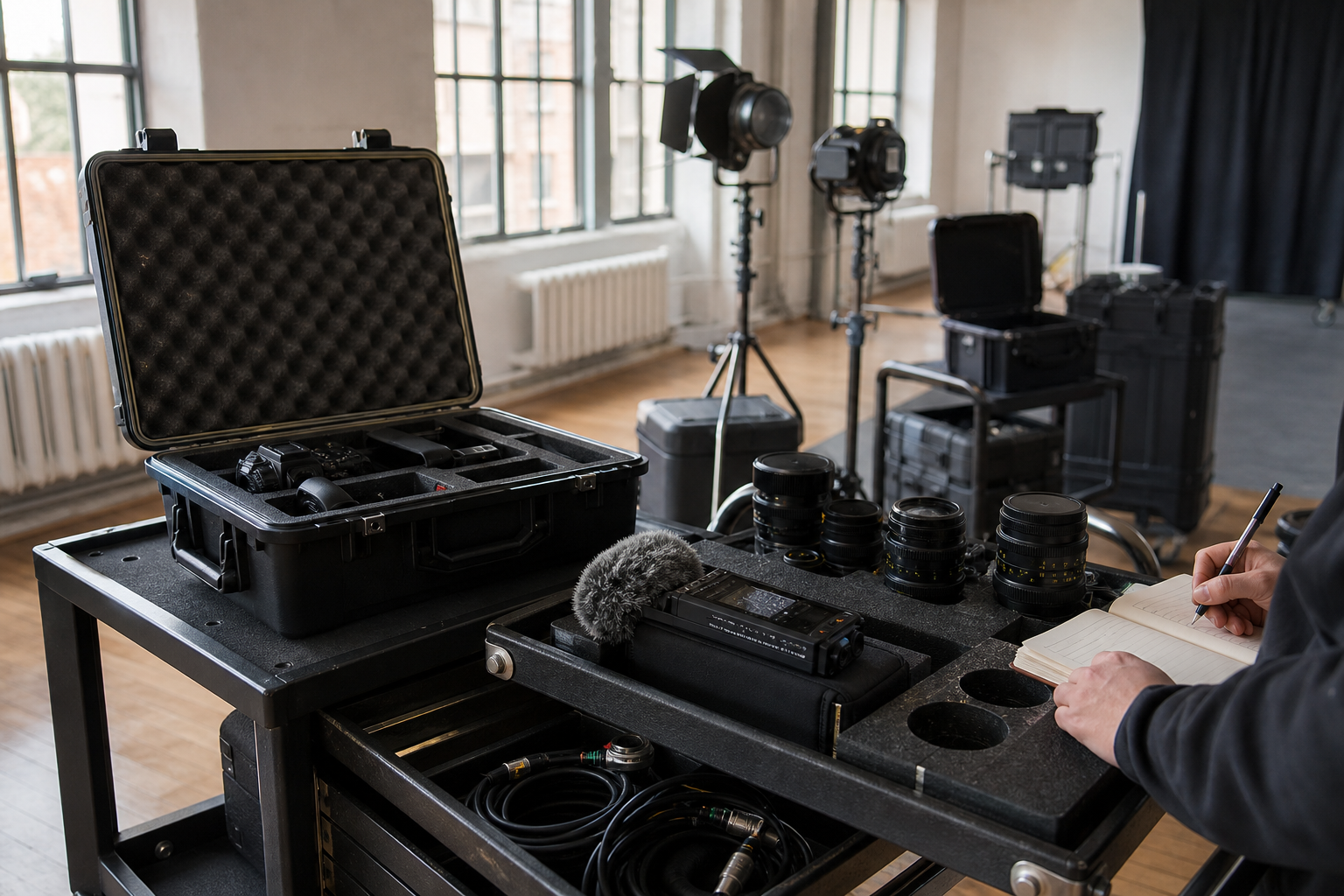
Inventorying film equipment before a location shoot by OpenAI image generation for SetScout Original image generated for SetScout; no third-party source image used
Film Equipment Insurance: Documenting Owned and Rented Gear
A practical checklist for cameras, lighting, sound and rented film equipment: confirm inventory, values, transport, storage and claims procedures before the shoot.

Film insurance for a production at a prepared location by OpenAI image generation for SetScout Original image generated for SetScout; no third-party source image used
Film Insurance for Productions: Coverage, Costs and Location Risks
Which insurance modules a film production should review, which details affect the premium and how to include locations properly in the risk assessment.