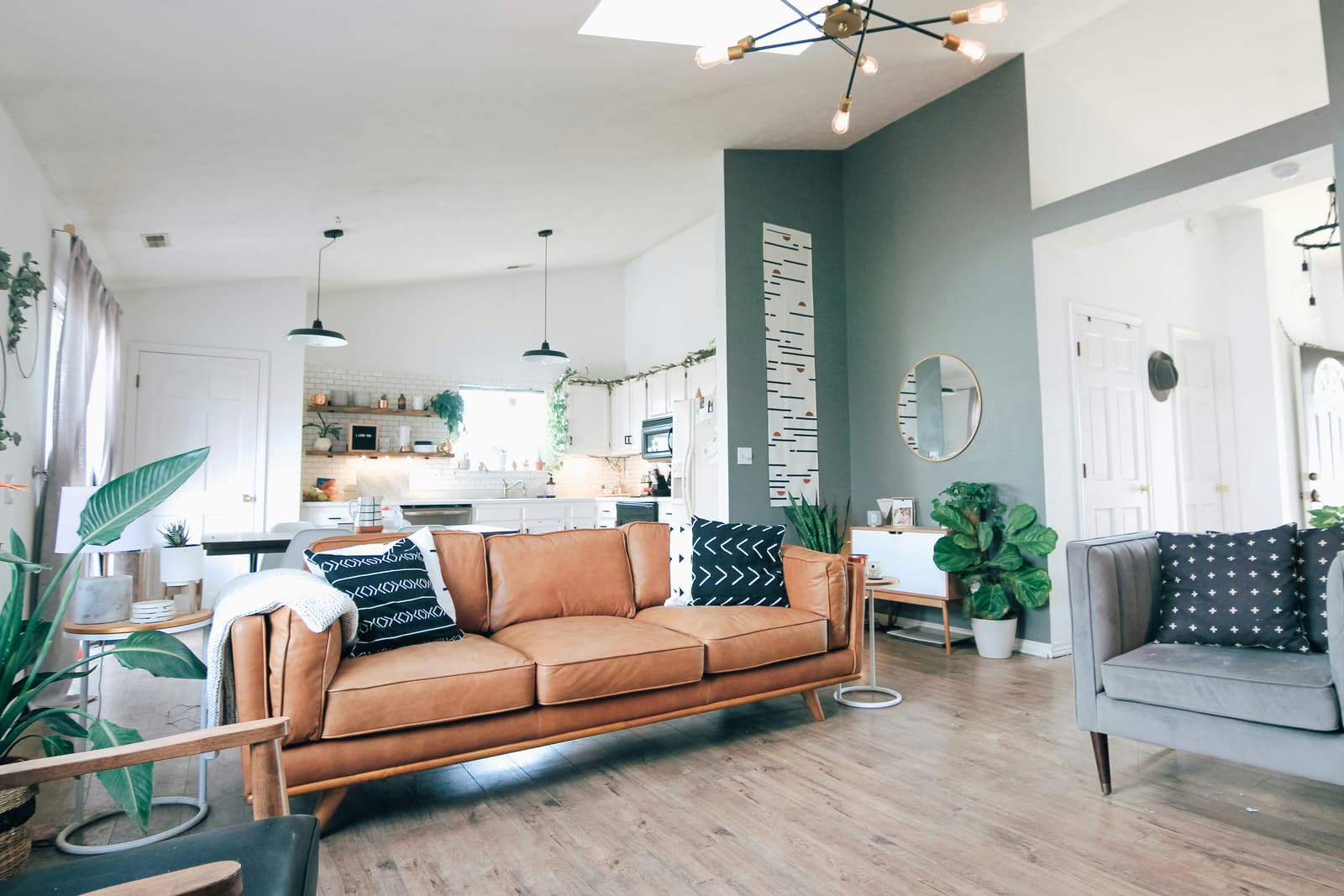
Living room interior by Kara Eads / Unsplash Unsplash License
A beautiful house is not automatically a workable film location. This readiness check helps owners assess rooms, light, access, parking, neighbors, privacy, protection needs and house rules before listing.
Renting out a house as a film location sounds simple: attractive rooms, a few photos, wait for an inquiry. In practice, a strong look is not enough. A house needs to survive a shoot day without access, neighbors, privacy, inventory or reset becoming the problem.
The honest readiness check therefore starts before pricing. If your house fails on light, space, parking, rules or protection needs, declining an inquiry is better than hosting a stressful shoot.
This checklist is not legal, tax or insurance advice. It helps homeowners judge whether a private house is basically suitable for film or photo production use.
Productions look for houses that can quickly tell a world. That can be a villa, townhouse, modern architect-designed home, old apartment-style house, farmhouse, bungalow, family home, empty property or a very ordinary place. The question is whether the look matches the brief.
Perfection is not required. Some locations work because they show use, personality or believable everyday life. The problem starts when the look only works from one angle and the room behind that angle is too tight to shoot in.
Film crews need more space than the camera frame shows. Camera, lighting, sound, director, makeup, client monitor, props and walkways all need somewhere to go. Small rooms can work, but only when the production stays small or adjacent rooms can absorb people and equipment.
Check the living room, kitchen, hallway, stairwell, garden, driveway, bathroom, bedrooms and possible holding areas. If the team can only stand inside the shooting room, the day becomes hard to control quickly.
Natural light, window size and orientation help, but they do not replace planning. Ask when each room looks good, whether lighting can be set up, whether curtains, shutters or exterior areas can be used, and how much blackout is realistic.
Sound matters just as much. Road noise, construction, a nearby school, flight path, dogs, neighbors, appliances or room echo can make filming harder. For many productions, a quiet room is worth more than a decorative one.
A house is shoot-friendly only if the team can arrive and load in. Parking, driveway space, stopping zones, stairs, lifts, garden paths, doors, thresholds and sensitive floors often matter earlier than wall color.
If the street is narrow, there is no parking, or neighbors are easily blocked, say so in the listing. Hiding that does not help. The production will discover it during the first recce.
The Berlin Brandenburg Film Commission states that filming on private property and in private or public facilities always requires approval from the authorized party (BBFC). If you own the house, this is simpler than with rented property, but an owners’ association, property management or house rules may still matter.
Define private boundaries as well. Bedrooms, children’s rooms, family photos, documents, computers, art, wardrobes, basement, attic, garage or parts of the garden can be excluded. Clear boundaries make the inquiry better, not worse.
A shoot is not a normal visit. People, bags, cases, stands, tape, cables, shoes, food and time pressure enter the house. If children, pets or relatives who need care are present, you need a clear plan for quiet, safety and fallback spaces.
Valuables, medication, private paperwork, keys, jewelry, cash, laptops and sensitive keepsakes should be removed before the shoot or kept in locked-off areas. That is not suspicion. It is clean preparation.
The California Film Commission recommends wide shots from multiple angles and clear images of interior and exterior areas for property submissions (California Film Commission). For a house listing, that means showing the rooms the way a production would plan them.
Good photos show more than the best sofa. They show room size, windows, ceilings, floors, doors, exterior view, garden, driveway, parking, stairs, kitchen, bathroom, hallways and relevant constraints.
Do not list your house if you cannot tolerate strangers in your private routine, cannot lock off rooms, have highly sensitive neighbors, have impossible parking, cannot protect valuable inventory or become anxious about every small change.
FilmLA frames extra income as an upside, but also points hosts toward the risks and downsides they should weigh (FilmLA). That is the right lens: not every good house is a good location.
SetScout helps you show a house as a concrete production option, not a fantasy promise. Strong information about rooms, photos, rules, availability, pricing logic and protection needs helps productions send better-fit inquiries.
If your house passes the check, prepare your profile through list your location. Read the checklist for renting out a property as a film location and the guide to calculating a location fee before approving serious inquiries.
No. Productions do not only look for villas. A normal family house, old home, townhouse or very specific style can work just as well if the look, rooms and logistics match the brief.
It depends on the inquiry. Small photo or social-content teams may arrive with only a few people. Advertising, TV or film work can be much larger. Before approval, always confirm crew size, vehicles, equipment and required areas.
That is negotiable. Many hosts want to be reachable for handover, questions and return, but not constantly in the crew’s way. What matters is a clear contact person, locked-off areas and documented condition before and after the shoot.
More posts you might be interested in

Industrial interior location by Ümit Yıldırım / Unsplash Unsplash License
Searching film locations by motif works best when each category is briefed with look, era, rooms, logistics, rights and hidden constraints.

Production planning board by Walls.io / Unsplash Unsplash License
Production schedule templates, shot lists and storyboards help location planning only when they expose rooms, access, light, sound, permits and recce risks.

German city skyline by Florian Wehde / Unsplash Unsplash License
A practical comparison of Germany’s production hubs: Berlin, Hamburg, Cologne, Munich and Rhine-Ruhr by look, permits, crew base, transport, seasonality and private-location search.
