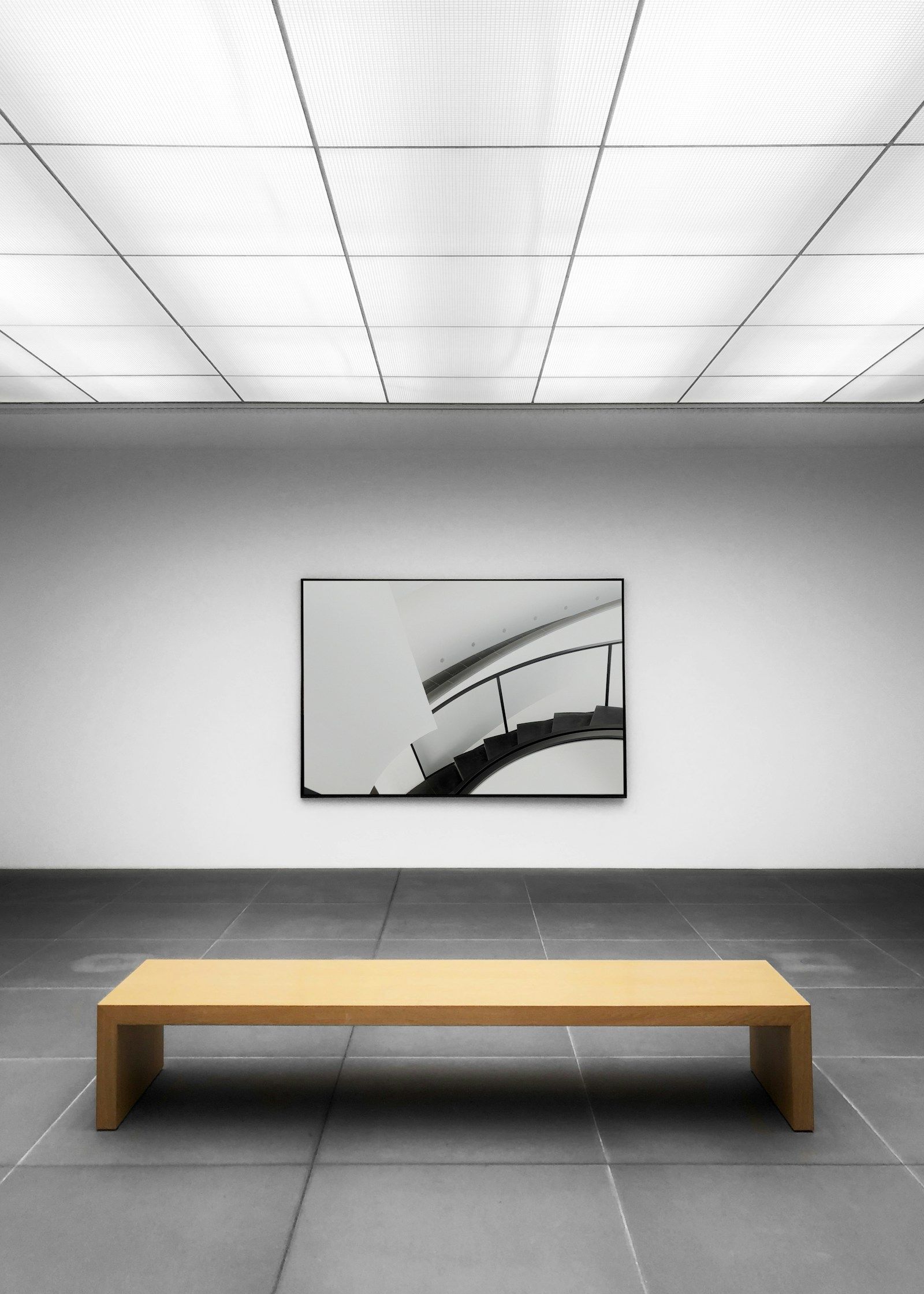
Photo by Robin Schreiner on Unsplash by Robin Schreiner Unsplash License
A practical workflow for productions, hosts and art departments to identify and clear visible logos, brands, artwork and product surfaces before filming.
Logos, brands and artwork in frame are rarely the first issue production thinks about during location search. On shoot day they become concrete fast: a poster in the background, a product shelf, a company logo at reception, a wall painting, an art book on a table or a branded vehicle outside.
This article is not legal advice. It shows how productions, hosts and art departments can handle visible rights before filming. It complements the posts on location usage rights, supermarkets, kiosks and stores as film locations and commercial shoots in private locations.
Many risks do not arise because a brand is heroed. They arise because it is visible, recognizable and appears in the wrong context. For advertising, social ads, branded content or client films, the clearance threshold is often lower than for purely editorial scenes.
A logo in the background can look like endorsement. Artwork can be a recognizable work in its own right. A product shelf can show competitors. A poster can contain uncleared image rights. A brand name in a sensitive scene can make the host, production or client nervous.
The EUIPO describes a trade mark as a sign customers use to identify goods or services and distinguish them from competitors. For filming, the practical step is simple: list visible logos, word marks, graphic marks, packaging, uniforms, vehicle brands and brand walls early.
The list does not need to be legally perfect. It needs to be production-useful: what is visible, how large is it, in which scene, in focus or background, sharp or soft, for which usage, and can it be removed, covered, replaced, cleared or avoided with camera angle?
Artwork and design are a separate category. WIPO explains copyright as protection for creators of literary and artistic works; on set that can include paintings, photographs, posters, illustrations, sculptures, design objects, book covers, record covers and decorative wall art.
Apartments, agency offices, hotels, restaurants and galleries often contain many such objects. If they are visually important, production should not wait until the edit to decide whether they are a problem. Before filming, it should be clear whether they may stay, need neutralizing or should be replaced by set dressing.
Retail locations are brand-heavy by nature. Supermarket shelves, kiosk goods, alcohol, tobacco, cosmetics, fashion, electronics, menus, delivery boxes and checkout screens can contain dozens of brands. That is attractive for authentic images, but it creates clearance work for commercial shoots.
The answer is rarely “remove everything.” A better approach starts with the motif: should the real store stay recognizable? Does the client need neutral goods? May competitors be visible? Will labels be turned, covered, replaced or treated as soft background texture? Who resets the space?
Not every appearance carries the same risk. Sensitive contexts increase the need for review: alcohol, medication, politics, health, children, violence, sexuality, insolvency, hygiene issues, labor conditions, environmental claims or direct competitors in frame.
The client matters too. A brand that feels harmless in an independent scene may be impossible in a competitor’s commercial. Production has to think about final usage: internal presentation, social ad, TVC, streaming, poster, press still or international campaign.
For each visible element there are four practical options: remove, cover, replace or clear. Removing is often cleanest. Covering can look cheap. Replacing needs art department and reset. Clearing needs time, ownership and often precise usage details.
The decision should happen before shoot day. If a director suddenly wants a real poster in the background, there needs to be a clear approval route. Without that route, a creative idea becomes a post-production problem.
Set dressing does not automatically solve rights risk. Props brought in by production can also show brands, artwork, designs, book covers or packaging. The art department should therefore choose not only by look, but by visibility, clearance and usage scope.
A simple set-dressing sheet helps: object, source, owner, visible brands or works, planned scene, clearance yes or no, reset responsibility. Small productions can keep this as a basic table. What matters is that the decision is traceable.
Hosts do not need to do the legal clearance for production. They can still make visible which areas are brand- or art-sensitive: reception logo, client wall, product shelf, art collection, private photographs, mural, company vehicles, licensed decor, merchandise or areas that must not be changed.
That transparency is an advantage. A production that needs a neutral background can judge fit sooner. A production that wants a real store atmosphere knows earlier which clearances or set-dressing measures may be required.
The location brief should not mention visible brands and works only in general terms. Better fields are concrete: which elements stay, which are removed, which may not be filmed, who moves items, who provides replacements, who checks frame before the take and who approves later changes?
The agreement or rights appendix can also define the intended usage, approved areas, excluded publication forms and any brands, artworks or photographs the host expressly excludes. That creates clarity, but it does not replace case-by-case legal review.
SetScout cannot invent clearance after the shoot. Its value is earlier visibility: hosts can flag brand- and art-sensitive areas, productions can ask more precise questions, and risky surfaces are discussed before booking.
When teams use SetScout to find film locations, visible brands, artwork and product surfaces should not be treated as minor background detail. The earlier they appear in the request, the less production has to rescue in edit, retouching or just before campaign delivery.
More posts you might be interested in
Photo by Joey Banks on Unsplash by Joey Banks Unsplash License
A practical access planning guide for productions and hosts documenting real routes, bathrooms, ramps, holding and limitations before booking.
Photo by Ryan Liu on Unsplash by Ryan Liu Unsplash License
How productions should prepare bar, club and nightclub locations for music videos, fashion, commercials and nightlife content.
Photo by Peter Herrmann on Unsplash by Peter Herrmann Unsplash License
How productions should assess bunker, lost-place and special-motif locations without creating legal or safety risk.
