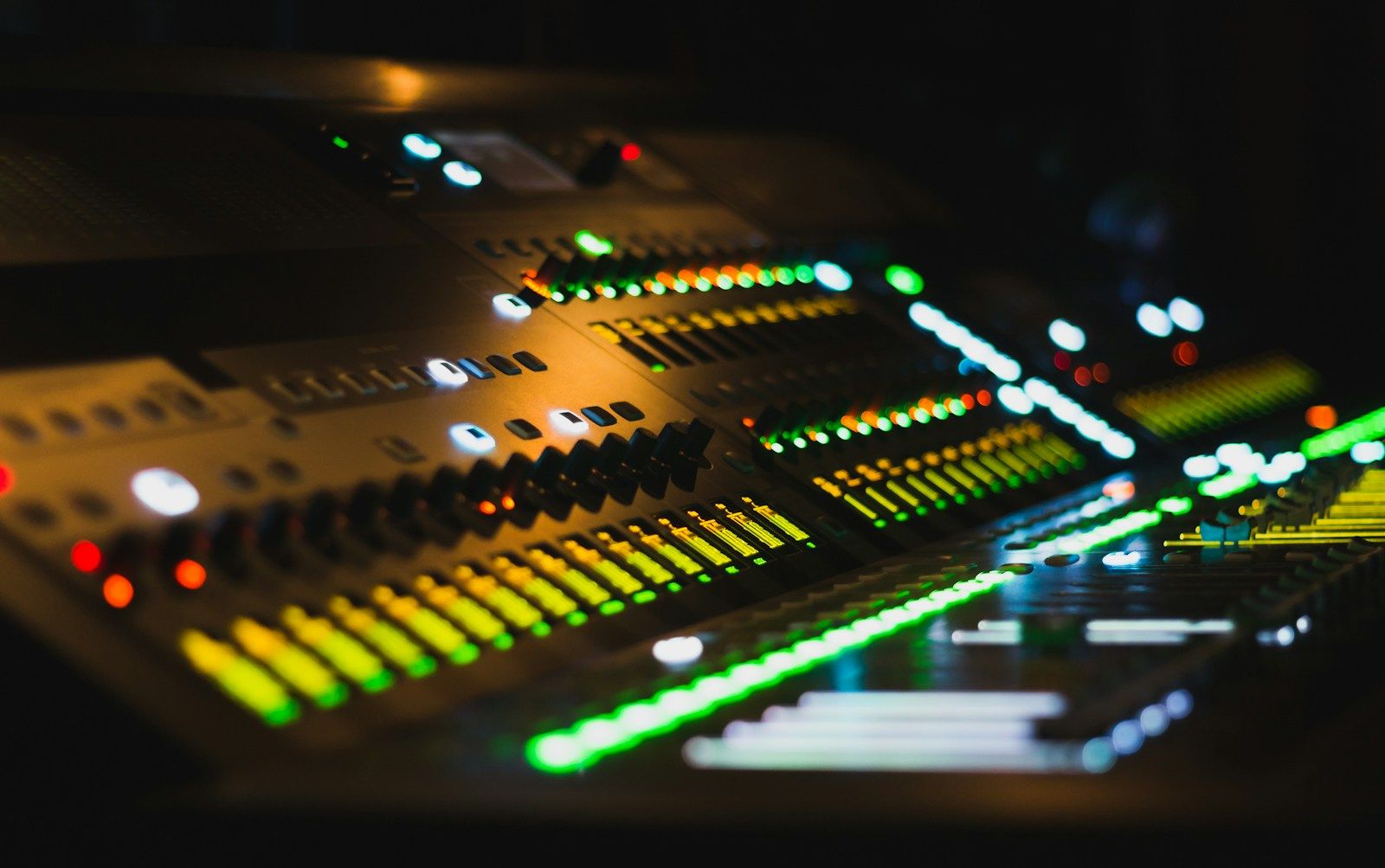
Photo by Caio Silva on Unsplash by Caio Silva Unsplash License
A practical sound-led location guide for producers, directors, sound recordists and scouts choosing places where dialogue matters.
A location can look perfect in photos and still fail for dialogue. Sync sound rarely fails because of one loud event. More often, the problem is constant background noise, hard surfaces, reverb, HVAC, a fridge, street traffic, neighbors or aircraft that only become obvious when someone listens carefully.
This guide shows how production, director, sound recordist and location scout can evaluate sound before booking. It complements the location recce checklist, the tech recce and planning for an interview location.
Many location decisions start visually: windows, depth, style, furniture and brand fit. For dialogue scenes, interviews, corporate films, testimonials and documentary formats, that is not enough. If clean sound cannot be recorded, a beautiful room becomes expensive.
Bad production sound creates extra takes, longer resets, dubbing, fewer edit options and sometimes ADR. That is especially frustrating when the risks were audible on site but were not captured during location selection.
Before the recce, teams should ask what is regularly audible at the location. Is there HVAC, refrigeration, servers, elevators, pumps, doors, workshop activity, kitchen equipment, neighbors, schools, churches, loading zones, trains, trams, flight paths or construction?
The useful question is not only “is it quiet?” Better questions are: what can be heard on a normal weekday at 9 a.m., noon, 4 p.m. and in the evening? Which sounds can be turned off and which cannot? Who is allowed to turn them off? For how long? Are there rooms that sound better than the visually strongest room?
HVAC is one of the most common sound traps. Ventilation, air conditioning, radiators, air outlets, display fridges, refrigerators, servers, pumps and electric doors often sound quieter to people than they do to microphones. Constant low noise under dialogue is particularly difficult.
Before booking, production needs to know which devices may be turned off. A fridge might be paused for short takes. Server cooling, fire systems or central ventilation often cannot be disabled. If a device can be turned off, production needs responsibility, timing and a reminder to switch it back on.
External noise is harder to control than internal noise. Roads, intersections, cobblestones, loading zones, garbage collection, trains, aircraft, schools, bars, gyms and workshops can dominate the day. A location that is quiet on Sunday may be unusable on Wednesday morning.
The recce should therefore happen at a realistic time or be supported by concrete information. If the shoot happens during rush hour, a Saturday visit only proves so much. For sync sound scenes, the production time has to match the noise profile, not only availability.
Noise is not the only problem. A quiet room can still sound bad when glass, concrete, tile, high ceilings and empty surfaces reflect dialogue. The ear adapts quickly to a room. A microphone does not.
For interviews and dialogue, a quick clap test, a spoken sentence from the planned camera position and a short room-tone recording are useful. Furniture, curtains, carpet, sound blankets, flats or props can help, but they have to be allowed and they cannot ruin the frame.
Some image solutions make sound worse. Blackout can block ventilation, generators enable lighting but create noise, and closed windows reduce traffic while increasing heat or HVAC needs. Lighting and sound decisions belong together in the tech recce.
A location is especially risky when it only works with a loud generator, running air conditioning or open windows. Production then has to decide early whether the look is worth the sound risk or whether another location is cheaper in the full production budget.
A sound check does not have to be complex. Useful steps include recording one minute of room tone, speaking from several positions, opening and closing doors and windows, testing HVAC, identifying fridges and appliances, noting outside noise and documenting when disturbances happen.
Do not only document the ideal moment. If an elevator arrives every five minutes or aircraft pass every ten minutes, that belongs in the location brief. Repeating sounds are manageable if they are named honestly.
ADR becomes more likely when the location has constant loud systems, uncontrolled external noise, quiet dialogue, hard reflective rooms or a scene with many angles and takes. That does not mean the location is impossible. It means the cost and creative risk are real.
Production and director should make that decision consciously. The same place may be excellent for a music video performance, a silent product film or atmospheric B-roll. It may be wrong for an emotional interview or a quiet dialogue scene.
Hosts help productions when they make acoustic facts visible: HVAC present, refrigeration can or cannot be turned off, street position, courtyard, neighbors, opening hours, loud machines, church, school, flight path, construction risk, hard surfaces and rooms with carpets or curtains.
Restrictions are useful too: no device shutdown, no closed windows in summer, no night work, no control over neighboring spaces, no generators in the courtyard. Clear limits prevent wrong inquiries and show professional productions that the host understands shoot reality.
SetScout should not sell a location only as an image. Good production decisions need technical and acoustic notes next to photos, rooms, access and availability. Then a team can see before the inquiry whether a place suits dialogue, interviews or only B-roll.
When teams choose film locations, sound should be checked as early as light, power and access. That saves set discussions, protects the schedule and prevents a visually perfect location from becoming a post-production problem.
More posts you might be interested in
Photo by Joey Banks on Unsplash by Joey Banks Unsplash License
A practical access planning guide for productions and hosts documenting real routes, bathrooms, ramps, holding and limitations before booking.
Photo by Ryan Liu on Unsplash by Ryan Liu Unsplash License
How productions should prepare bar, club and nightclub locations for music videos, fashion, commercials and nightlife content.
Photo by Peter Herrmann on Unsplash by Peter Herrmann Unsplash License
How productions should assess bunker, lost-place and special-motif locations without creating legal or safety risk.
