Dokumentation und Mehrwegmaterialien bei einer Filmproduktion by OpenAI image generation for SetScout Original image generated for SetScout; no third-party source image used
What “climate-friendly production” and the green motion label actually demonstrate, how verification works, and which location data matters.
For a production carrying the green motion label, “climate-friendly production” does not mean that the shoot generated no emissions. The label shows that the production underwent a defined verification process, met at least 19 of the 25 mandatory requirements in the current ecological standards, and submitted the required reports and carbon data.
According to the current information from the Green Shooting working group, green motion identifies German cinema, television, online, and VoD productions made in accordance with the ecological standards. PwC reviews the final reports before the label is awarded. Only after a positive assessment does the production company receive permission to use the label in the end credits and for promotional purposes.
The assessment includes the general final report, an international report where applicable, the preliminary and final carbon footprint, and the specified supporting evidence. The label is therefore more than a self-selected sustainability statement. It is not, however, a promise that every individual decision was the lowest-emission option available.
The version of the ecological standards in force since 1 November 2025 contains 25 mandatory requirements. At least 19 are needed for overall compliance. Up to six justified deviations are permitted. Requirements that do not apply, such as accommodation rules for a one-day production with no overnight stays away from home, are treated as fulfilled under the standard.
That is why “19 of 25” is not a simple grade or a free pass. Some requirements are excluded from the deviation rule. Deviations must also be kept to a minimum and explained transparently in the final report. Anyone who needs to know what applies to a specific project should check the current version and the conditions set by the funding body, broadcaster, or client.
Credible communication therefore names the specific process. A precise statement is better than a sweeping claim: The production was assessed under the applicable ecological standards and approved to use the green motion label.
The label is awarded to the production as a whole, but locations affect several areas at once. A location can simplify power, transport, accommodation, catering, material use, and waste, or require additional measures. This impact must be reflected in both planning and actual data.
The standards prioritize grid power and regulate exceptions for generators. For location work, this means clarifying the connection, capacity, cable length, and use early. The mere presence of a socket says nothing about its technical suitability for lighting and the crew base.
Accessibility, local crew, consolidated transport, and nearby accommodation can reduce the effort involved. The location address therefore becomes a factor in the carbon footprint. When comparing several options, the production should consider not only the hire fee, but also journeys, hotels, and necessary base vehicles.
Reusable serviceware, vegetarian or vegan options, regional or organic food, and waste separation require space and service providers. An empty courtyard is not yet a catering solution. The production needs drinking water, weatherproof food service, returns, containers, collection, and clear responsibilities.
Existing furniture, reused set dressing, and separable materials can reduce new purchases. At the same time, the host needs to know what may be moved, taped, or installed. An environmentally sound solution remains sound only if protection and reinstatement work.
This process shows why a retrospective self-assessment is not enough. Anyone who starts looking for evidence only after the shoot will find gaps that can no longer be closed properly.
Hosts do not need to invent a sustainability certification. Precise facts are more useful: connection specifications, contacts, the building’s electricity contract, access, public transport, nearby accommodation, water, waste routes, usable equipment, and reinstatement rules. Statements should be dated and clearly distinguish what is known, documented, and still to be checked.
A suitable working resource is SetScout’s Green Filming checklist for locations. For specialist coordination, the article Green Consultant for Film & TV explains the roles and handovers.
Check whether a specific production is named, whether the official label is actually used, which version of the standards applied, and whether the claim refers to a verifiable process. Vague terms such as “green set” or “sustainable location” may be well-intentioned, but without criteria they are not comparable.
A public-service broadcasting example is the current ZDF overview of Green Production. ZDF identifies energy supply, transport, accommodation, catering, materials, and disposal as specific areas for action. For the official label assessment, the Green Shooting working group’s website remains the authoritative source.
It is an industry label for productions verified against jointly developed ecological standards. The Green Shooting working group, funding bodies, broadcasters, and the central verification body have defined roles. Consult the current official label page for the precise classification.
No. Public use of the label requires the designated assessment and approval process. A production may report on its own measures, but it cannot present them as the official label without authorization.
Not necessarily. At present, at least 19 of the 25 mandatory requirements must be met. Deviations are limited and must be justified. Under the rules, individual requirements that do not apply are treated as fulfilled.
Yes, it can make several requirements easier to meet. The label still depends on the production as a whole, its actual data, and the assessment. A location alone cannot guarantee the result.
If you want to compare locations by look and practical infrastructure, start with film locations on SetScout and add the required Green Filming data to your enquiry.
Status: 13 July 2026. Sources include the official page for the green motion label, the current version of the ecological standards, and ZDF’s Green Production information. Always check the documents in force at the time before starting a specific production.
More posts you might be interested in

none by Jakub Zerdzicki All photos and videos on Pexels can be downloaded and used for free.
How to report profits from renting out your location correctly for German tax purposes
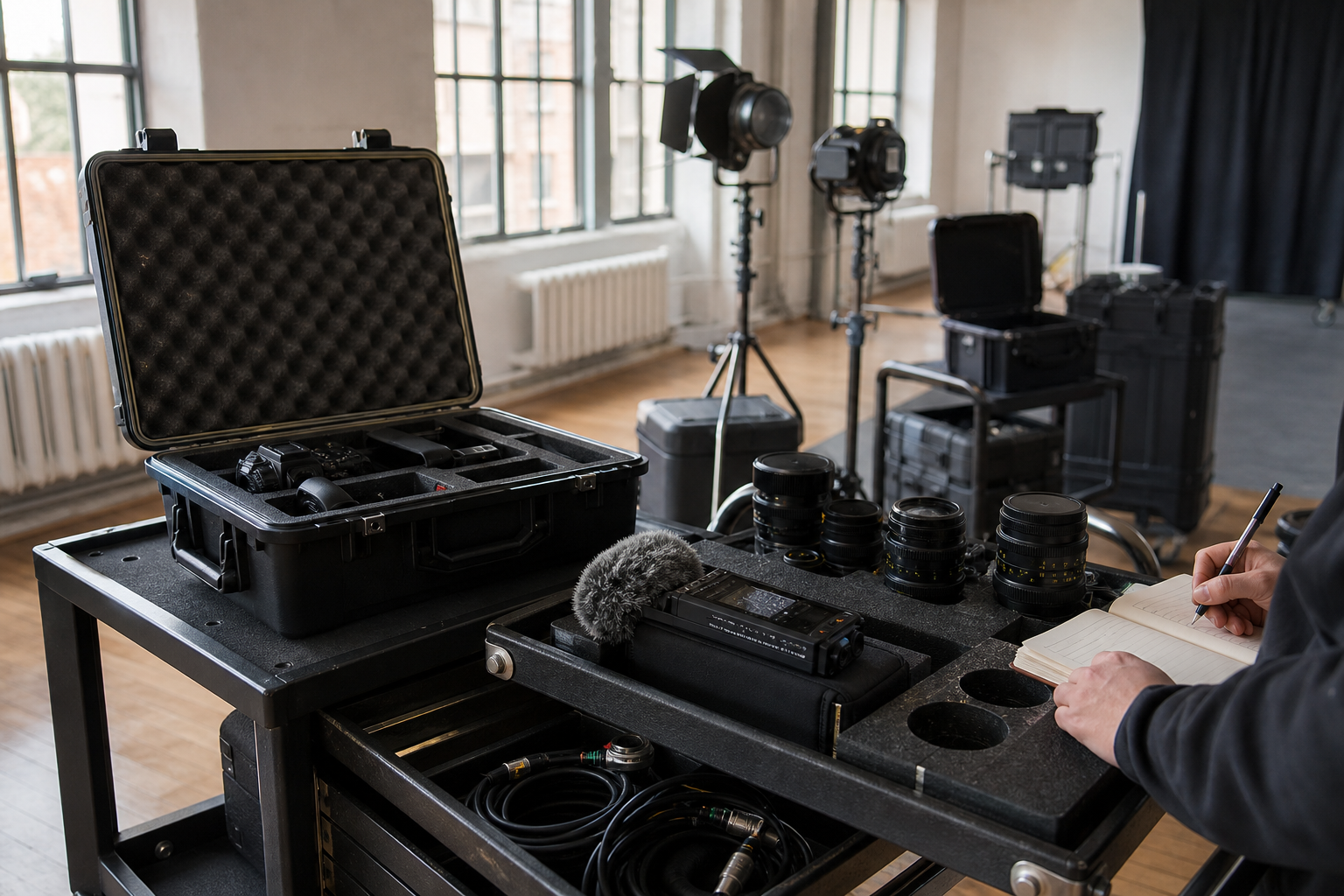
Inventorying film equipment before a location shoot
A practical checklist for cameras, lighting, sound and rented film equipment: confirm inventory, values, transport, storage and claims procedures before the shoot.

Film insurance for a production at a prepared location by OpenAI image generation for SetScout Original image generated for SetScout; no third-party source image used
Which insurance modules a film production should review, which details affect the premium and how to include locations properly in the risk assessment.
SetScout is funded through the EXIST program by the Federal Ministry for Economic Affairs and Energy and the European Social Fund Plus (ESF Plus).