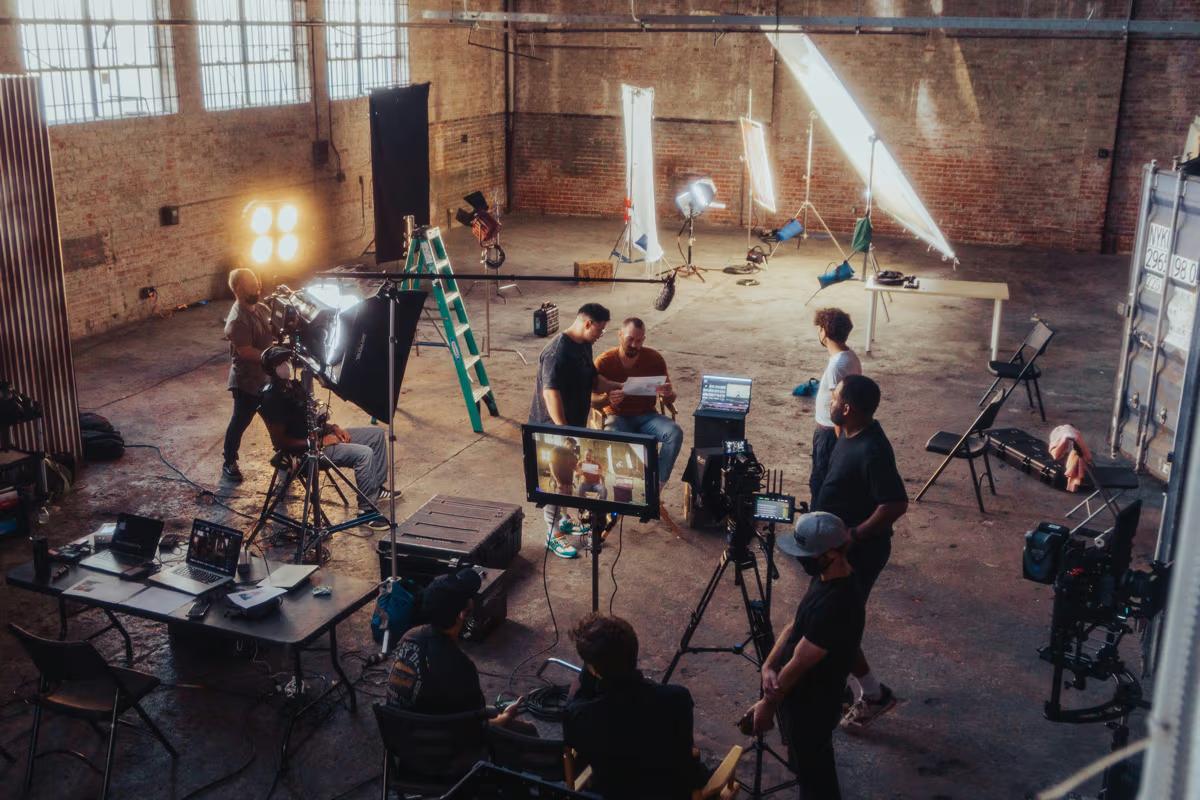
Where filming takes place, how much is being produced, and where the industry is heading.
For years, Germany has been one of the leading production bases in Europe: strong funding structures, well-developed film commission networks, and regional hubs (Berlin-Brandenburg, Bavaria, Hamburg, among others). But how much material is shot on location, how many different locations are typically required, and how has this developed in recent years? Here are my summarized findings — clearly separated into hard facts, meaningful indicators, and well-founded estimates.
Summary (key points)
His conclusion:There is no central, public statistic that definitively states “X% of material in Germany is shot on set.” Instead, several indicators (funding criteria, regional shooting data, production reports) provide guidance.FFA+1
Indicator: Funding conditions — Major funding programs stipulate that a significant share of production costs must be spent in Germany (often with minimum spend thresholds of around 25 % or incentives of up to 30 % for in-country expenditure). This provides a strong stimulus for shooting in Germany. FFA
Regional activity indicator: Berlin-Brandenburg continued to show high activity in 2024 with around 5,000 shooting days — a clear sign of vibrant on-site production within a single federal state. Medienboard
Estimate (transparent classification): Based on funding rules, regional shooting days, and production practices, I estimate that for predominantly (German-funded) productions at least 40–70% of the “visible” image material (exterior and interior shots at real locations) is created on location in Germany — depending on the type of production (low-budget documentary vs. high-end series). This range is deliberately conservative because comprehensive data is lacking (see justification below). FFA+1
Why there is no simple percentage figure
There are three reasons why it is difficult to provide a single, reliable percentage figure:
Different definitions:“On-set” / “on location” vs. studio shoots / virtual production are not always counted in the same way. (For example, what is an exterior set built in a studio?)BMWK
Fragmented data sources:Regional film commissions report shooting days (e.g. Berlin-Brandenburg), funding bodies publish funding volumes; a central national database for the “share of material shot on location” is missing.FFA+1
Production mix:Feature films, documentaries, TV series, and commercials differ greatly in the number of locations and the proportion of on-location material.
How many different locations are needed? (Practice & examples)
High-end series (international / prestige):candozens to hundreds ofdifferent locations; modern US/Canadian series often report8–15 real locationsper episode (for example, major drama series have used several dozen to over 60 locations for a single season). As an indicative order of magnitude, a production report for a major series cites 8–10 locations per episode.Condé Nast Traveler
German feature films / theatrical TV movies: are on average significantly below that — typically 5–30 locations depending on the script, production scale, and whether many interior sets are being built. (This is an industry practice estimate, supported by case studies and regional production reports.) Film Partners+1
Documentaries / low-budget: often 1–10 locations, sometimes just a single main location.
Takeaway:Number of locations scales significantly with the scope of the project: series > feature film > short film/documentary.
Development trends of recent years (brief analysis)
Trend: Rebound after crisis years (2023–2024)
After pandemic- and strike-related cutbacks, production has stabilized again; reports point to a recovery in 2024/2025, however with sharply increased production costs. This is leading to more selective scheduling and greater use of incentive schemes.Hollywood Reporter+1
Trend: Increase in high-end series shoots in Europe
International series productions are increasingly stopping in Germany as well — supported by German funds (DFFF, GMPF) and regional incentives. These productions are driving demand for a wide range of locations.FFA+1
Trend: Green & sustainable filming
Environmental regulations and sustainability initiatives are influencing location planning (e.g. avoiding long transfer routes, using local crew), which in some cases reduces the number of locations but makes planning more intensive.Council of Europe+1
Interesting facts and notes for producers and location managers
Funding impact: Many funding programs only cover costs that are incurred in Germany. This makes it economically attractive (and often necessary) to carry out at least part of the shoot on location in Germany. FFA
Regional hotspots:Berlin-Brandenburg, Munich/Bavaria, Hamburg, North Rhine-Westphalia and Baden-Württemberg each have well-developed infrastructures (studios, crews, services, film commissions).Business Location Center+1
Shooting days are meaningful:A single federal state can record several thousand shooting days per year (e.g. Berlin-Brandenburg ~5,000 shooting days in 2024) — this is a practical indicator of on-set activity.Medienboard
Conclusion — brief & journalistic
There is no single official statistic that gives an exact percentage such as “X% of material is produced on set in Germany.” However:funding regulations, regional shooting-day figures, and industry reportsclearly show that Germany remains a strong on-location country. Large productions use many locations (several per episode), while smaller productions use significantly fewer — and funding incentives, together with sustainability and cost factors, now shape location decisions. For producers, this means:doing more prep in advance, planning regionally and strategically, meeting funding criteria — and allowing for dozens of locations in complex series productions.FFA+2Medienboard+2
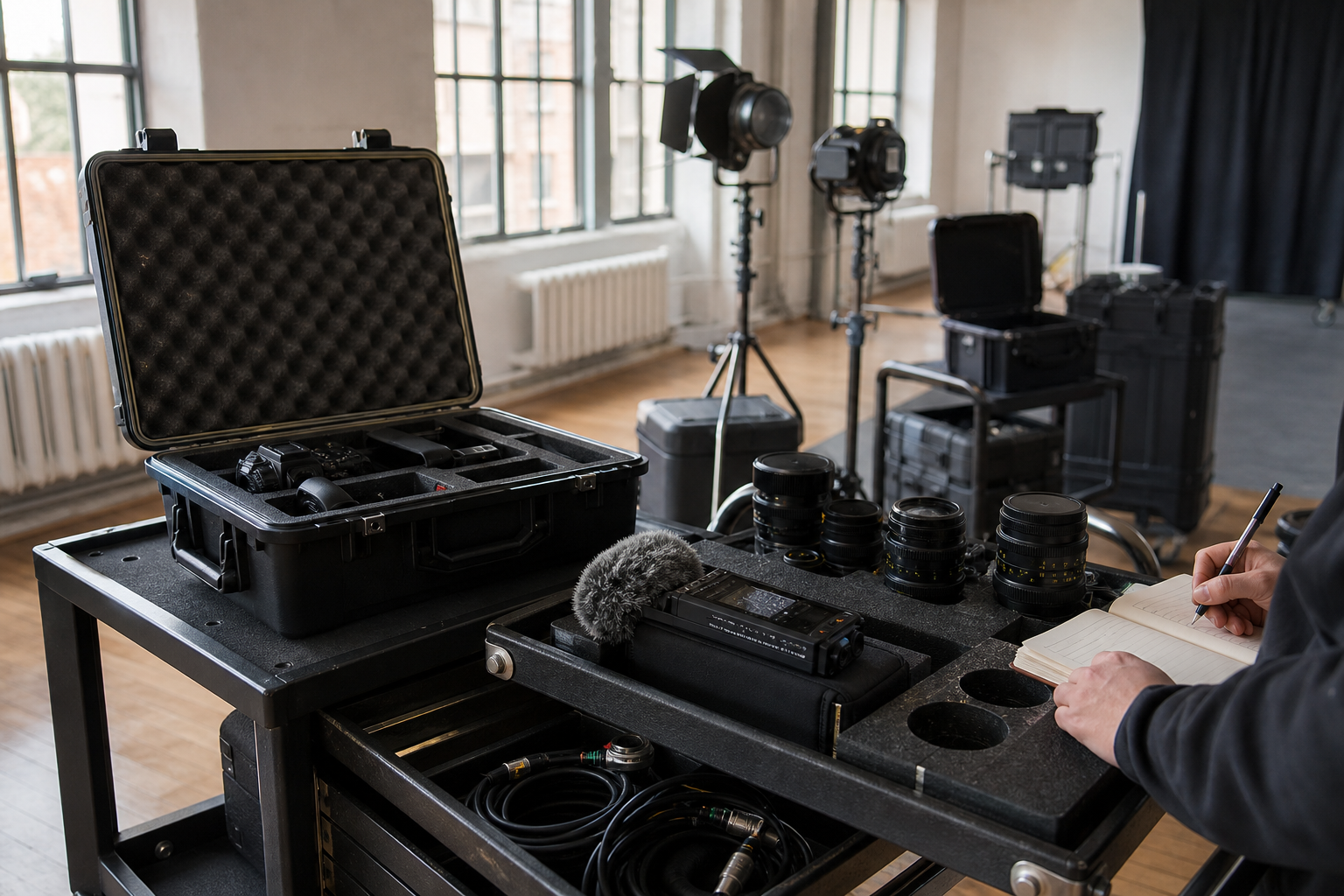
A practical checklist for cameras, lighting, sound and rented film equipment: confirm inventory, values, transport, storage and claims procedures before the shoot.
Which insurance modules a film production should review, which details affect the premium and how to include locations properly in the risk assessment.