
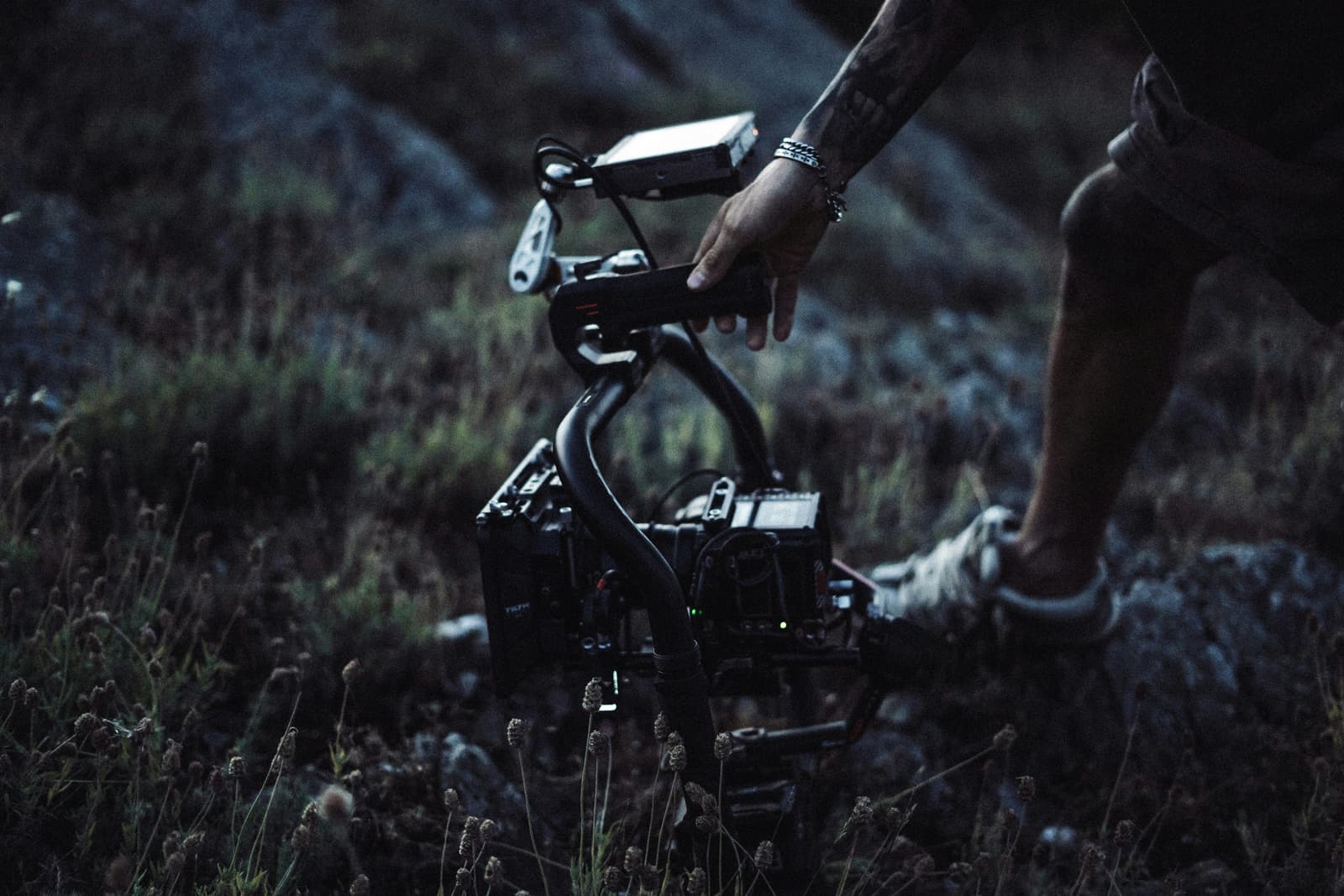
Filmmaker operating a camera stabilizer rig outdoors by Oleg Brovchenko / Unsplash Unsplash License
How to Find a Film Location: From Brief to Booking-Ready Request
End-to-end location-search workflow for producers moving from creative need to a qualified shortlist and booking-ready inquiry.
Finding a film location does not start with collecting attractive images. It starts with a brief that defines what the location must do on screen and what the production needs off screen.
The practical path is creative purpose, must-haves, descriptive search, radius, rights, shortlist, recce and a booking-ready request. Each step removes a different kind of risk.
Key takeaways
- A good search process separates visual preferences from real deal breakers such as access, crew size, sound, rights, parking and budget.
- Specific search language works better than a broad category. Describe the motif, mood, scene function and no-gos before adding filters.
- Permit questions belong before the booking-ready request, especially when public space, parking, night work or exterior impact is involved.
- Hosts respond faster when the request explains scene context, dates, crew, required areas, budget and decision timing.
1. Start with the purpose, then define the look
The creative brief decides whether you search with intent or only collect images. Define whether the location is a hero setting, interview setup, product world, action space or recurring motif. If you are working from a script, use the script-to-location-shortlist workflow to turn each scene into a search brief before comparing images.
Only then add style words such as modern, rough, warm, minimal, luxurious or everyday. A loft for a music video, an office for a corporate film and a kitchen for advertising may all be bright, but they require different sound, crew, prop and usage conditions.
2. Separate must-haves from nice-to-haves
A must-have is a criterion without which the location fails. Common examples are room size, daylight, controllable sound, parking, load-in, power, toilets, accessibility, exterior space, allowed hours, price range or specific rights.
Nice-to-haves are negotiable: wall color, furniture style, a second room, a particular view, existing props or a shorter drive. If you mix both categories, you reject good options too early or send inquiries to locations that cannot hold the shoot day.
3. Turn the brief into specific search language
Digital and AI-assisted search works best when the input describes a production need. “Lake” is broad. “Quiet lakeshore for a romantic dusk scene, road access for two vans, no visible buildings” gives both the search system and the human reviewer criteria they can test.
Combine motif, mood, scene, region and no-go: abandoned industrial hall with graffiti, modern office for a corporate interview, rooftop with skyline and safe night access. See where AI film location search helps and where human review remains essential.
If the results are too broad, improve the brief before adding more filters. These prompts for better AI location search show how to state atmosphere, practical needs and exclusions clearly.
4. Define radius and city logic
Search radius is a production decision, not only a map setting. A city-center location may look right and still be weaker than a private location outside the core because of parking, noise, load-in or permits.
Define radius, crew base, transport, equipment vehicles, client travel, possible second locations and buffer time together. A location becomes stronger when it supports the whole production day, not just the frame.
5. Check rights and permits early
When filming goes beyond ordinary public use, public areas may require permits. The Berlin Brandenburg Film Commission explains that filming on public streets and grounds in Berlin and Brandenburg generally requires a permit in those cases (BBFC).
Private locations need approval from the authorized party. Public streets, sidewalks, parking, exterior lights, drones, night work or special use may require additional checks. Use the city-by-city filming permit guide as a starting point, then confirm the exact route for the place and shoot scope.
6. Build a shortlist with fewer options and better questions
A professional shortlist is not a gallery. Creative BC describes how location teams collect several options for each set during pre-production and pre-vet potential locations (Creative BC). The point is to compare real candidates with decision-grade information.
A useful shortlist includes more than photos for each option: address or region, available areas, light, sound risks, access, parking, power, toilets, price assumption, contact status, open questions and a recommendation.
7. Prepare the recce instead of just visiting
A recce tests whether camera, lighting, sound, art, styling, makeup, catering, cast, client, transport and reset can work at the address. Use a location recce checklist so the visit produces decisions instead of another folder of photos.
Bring questions: where does gear enter? Where do vehicles stand? Which rooms are off limits? Where is power? What do you hear at 10:00, 14:00 and 20:00? Is there a lift, toilet, holding area, Wi-Fi, shade, weather plan and neighbor risk?
8. Write a request the host can decide on
A booking-ready request is not a vague note of interest. It gives the host enough information to judge effort, risk, price and availability: project type, brand or client, date, hours, crew size, rooms, scenes, equipment and usage scope.
Add special points as well: sync sound, exterior lighting, generator, animals, children, sensitive content, redressing, furniture movement, cleaning, insurance, budget range, decision deadline and whether a recce is planned.
9. Check booking readiness before saying yes
A location is booking-ready when look, logistics, rights, price, timing, contacts, house rules, insurance, reset and open permit questions fit together. Before that, it is an option, not a reliable production location.
Soft assumptions are dangerous: probably available, should work, parking will be fine, permit should come through. Replace those assumptions with concrete answers or mark them as risks in the production plan.
How SetScout helps you find a film location
SetScout helps productions connect visual search with practical criteria earlier. You can start from a creative brief, review relevant categories and turn a shortlist into a concrete request instead of maintaining separate spreadsheets, folders and loose links.
Start with film locations in Germany, compare location scouting workflows or use AI film location search when you want to move from text, mood or reference image to real options faster.
FAQ: finding a film location
How early should I start location search?
Start early enough for permits, recce, negotiation, contract and backup options to remain realistic. When public space, night work, parking, many vehicles or larger redressing are involved, a late start becomes expensive quickly.
How many locations should be on a shortlist?
Three to five serious options per motif are usually more useful than a long list. Each option should have enough information to compare look, price, availability, access and risk.
Can AI choose the final film location?
AI can broaden discovery and match descriptive briefs to candidates, but it cannot confirm ownership, current availability, sound, access, permits or shoot-day feasibility. Final selection still needs human verification.
What makes a request booking-ready?
It states date, hours, project type, crew size, rooms, scenes, equipment, rights, budget range and decision deadline. The host should understand what will actually happen and what still needs negotiation.
Recommended articles
More posts you might be interested in

none by Jakub Zerdzicki All photos and videos on Pexels can be downloaded and used for free.
Tax rules for income from renting out a film location
How to report profits from renting out your location correctly for German tax purposes
Inventorying film equipment before a location shoot by OpenAI image generation for SetScout Original image generated for SetScout; no third-party source image used
Film Equipment Insurance: Documenting Owned and Rented Gear
A practical checklist for cameras, lighting, sound and rented film equipment: confirm inventory, values, transport, storage and claims procedures before the shoot.
Film insurance for a production at a prepared location by OpenAI image generation for SetScout Original image generated for SetScout; no third-party source image used
Film Insurance for Productions: Coverage, Costs and Location Risks
Which insurance modules a film production should review, which details affect the premium and how to include locations properly in the risk assessment.